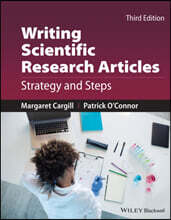

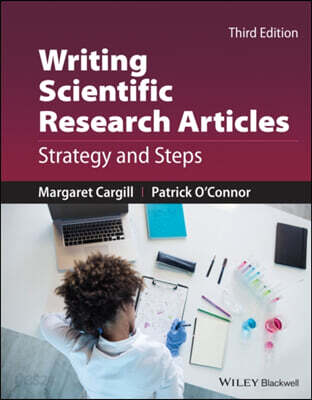
- 주간베스트
- 대학교재/전문서적 155위
이미 소장하고 있다면 판매해 보세요.
- 국내배송만 가능
- 문화비소득공제 가능
책소개
목차
|
Preface to the third edition ix Preface to the second edition xi Preface to the first edition xiii Section 1: A framework for success 1 1 How to use this book 3 1.1 Getting started with writing for international publication 3 1.2 Publishing in the international literature 4 1.3 Aims of the book 8 1.4 How the book is structured 9 1.5 How to use this book if you are. . . 10 2 Research article structures 13 2.1 Conventional article structures: AIMRaD and its variations 13 3 Reviewers’ criteria for evaluating manuscripts 19 3.1 Titles as content signposts 20 Section 2: When and how to write each article section 23 4 Results as a “story”: the key driver of an article 25 5 Results: turning data into knowledge 27 5.1 Designing figures 28 5.2 Designing tables 30 5.3 Figure legends and table titles 31 5.4 Supplementary material 33 5.5 Archiving data 34 6 Writing about results 35 6.1 Structure of Results sections 35 6.2 Functions of Results sentences 36 6.3 Verb tense in Results sections 36 7 The Methods section 39 7.1 Purpose of the Methods section 39 7.2 Organising Methods sections 40 7.3 Methods in supplementary material 41 7.4 Publishing methods papers 41 7.5 Use of passive and active verbs 41 8 The Introduction 47 8.1 Argument stages towards a compelling Introduction 47 8.2 Stage 1: Locating your project within an existing field of scientific research 50 8.3 Using references in Stages 2 and 3 51 8.4 Avoiding plagiarism when using others’ work 54 8.5 Stage 3: Indicating the gap or research niche 55 8.6 Stage 4: The statement of purpose or main activity 56 8.7 Stages 5 and 6: Highlighting benefit and mapping the article 57 8.8 Suggested process for drafting an Introduction 57 8.9 Editing for logical flow 58 9 The Discussion section 63 9.1 Important structural issues 63 9.2 Information elements to highlight the key messages 64 9.3 Negotiating the strength of claims 66 10 The title and keywords 69 10.1 Strategy 1: Provide as much relevant information as possible, but be concise 69 10.2 Strategy 2: Use carefully chosen keywords prominently 69 10.3 Strategy 3: Choose strategically ? noun phrase, statement, or question? 70 10.4 Strategy 4: Avoid ambiguity in noun phrases 71 11 The Abstract and highlights 73 11.1 Why Abstracts are so important 73 11.2 Selecting additional keywords 73 11.3 Abstracts: typical information elements 73 11.4 Visual abstracts 75 11.5 “Highlights” and other significance or summary sections 75 12 Writing review articles 77 12.1 What editors want to publish 79 12.2 The “take?home message” of a review 79 12.3 The structure of review articles 87 12.4 Visual elements in review articles: tables, figures, and boxes 89 12.5 Checklist for review article manuscripts 91 12.6 Systematic review articles 91 12.7 Submission and revision of review articles 93 Section 3: Getting your manuscript published 95 13 Submitting a manuscript 97 13.1 Five practices of successful authors 97 13.2 Understanding the peer?review process 98 13.3 Understanding the editor’s role 99 13.4 The contributor’s covering letter 99 13.5 Understanding the reviewer’s role 101 13.6 Understanding the editor’s role (continued) 103 14 How to respond to peer reviews 105 14.1 Rules of thumb for responding to reviews 105 14.2 How to deal with manuscript rejection 106 14.3 How to deal with “conditional acceptance” or “revise and resubmit” 106 15 A process for preparing a manuscript 115 15.1 Manuscript mapping 116 15.2 Editing procedures 117 15.3 A pre?review checklist 120 Section 4: Developing your writing and publication skills further 121 16 Skill?development strategies for groups and individuals 123 16.1 Journal clubs 123 16.2 Writing groups 124 16.3 Selecting feedback strategies for different purposes 124 16.4 Becoming a reviewer 126 16.5 Training for responding to reviewers 127 17 Developing discipline?specific English skills 129 17.1 Editor expectations of language use 129 17.2 Strategic (and acceptable!) language re?use: sentence templates 130 17.3 More about noun phrases 133 17.4 Concordancing: a tool for developing your discipline?specific English 134 17.5 Using the English articles (a/an, the) appropriately in science writing 138 17.6 Using “which” and “that” 141 18 Writing funding proposals 143 18.1 A process for preparing and submitting a funding proposal 144 18.2 Easy mistakes to make 147 Section 5: Provided example articles 149 19 PEA1: Kaiser et al. (2003) 151 20 PEA2: Britton-Simmons & Abbott (2008) 165 21 PEA3: Ganci et al. (2012) 177 Answer pages 191 Appendix: Measures of journal impact and quality 221 A.1 Journal impact 221 A.2 Using indices of journal quality 222 References 225 Index 229 |
저자 소개
Margaret Cargill is an applied linguist with over 25 years of experience as a research communication educator. Her research focuses on innovative collaborative methods for helping scientists develop high-level skills for communicating their research findings effectively. She has worked extensively in Australia, Europe, and Asia with scientists of many disciplines and language and cultural backgrounds.
Patrick O’Connor is a research ecologist, environmental economist, environmental consultant, and science educator. His work over the last 20 years has focused on the use of scientific principles in designing, monitoring, and evaluating environmental programs for governments and statutory authorities in Australia. His research interests and scientific publications span fields of ecosystem service economics, terrestrial ecology, and detection of change in plant and animal communities.
품목정보
- 발행일
- 2021년 06월 01일
- 쪽수, 무게, 크기
- 256쪽 | 680g | 216*272*15mm
- ISBN13
- 9781119717270
리뷰/한줄평0
상품정보안내
(판형과 판수 등이 다양한 도서는 찾으시는 도서의 ISBN을 알려 주시면 보다 빠르고 정확한 안내가 가능합니다.)
해외거래처에서 품절인 경우, 2차 거래선을 통해 유럽과 미국 출판사로 직접 수입이 진행될 수 있습니다.
수입 진행 시점으로 부터 2~3주가 추가로 소요되며, 해외에서도 유통이 원활하지 않은 도서는 품절 안내가 지연될 수 있습니다.
해당 경우, 문자와 메일로 별도 안내를 드리고 있사오니 마이페이지에서 휴대전화번호와 메일주소를 다시 한번 확인해주시기 바랍니다.