

이미 소장하고 있다면 판매해 보세요.
- 국내배송만 가능
- 해외 거래처 사정에 의하여 품절/지연 가능
- 도서 정보 중 미표기 사항 안내?
- 문화비소득공제 가능
책소개
목차
|
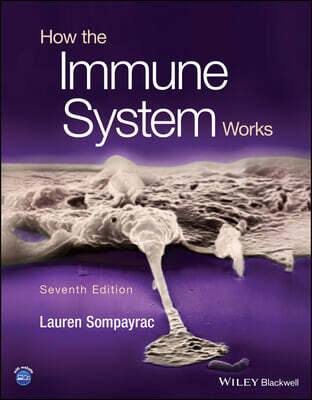
Acknowledgments viii How to Use This Book ix This book is neither a comprehensive text nor an exam-review tool. It is an overview of the immune system, designed to give anyone who is learning immunology a feel for how the system fits together. About the Companion Website x Lecture 1 An Overview 1 The immune system is a “team effort,” involving many different players who work together to provide a powerful defense against invaders. Focusing on one player at a time makes it hard to understand the game. Here we view the action from the grandstand to get a wide-angle picture of what the immune system is all about. Lecture 2 The Innate Immune System 12 The innate immune system is a “hard-wired” defense that has evolved over millions of years to recognize pathogens that commonly infect humans. It provides a rapid and powerful response against “everyday” invaders. Lecture 3 B Cells and Antibodies 26 B cells and the antibodies they produce are part of the adaptive immune system ? a system that protects us against pathogens both common and rare. Lecture 4 The Magic of Antigen Presentation 40 T cells, another weapon of the adaptive immune system, only recognize invaders that are properly presented by specialized antigen presenting cells. This feature keeps T cells focused on the types of attackers they can defend against. Lecture 5 T Cell Activation 52 Before they can spring into action, T cells must be activated. This requirement helps insure that only useful weapons will be mobilized. Lecture 6 T Cells at Work 60 Once they have been activated, helper T cells orchestrate the immune response, and killer T cells destroy infected cells. Lecture 7 Secondary Lymphoid Organs and Lymphocyte Trafficking 69 B and T lymphocytes travel through secondary lymphoid organs looking for the intruders they can defend against. Once activated in the secondary lymphoid organs, B and T cells are dispatched to the particular areas of the body where they can be most useful. Lecture 8 Restraining the Immune System 82 The powerful weapons of the immune system must be restrained lest they become overly exuberant. In addition, once an invader has been defeated, the immune system must be “reset” to prepare for future attacks. Lecture 9 Self Tolerance and MHC Restriction 86 T cells must be “tested” to be sure they focus on appropriately presented antigens, and B and T lymphocytes must be screened to eliminate those which might attack our own bodies. Lecture 10 Immunological Memory 97 The innate immune system remembers pathogens which have been attacking humans for millions of years. In contrast, B and T cells remember pathogens we have encountered during our lifetime. Memory B and T lymphocytes respond more quickly and effectively to a subsequent attack by the same invader. Lecture 11 The Intestinal Immune System 103 The human intestines are home to trillions of bacteria, viruses, fungi, and parasites. How the immune system deals with these potentially dangerous intestinal residents, which frequently invade the tissues surrounding the intestines, is a hot topic in immunology. Lecture 12 The Immune System Gone Wrong 110 The immune system usually does a good job of defending us. Sometimes, however, mistakes are made. Two examples of the “immune system gone wrong” are allergies and autoimmunity. Lecture 13 Immunodeficiency 119 Serious disease may result when our immune system does not operate at full strength. Humans who are infected with HIV-1 have profoundly impaired immune systems. Lecture 14 Vaccines 125 Vaccines safely mimic a microbial attack so that our immune system will be primed and ready for a future challenge by the same pathogen. Lecture 15 Cancer and the Immune System 132 The human immune system is not very good at defending us against cancer. Indeed, there is a built-in conflict between the need to minimize the chance that its weapons will attack our own bodies and the need to destroy cancer cells. Lecture 16 Immunotherapy 139 Physicians are “borrowing” some of the weapons of the immune system and using them to treat disease. Lecture 17 COVID-19 and the Immune System 146 The COVID-19 pandemic has given immunologists a “laboratory” to study the immune response to respiratory viral infections. The COVID-19 vaccine program has resulted in major advances in vaccine design, including the mRNA vaccine platform. Glossary 154 Here are definitions of some of the terms that immunologists use ? but which “normal” people wouldn’t. Acronyms and Abbreviations 158 Immunologists are big on acronyms and abbreviations, but they can drive you crazy. So I’ve made a list to which you can refer. Index 159 |
저자 소개
Lauren Sompayrac, PhD, was a Research Professor in the Department of Molecular, Cellular, and Developmental Biology at the University of Colorado, USA. He is a graduate of the Massachusetts Institute of Technology and was a Postdoctoral Fellow in the Department of Pathology at the Harvard Medical School. Now retired, Dr. Sompayrac is the author of How the Immune System Works, How Pathogenic Viruses Work, How Cancer Works, and How Pathogenic Viruses Think.
관련 분류
품목정보
- 발행일
- 2022년 11월 07일
- 쪽수, 무게, 크기
- 176쪽 | 213*272*13mm
- ISBN13
- 9781119890683
사락 별점0
혜택 및 유의사항밑줄0
혜택 및 유의사항상품정보안내
직수입외서의 경우, 해외거래처에서 제공하는 정보가 부족하여 제목, 표지, 가격, 유통상태 등의 정보가 미비하거나 변경되는 경우가 있습니다. 정확한 확인을 원하시는 경우, 일대일 상담으로 문의하여 주시면 답변 드리겠습니다.
(판형과 판수 등이 다양한 도서는 찾으시는 도서의 ISBN을 알려 주시면 보다 빠르고 정확한 안내가 가능합니다.)
해외거래처에서 품절인 경우, 2차 거래선을 통해 유럽과 미국 출판사로 직접 수입이 진행될 수 있습니다.
수입 진행 시점으로 부터 2~3주가 추가로 소요되며, 해외에서도 유통이 원활하지 않은 도서는 품절 안내가 지연될 수 있습니다.
해당 경우, 문자와 메일로 별도 안내를 드리고 있사오니 마이페이지에서 휴대전화번호와 메일주소를 다시 한번 확인해주시기 바랍니다.
(판형과 판수 등이 다양한 도서는 찾으시는 도서의 ISBN을 알려 주시면 보다 빠르고 정확한 안내가 가능합니다.)
해외거래처에서 품절인 경우, 2차 거래선을 통해 유럽과 미국 출판사로 직접 수입이 진행될 수 있습니다.
수입 진행 시점으로 부터 2~3주가 추가로 소요되며, 해외에서도 유통이 원활하지 않은 도서는 품절 안내가 지연될 수 있습니다.
해당 경우, 문자와 메일로 별도 안내를 드리고 있사오니 마이페이지에서 휴대전화번호와 메일주소를 다시 한번 확인해주시기 바랍니다.
63,100원
총 1개
63,100원