
소득공제
외서
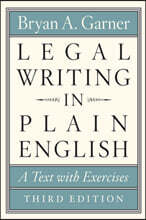
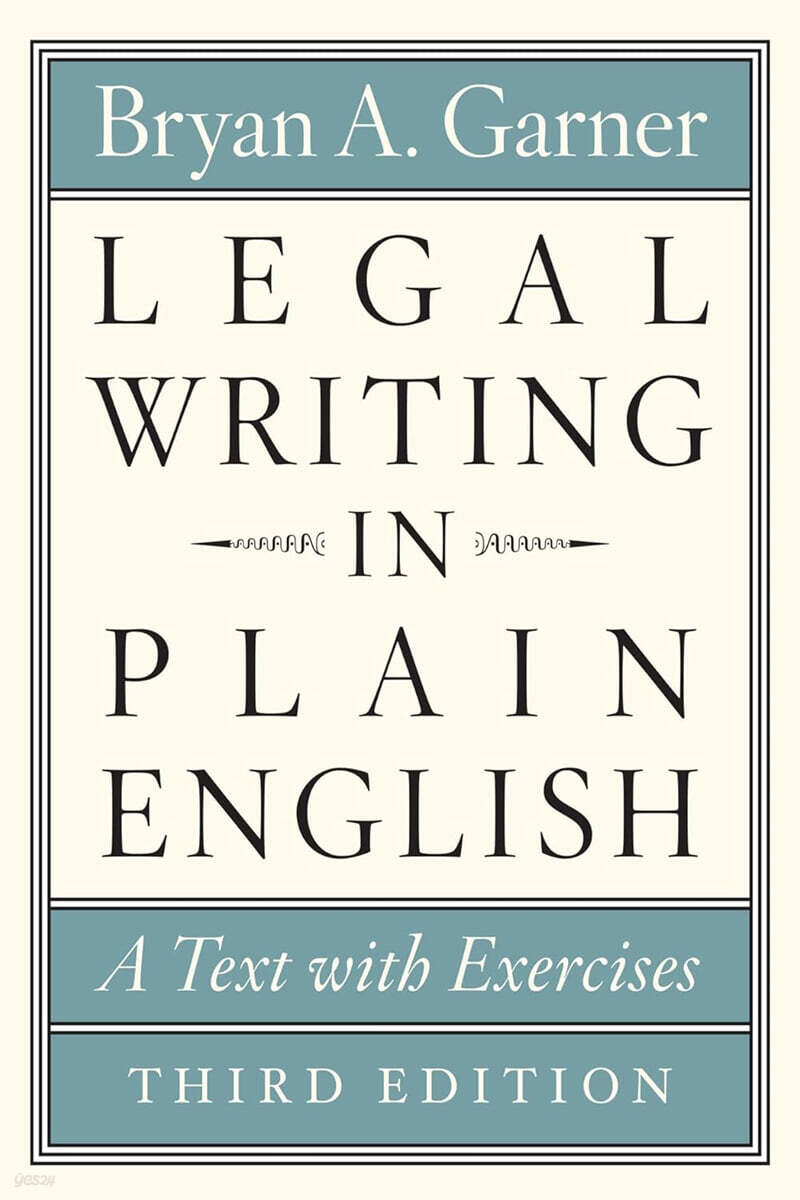
Legal Writing in Plain English, Third Edition: A Text with Exercises
Paperback, 3rd Edition
University of Chicago Press
2023.09.06.
이미 소장하고 있다면 판매해 보세요.
- 국내배송만 가능
- 문화비소득공제 가능
책소개
목차
|
Preface
Introduction Part One: Principles for All Legal Writing 1. Framing Your Thoughts § 1. Have something to say, and think it through. Approach your task with a fervent desire to get your message across. § 2. Carry out your writing projects in four steps: think and research; plan and organize; write; revise. § 3. Order your material in a logical sequence. Present facts chronologically. For other material, make the order (a) deductive, (b) comparative, or (c) spatial. Keep related material together. § 4. Use informative headings to mark sections and, if helpful, subsections. 2. Phrasing Your Sentences § 5. Exclude unnecessary words. § 6. Keep your average sentence length to about 20 words. § 7. Keep the subject, the verb, and the object together--toward the beginning of the sentence. § 8. Use parallel phrasing for parallel ideas: don't pair unlike grammatical forms. § 9. Use strong, precise verbs. Minimize is, are, was, and were--especially when they are part of a passive-voice construction. § 10. Avoid multiple negatives. § 11. End sentences emphatically. 3. Choosing Your Words § 12. Use plain English, not legalese. § 13. Be wary of pretension, officialese, and stiff formulas. § 14. Simplify wordy phrases--especially those containing of. § 15. Avoid zombie nouns--especially -ion words that you can turn into verbs. § 16. Avoid doublets and triplets. § 17. Refer to people and companies by name. Never use corresponding terms ending in -or and -ee. § 18. Use shorthand names only when you must. Shun unfamiliar acronyms. § 19. Make it snappy, vivid, and interesting. § 20. Be a companionable voice of reason. Make everything you write speakable. Part Two: Principles Mainly for Analytical and Persuasive Writing § 21. Plan all three parts: the beginning, the middle, and the end. § 22. For the all-important opener, use the deep issue to state the problem clearly. § 23. Summarize concretely and effectively. But don't overparticularize with dates and similar unimportant details. § 24. Make your paragraphs cohesive. Introduce each one with a topic sentence. § 25. Link your paragraphs explicitly. § 26. Vary the length of your paragraphs, but keep them generally short. § 27. Provide textual signposts along the way. § 28. Unclutter the text by footnoting citations. Keep the footnotes free of sentences. § 29. Weave quotations deftly into your prose. "Quotation sandwiches" are hard to skip. § 30. Be forthright in dealing with counterarguments. Part Three: Principles Mainly for Legal Drafting § 31. Draft for an ordinary reader, not for a mythical judge who might someday review the document. § 32. Organize provisions in descending order of importance. Use a good numbering system and abundant headings to make things easy to find. § 33. Minimize definitions and cross-references. If you have more than a few definitions, put them in a schedule at the end, not at the beginning. § 34. Break down enumerations into parallel provisions. Put every list of subparts at the end of the sentence--never at the beginning or in the middle. § 35. Replace every shall. § 36. Don't use provisos. § 37. Replace and/or wherever it appears. § 38. Prefer the singular over the plural. § 39. Use numerals, not words, to denote amounts. Avoid word-numeral doublets. § 40. If you don't understand a form provision--or why it should be included in your document--try diligently to gain that understanding. If you still can't understand it, cut it. Part Four: Principles for Document Design § 41. Make sensible choices about typography: use a readable font and type size, don't underline, minimize all-caps and initial caps, and put one space between sentences. § 42. Create ample white space--and use it meaningfully. § 43. Highlight ideas with attention-getters such as bullets. § 44. Use graphics whenever they can enhance your message. § 45. For a long document, make a table of contents. Part Five: Methods for Continued Improvement § 46. Embrace constructive criticism. § 47. Edit your work rigorously and systematically. § 48. Seek out reliable answers to questions of grammar and usage. § 49. Habitually gauge your own readerly likes and dislikes, as well as those of other readers. § 50. Remember that good writing makes the reader's job easy; bad writing makes it hard. Appendix A: A Restatement of Punctuation Appendix B: Four Model Documents 1. Research Memos 2. Motions 3. Appellate Briefs 4. Contracts Key to Basic Exercises Bibliography Index |
품목정보
- 발행일
- 2023년 09월 06일
- 쪽수, 무게, 크기
- 336쪽 | 590g | 167*235*21mm
- ISBN13
- 9780226816548
사락 별점0
혜택 및 유의사항밑줄0
혜택 및 유의사항상품정보안내
직수입외서의 경우, 해외거래처에서 제공하는 정보가 부족하여 제목, 표지, 가격, 유통상태 등의 정보가 미비하거나 변경되는 경우가 있습니다. 정확한 확인을 원하시는 경우, 일대일 상담으로 문의하여 주시면 답변 드리겠습니다.
(판형과 판수 등이 다양한 도서는 찾으시는 도서의 ISBN을 알려 주시면 보다 빠르고 정확한 안내가 가능합니다.)
해외거래처에서 품절인 경우, 2차 거래선을 통해 유럽과 미국 출판사로 직접 수입이 진행될 수 있습니다.
수입 진행 시점으로 부터 2~3주가 추가로 소요되며, 해외에서도 유통이 원활하지 않은 도서는 품절 안내가 지연될 수 있습니다.
해당 경우, 문자와 메일로 별도 안내를 드리고 있사오니 마이페이지에서 휴대전화번호와 메일주소를 다시 한번 확인해주시기 바랍니다.
(판형과 판수 등이 다양한 도서는 찾으시는 도서의 ISBN을 알려 주시면 보다 빠르고 정확한 안내가 가능합니다.)
해외거래처에서 품절인 경우, 2차 거래선을 통해 유럽과 미국 출판사로 직접 수입이 진행될 수 있습니다.
수입 진행 시점으로 부터 2~3주가 추가로 소요되며, 해외에서도 유통이 원활하지 않은 도서는 품절 안내가 지연될 수 있습니다.
해당 경우, 문자와 메일로 별도 안내를 드리고 있사오니 마이페이지에서 휴대전화번호와 메일주소를 다시 한번 확인해주시기 바랍니다.
32,400원
총 1개
32,400원