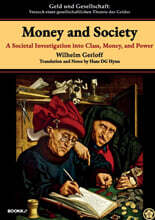

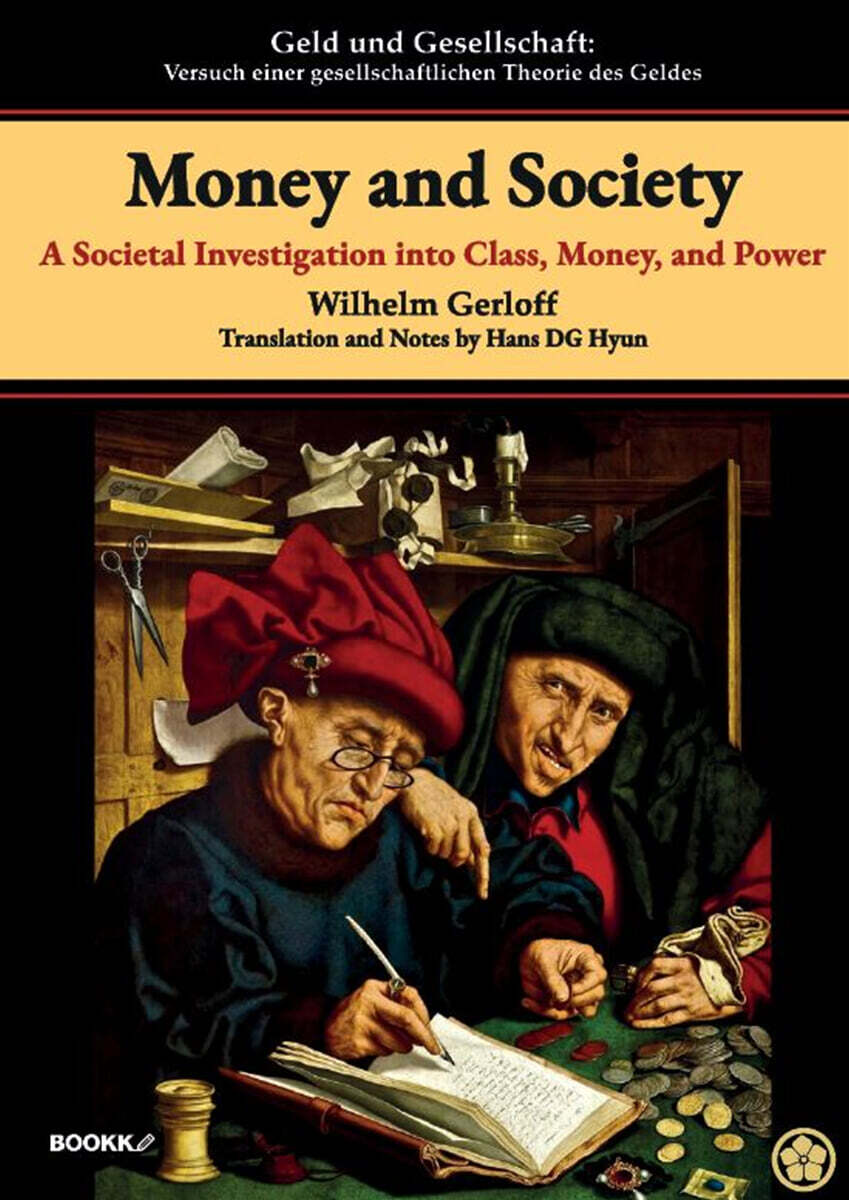
- 주문 후 제작되는 개인 오더 도서로 신중한 구매를 부탁드리며, 발송까지 7일가량 소요됩니다.
이미 소장하고 있다면 판매해 보세요.
- 국내배송만 가능
- 문화비소득공제 가능
목차
|
I. Money as a Social Phenomenon 2
§1. The Task 2 §2. The Meaning of the Societal Theory of Money 6 §3. Socio-Psychological Foundation 12 II. The Beginnings of the Money-Usage 23 §4. The Emergence of Money 23 §5. The Gift-Traffic 51 §6. The Hoard-money 76 §7. Money and Ownership 85 §8. Exchange-Money and Purchase-Money 91 §9. The Money-Usage 97 §10. Class-money 105 III. The Essence of Money 114 §11. The Concept of Money 114 §12. Societality of Money 126 §13. The Essential Services of Money 136 §14. Money as a Social Means of Relationship 143 §15. Money as a Social Means of Recognition 146 §16. Money as a Social Means of Power 153 §17. Money as an Economic Means 161 §18. Money as a Means of Exchange 167 §19. Money as a Means of Expressing Prices 173 §20. Money as a Means of Account 180 §21. Money as a Means of Payment 186 §22. The Capital Function of Money 193 IV. The Domains of Influence by Money 204 §23. Money and Division of Labour 204 §24. Money and Needs 209 §25. Money and the Legal-Order 213 §26. The State and Money 222 §27. The Purchasing Power of Money 228 V. Money in the Social Order 256 §28. The Right Money 256 §29. The Money-Orientation 283 §30. The Societal Theory of Money 306 References 331 Translation Notes 350 Index |
저자 소개 2
Wilhelm Gerloff (1880-1954) was born in Krefeld, Germany in 1880 and had a multifaceted educational journey, starting as an elementary school teacher and eventually becoming a distinguished academic. He pursued studies in various disciplines including economics, political science, and finance. He held teaching positions in di
Wilhelm Gerloff (1880-1954) was born in Krefeld, Germany in 1880 and had a multifaceted educational journey, starting as an elementary school teacher and eventually becoming a distinguished academic. He pursued studies in various disciplines including economics, political science, and finance. He held teaching positions in different universities, finally becoming a full professor at the University of Innsbruck, where his focus on finance became prominent.
His interest in finance was significant, advocating for its stronger representation in the academic landscape. He played a pivotal role in redefining financial studies, especially in the context of the challenges posed by World War I. He is known as the founding father of public finance in Germany, known as the editor of Handbuch der Finanzwissenschaft (1926).
Gerloff’s contributions were not limited to finance; he ventured into socio-political and economic issues, often presenting views that contrasted with prevailing ideologies. He aimed to modernize the Historical School, integrating its traditions into contemporary economic theories. His works demonstrated a close connection to sociology, echoing the thoughts of Max Weber and Franz Oppenheimer. He integrated sociological understanding into his economic analyses, emphasizing the significance of social, historical, and cultural factors in shaping economic systems.
His tenure at the University of Frankfurt faced challenges due to his critical stance against National Socialism. He was eventually removed from office by Nazis and subjected to political scrutiny and restrictions on international activities.
Health issues affected his later career, leading to his early retirement in 1940. However, he remained connected to academia, contributing to the reconstruction of the Faculty of Economics and Social Sciences at the University of Frankfurt after World War II. He passed away in 1954, leaving a legacy of academic excellence and a significant impact on economic thought.
His interest in finance was significant, advocating for its stronger representation in the academic landscape. He played a pivotal role in redefining financial studies, especially in the context of the challenges posed by World War I. He is known as the founding father of public finance in Germany, known as the editor of Handbuch der Finanzwissenschaft (1926).
Gerloff’s contributions were not limited to finance; he ventured into socio-political and economic issues, often presenting views that contrasted with prevailing ideologies. He aimed to modernize the Historical School, integrating its traditions into contemporary economic theories. His works demonstrated a close connection to sociology, echoing the thoughts of Max Weber and Franz Oppenheimer. He integrated sociological understanding into his economic analyses, emphasizing the significance of social, historical, and cultural factors in shaping economic systems.
His tenure at the University of Frankfurt faced challenges due to his critical stance against National Socialism. He was eventually removed from office by Nazis and subjected to political scrutiny and restrictions on international activities.
Health issues affected his later career, leading to his early retirement in 1940. However, he remained connected to academia, contributing to the reconstruction of the Faculty of Economics and Social Sciences at the University of Frankfurt after World War II. He passed away in 1954, leaving a legacy of academic excellence and a significant impact on economic thought.
품목정보
- 발행일
- 2023년 12월 15일
- 쪽수, 무게, 크기
- 427쪽 | 148*210*30mm
- ISBN13
- 9791141060404
출판사 리뷰
|
본서에서는 화폐의 진화와 관련된 사회학적 이론에 대한 새로운 시도를 보여주고 있다. 게를로프는 막스베버와 파레토 등의 대륙의 사회학자들의 연구에서 도출된 실로 다양한 사회학적 개념을 십분 활용하고 있고 문화사의 연구자로서 사회를 조망하고 있는데, 사비니(Savigny)와 독일 역사학파에서 영감을 받고 있음이 명백하다. 또한 그는 화폐를 사회적 진화의 산물이며 동시에 그것을 추진하는 에이전트로보고 있는데, 사실 화폐라는 것은 각 시대 분기에 따라서 상호 다른 기능을 가지고 있다. (…) 화폐가 경제적, 정치적으로 사물을 조직화하는 권력이라는 차원에 있어서 가장 고도화된 정점에 오르게 된 자본주의 사회와 현대적 국민국가에서의 화폐에 대하여 게를로프는 상세한 묘사를 하고 있다. (…) 사회과학자들의 마음들이 전혀 상이한 방법론과 개념에 의해서 각기 사로잡혀 있는 현재의 시점에서 본서는 독일 역사학파가 가지고 있는 사고를 반영하는 흥미로운 예라고 간주될 수 있다.” (John Eros)
A masterpiece classic in monetary theory, establishing the 'class theory of money. He [Gerloff] described and analysed in great detail the non-economic social factors responsible for the origin and development of money and its impact on various noneconomic human activities and relationships. (…) [According to him] (money) was the object that was a status symbol, conferring social prominence on its owner, that was chosen for monetary purposes. Its wide acceptance as the object that must be acquired and held for the sake of the social prestige it represents was the first step towards the choice of a monetary object. (…) Gerloff's theory contains sufficient truth to be regarded as a valuable addition to the corpus of doctrines of economic anthropology. ? Paul Einzig, Primitive Money Gerloff (…) points out that money is always the object of institutional orders. Gerloff doesn't attribute any of the classical functions of money as immutable, meaning they're not independent of external factors. In Gerloff's understanding, the question of which classical functions (unit of account, medium of exchange, store of value, measure of deferred payment) is primary depends on the requirements of the specific society utilizing that money. The only constant function of money according to Gerloff is to be a “bearer of social structure” or “social relationship” and thus a means of power. (…) According to Gerloff, [the] ""right money"" must be money with a certain ‘purchasing power’ (Kaufmacht) that corresponds to the respective economic order and the ethical education of the people using the money. The simultaneous ""taming and guarding"" of money is the task of monetary policy. […] [His] concept of ‘purchasing power’ (…) contributes to the monetary policy debate in both normative and analytical terms. ? Felix Brandl, Von der Entstehung des Geldes zur Sicherung der Wahrung. |