
이미 소장하고 있다면 판매해 보세요.
- 국내배송만 가능
- 해외 거래처 사정에 의하여 품절/지연 가능
- 도서 정보 중 미표기 사항 안내?
- 문화비소득공제 가능
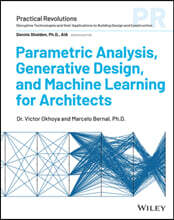
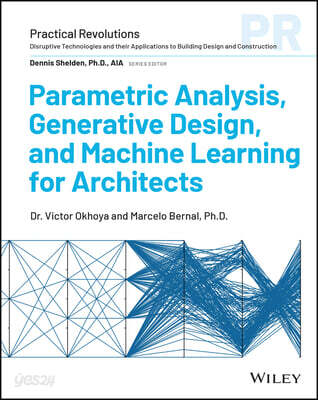
책소개
목차
|
Preface xi Acknowledgments xv Part One: Back ground and Definitions 1 Chapter 1 COMPUTER-AIDED DESIGN AND BUILDING INFORMATION MODELING 3 Computer Aided Design 5 Building Information Modeling 9 Chapter 2 COMPUTATIONAL DESIGN AND PARAMETRIC DESIGN 19 Computational Design 19 Parametric Design 30 Chapter 3 WHAT IS PARAMETRIC DESIGN? 41 Definition of Parametric Design 41 The Need for Parametric Design 47 Project Case: Parametric Analysis 51 Project Case: Generative Design 60 Part Two: Parametric Analysis 73 Chapter 4 METHODS OF PARAMETRIC ANALYSIS 75 Performing Energy Simulations 75 Performing Daylight Simulations 82 Daylight Analysis Process 83 Performing Parametric Analysis 90 Evaluating Parametric Analysis 97 Chapter 5 PARAMETRIC ANALYSIS FOR ENERGY AND DAYLIGHT PERFORMANCE 105 Energy Analysis Project Case: Hotel Residence 105 Project Case: Student Housing 112 Project Case: Student Residence 120 Project Case: High School Building 132 Part Three: Generative Design 139 Chapter 6 METHODS OF GENERATIVE DESIGN 141 Space Partitioning Algorithms 146 Site Subdivision Algorithms 155 Form Making Algorithms 160 Chapter 7 GENERATIVE DESIGN AT THE URBAN DESIGN SCALE 171 Project Case: Business Park 172 Project Case: Mixed Housing 179 Chapter 8 GENERATIVE DESIGN AT THE BUILDING SCALE AND INTERIOR DESIGN SCALE 195 Generative Design at the Building Scale 195 Generative Design at the Interior Design Scale 206 Part Four: Machine L earning 219 Chapter 9 MACHINE LEARNING FOR ENERGY ANALYSIS 221 Machine Learning Algorithms 223 Project Case: Residential Tower 230 Chapter 10 DEEP LEARNING FOR SOLAR ANALYSIS 239 Types of Deep Learning Algorithm 241 Generative Adversarial Networks 246 Project Case: Urban Solar 252 Bibliography 257 Index 259 |
저자 소개
Dr Victor Okhoya holds a Doctor of Design in Architecture from Carnegie Mellon University with a specialty in Computational Design, and has worked with architectural computational technology for more than twenty years. He has published widely on architectural computation technology and related subjects, has held leadership roles in digital design technology at leading architectural practices, and has trained hundreds of industry professionals on the use of digital design tools.
Marcelo Bernal, PhD, holds a doctoral degree in Architecture from the Georgia Institute of Technology with a specialty in Computational Design, and has more than two decades' experience in research and architectural practice. He has held professorial positions at the Universidad Techica Federico Santa Maria (UTFSM), Chile, and has published widely on architectural design and related subjects.
품목정보
- 발행일
- 2026년 07월 17일
- 쪽수, 무게, 크기
- 288쪽 | 크기확인중
- ISBN13
- 9781394197996
리뷰/한줄평0
상품정보안내
(판형과 판수 등이 다양한 도서는 찾으시는 도서의 ISBN을 알려 주시면 보다 빠르고 정확한 안내가 가능합니다.)
해외거래처에서 품절인 경우, 2차 거래선을 통해 유럽과 미국 출판사로 직접 수입이 진행될 수 있습니다.
수입 진행 시점으로 부터 2~3주가 추가로 소요되며, 해외에서도 유통이 원활하지 않은 도서는 품절 안내가 지연될 수 있습니다.
해당 경우, 문자와 메일로 별도 안내를 드리고 있사오니 마이페이지에서 휴대전화번호와 메일주소를 다시 한번 확인해주시기 바랍니다.