
이미 소장하고 있다면 판매해 보세요.
- 국내배송만 가능
- 문화비소득공제 가능
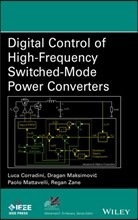
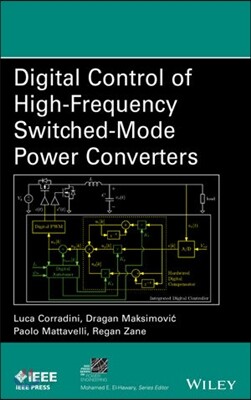
책소개
목차
|
PREFACE ix
INTRODUCTION 1 CHAPTER 1 CONTINUOUS-TIME AVERAGED MODELING OF DC?DC CONVERTERS 13 1.1 Pulse Width Modulated Converters 14 1.2 Converters in Steady State 16 1.2.1 Boost Converter Example 17 1.2.2 Estimation of the Switching Ripple 19 1.2.3 Voltage Conversion Ratios of Basic Converters 20 1.3 Converter Dynamics and Control 21 1.3.1 Converter Averaging and Linearization 22 1.3.2 Modeling of the Pulse Width Modulator 24 1.3.3 The System Loop Gain 25 1.3.4 Averaged Small-Signal Models of Basic Converters 26 1.4 State-Space Averaging 28 1.4.1 Converter Steady-State Operating Point 28 1.4.2 Averaged Small-Signal State-Space Model 29 1.4.3 Boost Converter Example 30 1.5 Design Examples 32 1.5.1 Voltage-Mode Control of a Synchronous Buck Converter 32 1.5.2 Average Current-Mode Control of a Boost Converter 42 1.6 Duty Ratio d[k] Versus d(t) 48 1.7 Summary of Key Points 50 CHAPTER 2 THE DIGITAL CONTROL LOOP 51 2.1 Case Study: Digital Voltage-Mode Control 52 2.2 A/D Conversion 53 2.2.1 Sampling Rate 53 2.2.2 Amplitude Quantization 56 2.3 The Digital Compensator 58 2.4 Digital Pulse Width Modulation 63 2.5 Loop Delays 65 2.5.1 Control Delays 65 2.5.2 Modulation Delay 66 2.5.3 Total Loop Delay 70 2.6 Use of Averaged Models in Digital Control Design 71 2.6.1 Limitations of Averaged Modeling 71 2.6.2 Averaged Modeling of a Digitally Controlled Converter 74 2.7 Summary of Key Points 78 CHAPTER 3 DISCRETE-TIME MODELING 79 3.1 Discrete-Time Small-Signal Modeling 80 3.1.1 A Preliminary Example: A Switched Inductor 82 3.1.2 The General Case 85 3.1.3 Discrete-Time Models for Basic Types of PWM Modulation 87 3.2 Discrete-Time Modeling Examples 88 3.2.1 Synchronous Buck Converter 90 3.2.2 Boost Converter 97 3.3 Discrete-Time Modeling of Time-Invariant Topologies 102 3.3.1 Equivalence to Discrete-Time Modeling 106 3.3.2 Relationship with the Modified Z-Transform 108 3.3.3 Calculation of Tu(z) 108 3.3.4 Buck Converter Example Revisited 112 3.4 Matlab Discrete-Time Modeling of Basic Converters 112 3.5 Summary of Key Points 117 CHAPTER 4 DIGITAL CONTROL 119 4.1 System-Level Compensator Design 119 4.1.1 Direct-Digital Design Using the Bilinear Transform Method 120 4.1.2 Digital PID Compensators in the z- and the p-Domains 123 4.2 Design Examples 126 4.2.1 Digital Voltage-Mode Control of a Synchronous Buck Converter 126 4.2.2 Digital Current-Mode Control of a Boost Converter 134 4.2.3 Multiloop Control of a Synchronous Buck Converter 136 4.2.4 Boost Power Factor Corrector 141 4.3 Other Converter Transfer Functions 154 4.4 Actuator Saturation and Integral Anti-Windup Provisions 160 4.5 Summary of Key Points 165 CHAPTER 5 AMPLITUDE QUANTIZATION 167 5.1 System Quantizations 167 5.1.1 A/D Converter 167 5.1.2 DPWM Quantization 169 5.2 Steady-State Solution 172 5.3 No-Limit-Cycling Conditions 175 5.3.1 DPWM versus A/D Resolution 175 5.3.2 Integral Gain 178 5.3.3 Dynamic Quantization Effects 181 5.4 DPWM and A/D Implementation Techniques 182 5.4.1 DPWM Hardware Implementation Techniques 182 5.4.2 Effective DPWM Resolution Improvements via ΣΔ Modulation 186 5.4.3 A/D Converters 187 5.5 Summary of Key Points 190 CHAPTER 6 COMPENSATOR IMPLEMENTATION 191 6.1 PID Compensator Realizations 194 6.2 Coefficient Scaling and Quantization 197 6.2.1 Coefficients Scaling 198 6.2.2 Coefficients Quantization 200 6.3 Voltage-Mode Control Example: Coefficients Quantization 203 6.3.1 Parallel Structure 204 6.3.2 Direct Structure 206 6.3.3 Cascade Structure 208 6.4 Fixed-Point Controller Implementation 213 6.4.1 Effective Dynamic Range and Hardware Dynamic Range 214 6.4.2 Upper Bound of a Signal and the L1-Norm 216 6.5 Voltage-Mode Converter Example: Fixed-Point Implementation 218 6.5.1 Parallel Realization 220 6.5.2 Direct Realization 225 6.5.3 Cascade Realization 229 6.5.4 Linear versus Quantized System Response 233 6.6 HDL Implementation of the Controller 234 6.6.1 VHDL Example 235 6.6.2 Verilog Example 237 6.7 Summary of Key Points 239 CHAPTER 7 DIGITAL AUTOTUNING 241 7.1 Introduction to Digital Autotuning 242 7.2 Programmable PID Structures 243 7.3 Autotuning VIA Injection of a Digital Perturbation 247 7.3.1 Theory of Operation 249 7.3.2 Implementation of a PD Autotuner 253 7.3.3 Simulation Example 255 7.3.4 Small-Signal Analysis of the PD Autotuning Loop 261 7.4 Digital Autotuning Based on Relay Feedback 265 7.4.1 Theory of Operation 266 7.4.2 Implementation of a Digital Relay Feedback Autotuner 267 7.4.3 Simulation Example 271 7.5 Implementation Issues 272 7.6 Summary of Key Points 275 APPENDIX A DISCRETE-TIME LINEAR SYSTEMS AND THE Z-TRANSFORM 277 A.1 Difference Equations 277 A.1.1 Forced Response 278 A.1.2 Free Response 279 A.1.3 Impulse Response and System Modes 281 A.1.4 Asymptotic Behavior of the Modes 282 A.1.5 Further Examples 283 A.2 Z-Transform 284 A.2.1 Definition 284 A.2.2 Properties 285 A.3 The Transfer Function 287 A.3.1 Stability 287 A.3.2 Frequency Response 288 A.4 State-Space Representation 288 APPENDIX B FIXED-POINT ARITHMETIC AND HDL CODING 291 B.1 Rounding Operation and Round-Off Error 291 B.2 Floating-Point versus Fixed-Point Arithmetic Systems 293 B.3 Binary Two’s Complement (B2C) Fixed-Point Representation 294 B.4 Signal Notation 296 B.5 Manipulation of B2C Quantities and HDL Examples 297 B.5.1 Sign Extension 298 B.5.2 Alignment 299 B.5.3 Sign Reversal 301 B.5.4 LSB and MSB Truncation 302 B.5.5 Addition and Subtraction 304 B.5.6 Multiplication 305 B.5.7 Overflow Detection and Saturated Arithmetic 307 APPENDIX C SMALL-SIGNAL PHASE LAG OF UNIFORMLY SAMPLED PULSE WIDTH MODULATORS 313 C.1 Trailing-Edge Modulators 313 C.2 Leading-Edge Modulators 317 C.3 Symmetrical Modulators 318 REFERENCES 321 INDEX 335 |
저자 소개
Luca Corradini, PhD, is an Assistant Professor at the University of Padova, Italy. He is the co-author of more than fifty articles published in journals and conference proceedings.
Dragan Maksimovic, PhD is a Charles V. Schelke Endowed Professor and Director of the Colorado Power Electronics Center (CoPEC) at the University of Colorado at Boulder, USA.
Paolo Mattavelli, PhD, joined the DTG of the University of Padova, Italy. Dr. Mattavelli's major fields of interest include analysis, and modeling and control of power converters.
Regan Zane, PhD, is a Professor of Electrical and Computer Engineering at the University of Colorado at Boulder, USA. Dr. Zane received the NSF Career Award in 2004 for his work in energy efficient lighting systems.
품목정보
- 발행일
- 2015년 06월 19일
- 쪽수, 무게, 크기
- 360쪽 | 크기확인중
- ISBN13
- 9781118935101
리뷰/한줄평0
상품정보안내
(판형과 판수 등이 다양한 도서는 찾으시는 도서의 ISBN을 알려 주시면 보다 빠르고 정확한 안내가 가능합니다.)
해외거래처에서 품절인 경우, 2차 거래선을 통해 유럽과 미국 출판사로 직접 수입이 진행될 수 있습니다.
수입 진행 시점으로 부터 2~3주가 추가로 소요되며, 해외에서도 유통이 원활하지 않은 도서는 품절 안내가 지연될 수 있습니다.
해당 경우, 문자와 메일로 별도 안내를 드리고 있사오니 마이페이지에서 휴대전화번호와 메일주소를 다시 한번 확인해주시기 바랍니다.