
이미 소장하고 있다면 판매해 보세요.
- 국내배송만 가능
- 해외 거래처 사정에 의하여 품절/지연 가능
- 도서 정보 중 미표기 사항 안내?
- 문화비소득공제 가능
책소개
목차
|
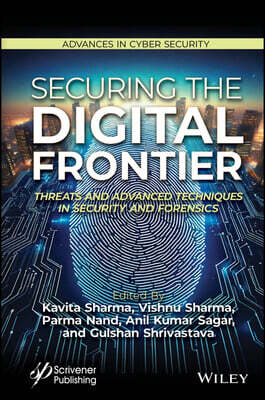
Preface xix 1 Pegasus-A Menace to Privacy and Security 1 Raunaq Khurana and Shilpa Mahajan 1.1 Introduction 1 1.2 Working of Pegasus 4 1.3 Literature Review 10 1.4 Methodologies 12 1.5 Pegasus Implantation Techniques 12 1.6 Mitigation Measures 13 1.7 Conclusion 14 2 Data Privacy and Compliance in Information Security 17 Rakesh Nayak, Umashankar Ghugar, Praveen Gupta, Satyabrata Dash and Nishu Gupta 2.1 Introduction 18 2.2 Discussion on Risks, Consequences, and Security Measures for Data Privacy 19 2.3 Data Privacy and Compliance in Information Security: The Changing Nature 28 2.4 Continuous Learning and Adaptation: Keeping Pace with Emerging Technologies and Regulations 31 2.5 Conclusion 32 3 Unveiling Cyber Threats and Digital Forensics 35 Nidhi Gupta, Arpita Trivedi, Parveen P. Terang and Hasmat Malik 3.1 Information Security 36 3.2 Cyberattacks 39 3.3 Protection Techniques 44 3.4 Internet of Medical Things 53 3.5 Conclusion 54 4 A Customised Privacy Preservation Mechanism for Cyber-Physical Systems 59 Manas Kumar Yogi and A.S.N. Chakravarthy 4.1 Introduction 59 4.2 Background 64 4.3 Motivation 73 4.4 Proposed Mechanism 76 4.5 Experimental Results 81 4.6 Future Directions 84 4.7 Conclusion 88 5 Securing the Future: Emerging Threats and Countermeasures in Cryptography 91 Debosree Ghosh, Kishore Ghosh, Chandrima Chakraborty, Atanu Datta and Somsubhra Gupta 5.1 Introduction 92 5.2 Quantum Computing and Post-Quantum Cryptography 92 5.3 Cryptanalysis: Cracking the Code 93 5.4 Side-Channel Attacks: Stealthy and Insidious 95 5.5 Fault Attacks: Exploiting Implementation Weaknesses 96 5.6 Hardware Security Modules (HSMS) 97 5.7 Secure Implementations: From Theory to Reality 99 5.8 A Holistic Approach to Cryptography 99 5.9 Quantum Key Distribution (QKD) 100 5.10 Internet of Things in Cryptography 102 5.11 Artificial Intelligence in Cryptography 103 5.12 Cryptarithmetic 104 5.13 The Road Ahead: Future Trends and Prospects 105 5.14 Conclusion 106 6 Cyber Threats and Its Impact on Electronic Transactions 109 Ramalingam Dharmalingam and Vaishnavi Dharmalingam 6.1 Introduction 109 6.2 Digital Transformation and Cybersecurity 111 6.3 Evolution of Cyber Threats 112 6.4 Emerging Cyber Threats 115 6.5 Impacts of Data Breaches in the Financial Sector 121 6.6 Cybersecurity Standards, Frameworks, and Benchmarks 124 6.7 Innovative Approaches to Cyber-Incident Management 127 6.8 Conclusion 129 7 A Robust Model for Enabling Insider Threat Detection and Prevention: Techniques, Tools, and Applications 133 A. Sheik Abdullah, Shivansh Dhiman and Arif Ansari 7.1 Introduction 134 7.2 Structure 135 7.3 Impact of Insider Threats on Modern Organizations 137 7.5 Challenges in Insider Threat Detection 142 7.6 Techniques for Insider Threat Detection 144 7.7 Robust Model 146 7.8 Application and Case Studies 156 7.9 Other Important Insider Threat Prevention Strategies 158 7.10 Ethical Considerations 160 7.11 Future Trends 163 7.12 Conclusion 165 8 Digital Vulnerabilities Unveiled: A Multidisciplinary Exploration of Emerging Threats to Security and Privacy in the Age of Networked Communication 169 Priya Sachdeva and Archan Mitra 8.1 Introduction 170 8.2 Theoretical Foundation 172 8.3 Methodological Framework 174 8.4 Emergent Themes 176 8.5 Interdisciplinary Insights 178 8.6 Pedagogical Implications 179 8.7 Findings and Discussion 181 8.8 Integration and Synthesis 185 8.9 Conclusion 187 9 Tools of Emancipation as Global Web and its Digital Ecosystem: Steering IoT Landscape, Cloud Computing Unravel Safe Spaces Lensing New Cyber Risks and Emerging Threats 197 Bhupinder Singh and Christian Kaunert 9.1 Introduction 198 9.2 Tools of Emancipation on the World Wide Web: Conceptual Framework and Definition 202 9.3 IoT Landscape and Its Overview: Opportunities and Challenges 203 9.4 Cloud Computing: Pillar for Safe Spaces Protection 204 9.5 Cyber Risks and Emerging Threats-Current Landscape of Cyber Threats 206 9.6 Tools of Emancipation: Digital Tools for Positive Purposes and Potential for Using Technology 207 9.7 Assimilating Tools of Emancipation, Cloud Computing, and IoT 208 9.8 Embryonic Updated Technologies and Future Tendencies 209 9.9 New Cyber Risks and Emerging Threats 210 9.10 Conclusion and Future Scope 212 10 IoT and Smart Device Security: Emerging Threats and Countermeasures 217 Geo Francis E., S. Sheeja, Antony John E.F. and Jismy Joseph 10.1 Introduction to IoT and Smart Devices 217 10.2 Vulnerabilities in IoT Devices 223 10.3 Emerging Threats in IoT Security 226 10.4 Attack Vectors in IoT 228 10.5 Countermeasures for IoT Security 230 10.6 Case Studies in IoT Security 232 10.7 Future Trends and Challenges in IoT Security 236 10.8 Conclusion 238 11 Secured IoT with LWC and Blockchain 243 Srishti Priya Chaturvedi, Ajay Yadav, Santosh Kumar and Rahul Mukherjee 11.1 Introduction 244 11.2 Applications of IoT 251 11.3 Different Security Attacks on IoT Layers 254 11.4 Solution to IoT Security Attacks 259 11.5 Conclusion 265 12 Social Engineering Attacks: Detection and Prevention 269 Rajat Singh, Priyanka Soni and Animaw Kerie 12.1 Introduction 269 12.2 Life Cycle of Social Engineering 272 12.3 Types of Social Engineering 274 12.4 Social Engineering Attacks Using Advanced Techniques 277 12.5 Social Engineering Attack Detection Models 278 12.6 Detection of Social Engineering Links 281 12.7 Preventive Approaches 282 12.8 Preventive Measures Against Social Engineering Attacks 285 12.9 Conclusion 286 13 Multilayer Perceptron of Occlusion and Pose-Sensitive Ear Attributes for Social Engineering Attack Mitigation 291 O. Taiwo Olaleye, Oluwasefunmi Arogundade, Adebayo Abayomi-Alli, Wilson Ahiara, Temitope Ogunbiyi, Segun Akintunde, Segun Dada and Olalekan Okewale 13.1 Introduction 292 13.2 Literature Review 295 13.3 Materials and Methods 299 13.4 Result and Discussion 305 13.5 Conclusion 311 14 Study and Analysis of Cyberbullying Message Detection and Prevention Using Machine Learning Techniques 315 S. Shanmugam, S. Gunasekaran and N. Anusha 14.1 Introduction 316 14.2 Literature Survey 318 14.3 Implementation of Cyberbullying Model 320 14.4 Evaluation and Comparison of Machine Learning Techniques for Cyber Bullying 325 14.5 Conclusion 329 15 Future Directions in Digital Forensics and Cybersecurity 333 Elipe Arjun and Priyanka Singh 15.1 Overview of Digital Forensics and Cyber Forensics 333 15.2 Introduction 335 15.3 Technologies and Their Impact 337 15.4 Impact of Emerging Technologies on Digital Forensics and Cybersecurity 338 15.5 Cybersecurity and Digital Forensics: Threats and Opportunities 342 15.6 Future of Digital Forensics 346 15.7 The Future of Cybersecurity 350 15.8 Collaboration and Interdisciplinary Approaches 353 15.9 Ethics and Human Factors in Future Digital Forensics and Cybersecurity 356 15.10 Challenges and Opportunities of Digital and Cyber-Forensics 359 15.11 Conclusion 360 16 Tomorrow's Shields: Exploring Future Trends in Cyber Security and Forensics 367 Mridu Sharma, Ravshish Kaur Kohli and Kunal Sharma 16.1 Introduction 368 16.2 Recent Digital Forensic Trends 369 16.3 Threats Faced by Digital Forensics 374 16.4 Opportunities 378 16.5 Conclusion 382 References 382 Index 387 |
저자 소개
Kavita Sharma, PhD, is a professor in the Department of Computer Science and Engineering at Galgotias College of Engineering and Technology, Greater Noida, India with over 12 years of research and academic experience. She has also been awarded a research fellowship from the Ministry of Electronics and Information Technology from the Government of India. Additionally, she has four patents (one granted and three published) and one granted design and has published seven books and 45 research articles in international journals and conferences of high repute.
Vishnu Sharma, PhD, is the Head of Department and a professor in the Department of Computer Science and Engineering at Galgotias College of Engineering and Technology, Greater Noida, India with over 21 years of teaching experience. He has published over 50 research papers on mobile ad-hoc networks and mobile computing in national and international conferences and journals, as well as two books on mobile computing and advanced mobile computing. Additionally, he has organized several national and international conferences and workshops and serves as the editor of IEEE Conference ICCCA proceedings.
Parma Nand, PhD, is the Dean of Academics at Sharda University, Greater Noida, India. He has over 26 years of teaching, industry, and research experience, emphasizing bridging the gap between academics and industry keeping in mind the growing IT industry in terms of futuristic technologies. Through his work, he has provided consultancy on a number of projects for industries and has delivered many invited and keynote talks at national and international conferences, workshops, and seminars in India and abroad. He has published more than 85 papers in peer-reviewed national and international journals and conferences, as well as two filed patents.
Anil Kumar Sagar, PhD, is a professor in the Department of Computer Science and Engineering in the School of Engineering and Technology, Sharda University, India with over 20 years of experience in teaching, guiding ten Master’s of Technology and five doctoral candidates in computer science. He also serves as a member of the editorial boards and review committees for many national and international journals and has served as a program and organizing committee member for several conferences.
Gulshan Shrivastava, PhD, is an associate professor in the Department of Computer Science and Engineering at Galgotias University, Greater Noida, India. He has five patents (four granted, one published) and 55 articles, books, and editorials in international journals and conferences of high repute. He also serves many reputed journals as a guest editor, editorial board member, international advisory board member, and reviewer board member and has delivered expert talks and guest lectures at numerous international conferences.
관련 분류
- 카테고리 분류
품목정보
- 발행일
- 2025년 03월 18일
- 쪽수, 무게, 크기
- 416쪽 | 크기확인중
- ISBN13
- 9781394268887
리뷰/한줄평0
상품정보안내
(판형과 판수 등이 다양한 도서는 찾으시는 도서의 ISBN을 알려 주시면 보다 빠르고 정확한 안내가 가능합니다.)
해외거래처에서 품절인 경우, 2차 거래선을 통해 유럽과 미국 출판사로 직접 수입이 진행될 수 있습니다.
수입 진행 시점으로 부터 2~3주가 추가로 소요되며, 해외에서도 유통이 원활하지 않은 도서는 품절 안내가 지연될 수 있습니다.
해당 경우, 문자와 메일로 별도 안내를 드리고 있사오니 마이페이지에서 휴대전화번호와 메일주소를 다시 한번 확인해주시기 바랍니다.