
이미 소장하고 있다면 판매해 보세요.
- 국내배송만 가능
- 문화비소득공제 가능
책소개
목차
|
Dedication.
Acknowledgments. List of Tables. List of Figures. Preface. Strategies for Teaching English Learners: A Summary. 1. Who Are English Learners and Their Teachers? 2. Critical Roles for Teachers. 3. Views of Teaching and Learning. 4. Performance-Based Learning. 5. Learner Strategies and Learner-Focused Teaching. 6. Learning Processes That Build on First Language. 7. The Imaginary. 8. Grammar Through Integrated Language Skills and Wonderful English. 9. Culturally Based Language Teaching. 10. Discourse in the Classrooms of English Learners. 11. Dual Language Proficiency. 12. Teaching English in Context. 13. Building a Community of Learners. 14. Project-Based Learning. 15. Learning English Through Service to the Community. Appendix A. A Critical Approach to Language Planning and Policy. Bibliography. Bibliography of Books Used in Teaching. Bibliography of Works Used for Visual Imaginary Dramatic Arts. |
품목정보
- 발행일
- 2004년 12월 23일
- 쪽수, 무게, 크기
- 476쪽 | 크기확인중
- ISBN13
- 9780205355433
관련 자료
|
* Features
- Unique Chapter 1 “Who Are English Learners and Their Teachers?” provides a clear and effective explanation of TESOL terminology, helping novice teachers become familiar with the professional jargon used in the field and serving as a guide to professional preparation programs in TESOL. - Discusses how language teachers are critical pedagogists and critical sociologists, addressing the fascinating topics related to language and power (Ch. 2). - Presents a concise yet comprehensible overview of the philosophical foundations of education, behavioral and cognitive methods, brain-compatible learning and affective and emotional factors as they relate to language learning (Ch. 3). - Standards-based learning overview in Chapter 4 provides students with the connection to performance standards. - A complete guide to lesson planning in Chapter 4 shows students how to create lesson plans within a constructivist planning framework. - Chapter 4, “Performance-Based Learning,” provides students with the A to Z on learning styles, study and survival skills, and computer-mediated communication as it applies to the ESL/EFL classroom. - In-depth discussion about English instruction in a Dual Language Program clarifies for students the role of English in bilingual programs (Ch. 11). - Discussion of issues related to parental involvement adds a new dimension to this often forgotten but important topic as it relates to language teaching. |
출판사 리뷰
|
* From the Back Cover
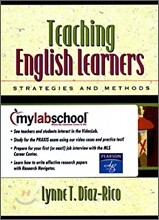
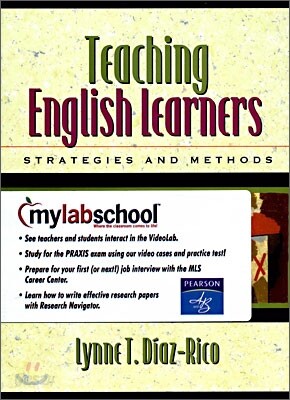
Written in Diaz-Rico's passionate style and unparalleled in its market, TESOL Strategies portrays the point of view that successful English language learning results from a combination of rich, interesting content instruction and a fast-moving, engaging curriculum based on the functional use of crosscultural content in authentic social, educational, and cultural contexts. A breakthrough in language teaching and learning, this thought-provoking text includes a coverage of second language acquisition issues and techniques, as well as attention to such controversial topics as the influence of culture on schooling, the cultural practices of schooling, and the sociopolitical context of education. "Extremely informative and well integrated.". Professor Elba Maldonado-Colon, San Jose State University. "The author's writing style reflects her vast knowledge and understanding of the...complex processes involved in teaching and learning...(TESOL Strategies') strengths lie in its comprehensiveness and adequate explanations of difficult concepts." Professor Irma Guardarrama, University of Houston. Author's Bio- Lynne Diaz-Rico is Professor of Education and Coordinator of the Master of Arts in Education, Teaching English to Speakers of Other Languages program at California State University, San Bernardino and co-author of the Crosscultural, Language and Academic Handbook (Allyn & Bacon). Her research interests are in accelerated language learning and innovative teacher education. Diaz-Rico 1st draft SMP.doc Page 1 of 1 |
사락 별점0
혜택 및 유의사항밑줄0
혜택 및 유의사항상품정보안내
직수입외서의 경우, 해외거래처에서 제공하는 정보가 부족하여 제목, 표지, 가격, 유통상태 등의 정보가 미비하거나 변경되는 경우가 있습니다. 정확한 확인을 원하시는 경우, 일대일 상담으로 문의하여 주시면 답변 드리겠습니다.
(판형과 판수 등이 다양한 도서는 찾으시는 도서의 ISBN을 알려 주시면 보다 빠르고 정확한 안내가 가능합니다.)
해외거래처에서 품절인 경우, 2차 거래선을 통해 유럽과 미국 출판사로 직접 수입이 진행될 수 있습니다.
수입 진행 시점으로 부터 2~3주가 추가로 소요되며, 해외에서도 유통이 원활하지 않은 도서는 품절 안내가 지연될 수 있습니다.
해당 경우, 문자와 메일로 별도 안내를 드리고 있사오니 마이페이지에서 휴대전화번호와 메일주소를 다시 한번 확인해주시기 바랍니다.
(판형과 판수 등이 다양한 도서는 찾으시는 도서의 ISBN을 알려 주시면 보다 빠르고 정확한 안내가 가능합니다.)
해외거래처에서 품절인 경우, 2차 거래선을 통해 유럽과 미국 출판사로 직접 수입이 진행될 수 있습니다.
수입 진행 시점으로 부터 2~3주가 추가로 소요되며, 해외에서도 유통이 원활하지 않은 도서는 품절 안내가 지연될 수 있습니다.
해당 경우, 문자와 메일로 별도 안내를 드리고 있사오니 마이페이지에서 휴대전화번호와 메일주소를 다시 한번 확인해주시기 바랍니다.
27,000원
총 1개
27,000원
