

소득공제
베스트셀러
수입
직수입양서
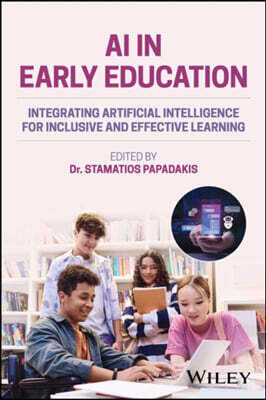
AI in Early Education
Integrating Artificial Intelligence for Inclusive and Effective Learning
Paperback, 1st Edition
Papadakis, Stamatios (University of Crete, Greece)(EDT)
Wiley
2025.10.31.
- 주간베스트
- 컴퓨터 14위
이미 소장하고 있다면 판매해 보세요.
- 국내배송만 가능
- 해외 거래처 사정에 의하여 품절/지연 가능
- 도서 정보 중 미표기 사항 안내?
- 문화비소득공제 가능
책소개
목차
|
List of Contributors xiii 1 Integrating Distributed Cognition and Culturally Responsive Pedagogy Frameworks for AI in Early Childhood Preservice Teacher Training: Toward a Culturally Responsive Educational AI (CREAI) 1 Rawad Chaker 1.1 Early Childhood Educators and AI Literacy: What Framework? 1 1.2 Distributed Cognition and Culturally Responsive Pedagogy: Toward an Integrative Framework for AI in Education? 2 1.3 AI as an Extension of the Human Mind: Theoretical Perspectives from the DC Paradigm 3 1.4 Using the DC Paradigm to Inform About AI Critical Integration 4 1.5 CREAI: Recommendations for AI Integration in Preservice Teacher Training 5 1.6 Conclusion 14 2 Fostering AI Literacy in Early Childhood: Designing Educational Activities for Preschoolers 21 Iro Voulgari, Elli Naoum, and Maria Sfyroera 2.1 Foundations of AI Literacy for Preschool Education 23 2.2 Crafting AI Literacy Learning Activities 27 2.3 Conclusion 36 3 AI in Action: Pedagogical Advice Using Artificial Intelligence as a Digital Resource in Early Childhood Education 41 Elyna Heinmae, Helin Puksand, and Kaire Kollom 3.1 Digital Competencies in Early Years Education 41 3.2 AI in the Context of Teaching and Learning in Early Years Education 44 3.3 Recommendations and Ideas for Teachers on How to Better Work with AI in Their Teaching 46 3.4 Discussion and Conclusion 52 3.5 The Estonian Context 54 4 Intelligent Learning: AI's Impact on Early Educational Strategies 59 Alessandro Bile Introduction: The Role of Technology in the Education Process 59 4.1 The Biological Learning Process 60 4.2 AI Tools and Technologies in Early Education 63 4.3 Educators' Perspectives on AI in Teaching 67 4.4 Ethical Guidelines and Global Frameworks for AI in Education 71 4.5 Conclusion 72 5 AI in Teacher Education: Implications for Future Teachers 77 Luciana Kinoshita and Intissar Yahia 5.1 Teacher Challenges and a TE Model 78 5.2 AI Integration into Teacher Education Programs 81 5.3 From Theory to Practice: Bringing AI into the Classroom 86 5.4 Conclusion and Recommendation 87 6 Pursuing Information Literacy Using AI: An Activity Model Proposal to Explore Generative AI While Tackling Disinformation 92 Filippo Bruni and Emiliana Murgia Introduction: Teaching Information Literacy in the Age of AI 92 6.1 Children and Information Access Challenges 93 6.2 Ethics and Digital Literacies for Children 94 6.3 Information Between Digital and AI Literacy 95 6.4 Generative AI: Concerns and Educational Opportunities 96 6.5 Best Practices: Media Literacy Index and the Finnish Case 98 6.6 The Key Role of Education Against Disinformation 100 6.7 Creating Content with AI to Tackle Disinformation: A Five-step Activity 100 6.8 Ready-in-5: Tackling Disinformation and Meeting Generative AI 101 6.9 Discussion and Conclusion 103 7 Developing a Parental Mediation Scale for Artificial Intelligence- supported Technologies for Children 107 Ali Ybrahim Can Gozum Introduction 107 7.1 Literature Review 109 7.2 Findings 114 8 Building AI Literacy from the Ground Up: A Holistic Approach to AI Integration in K-12 Education 131 Cristina Obae 8.1 Context 132 8.2 A Bottom-up Approach to AI 133 8.3 Teachers' AI Squad 133 8.4 Parents' Forum 136 8.5 Results 136 8.6 Conclusion 137 9 Shaping the Future of Education: AI-Driven Approaches for Primary Schools 139 Damian Maher, John De Nobile, Jose Hanham, and Alexia Maddox 9.1 Personalized Learning 140 9.2 Feedback 144 9.3 Chatbots 148 9.4 The Role of the Teacher 152 9.5 Conclusion 155 10 AI-driven Personalized Education: Adapting to Students' Learning Paces Through Interest Identification and Progress Monitoring 161 Rajul Kumar, Vishnu Teja Kandalam, and Goutam Das 10.1 AI-based Pedagogical Framework: Design and Implementation 163 10.2 Experimental Design and Key Findings 167 10.3 Recommendations and Future Work 170 10.4 Conclusion 170 11 Inclusive Education with AI: Supporting Special Needs and Overcoming Language Barriers 173 Alexandra-Emilia Forti?, Maria Villarroya Gaudo, Paulo Fazendeiro, Ernesto Exposito, and Nkanga Pedro 11.1 Gaps and Challenges in European Educational Systems-Insights and Analytics 174 11.2 Role of AI in Supporting Special Educational Needs and Overcome Language Barriers 175 11.3 Objectives of the Chapter 176 11.4 Structure Overview 176 11.5 AI Bias and Critical Thinking in Utilizing AI 176 11.6 Challenges in Educational Contexts and Accessibility 181 11.7 Visual Programming Applications for AI Education 183 11.8 Mapping Higher Education Experiences to Preuniversity Education 188 11.9 Conclusion 194 12 Ethics in AI: A Structured Approach to Teaching and Learning with AI in Ethical Contexts 201 Dr. Munir Moosa Sadruddin 12.1 Definition of AI 201 12.2 Importance of AIED 202 12.3 Applications of AIED 203 12.4 AIED and Ethics 205 12.5 Ethical Challenges 206 12.6 Data Privacy and Security Issues 206 12.7 Lack of Fairness 207 12.8 Lack of Transparency and Accountability 207 12.9 Inequity and Discrimination in Digital Practices 207 12.10 Existing Guidelines and Frameworks on AIED 209 12.11 Introduction to Nonuple+ AI Ethical Framework 210 12.12 Framework 210 12.13 Ethical Principles 213 12.14 Conclusion 216 13 New Times and New Challenges in Education: The Ethics of AI in Infant and Primary Education and Critical Thinking 223 Isabel Maria Gomez-Trigueros and Cristina Yanez de Aldecoa 13.1 AI, Generative AI, and Its Characteristics 224 13.2 Using AI and Machine Learning in Education 225 13.3 GenAI and Ethics in Education 226 13.4 Challenges and Opportunities in the Training of Infant and Primary Education Teachers with AI 227 13.5 Resources and Recommendations for Preschool and Primary School Teachers 228 13.6 Conclusion 231 14 Synthographies in the Classroom. Enhancing Visual Literacy with AI in ECEC and Primary Education 235 Lorenzo Manera 14.1 Text-to-Image Technologies: The Advent of AI-generated Images 235 14.2 From Photography to Synthography 236 14.3 AI Literacy in ECEC and the Reggio Emilia Approach 241 14.4 A Research Experience in Reggio Emilia 243 15 Navigating Trust and Transparency: The Role of XAI in Supporting Education and EU Regulatory Measures 248 Paul Hur and Marcus Kubsch 15.1 Background 250 15.2 Formal Regulations and Data Protection in the EU 253 15.3 XAI in Addressing Regulation Considerations 256 15.4 Conclusion 261 16 Harnessing AI for Inclusive Teaching: Professional Development Strategies for Early Educators 267 Arianna Marras, Fabrizio Fornara, and Angela Pasqualotto 16.1 The Role of AI in Education 267 16.2 AI Tools for Inclusive Teaching 269 16.3 AI and Inclusive Education: Aligning with UDL 277 16.4 AI and Teacher Training: Developing Skills for Responsible Use 279 16.5 Conclusion 283 17 Integrating AI into Pedagogical Practice: Professional Development Approaches for Educators 291 Hafiz Muhammad Ihsan Zafeer, Samra Maqbool, and Sufyan Maqbool 17.1 The Role of AI in Modern Pedagogy and Case Studies 292 17.2 Key Competencies for AI-enabled Pedagogy in ECE 294 17.3 Professional Development Approaches 295 17.4 Challenges in AI Integration 298 17.5 Conclusion 301 17.6 Recommendations 301 18 Teacher Professional Development: Training Strategies for Effective AI Tool Usage in Early Education 308 Mirela C. C. Ramacciotti 18.1 Early Educators' Characteristics: Personal and Technical Aspects 310 18.2 Competence in Implementing Curricula and Programs 314 18.3 Early Educators and AI: Where Problems May Lie 317 18.4 Early Educators and Training: Where Opportunities May Ensue 320 19 The AI-empowered Teacher: Transforming Teaching Practices and Professional Growth 336 Christina Varnava Vasou and Maria Meletiou-Mavrotheris 19.1 Challenges in Instructional Design for Primary Educators 339 19.2 Opportunities for AI in Enhancing Lesson Planning and Assessment 339 19.3 Addressing Challenges and Misconceptions About AI in Education 340 19.4 Recommendations for Creating an AI-friendly Educational Ecosystem 341 19.5 Practical Tools and Strategies for Lesson Planning, Assessments, and Rubrics 342 19.6 A Practical Toolkit for Educators: Integrating AI into Teaching Practice 343 19.7 Building the Educator's AI Toolkit: Grounded in Global Frameworks and Classroom Practice 344 19.8 Conclusion 348 Conclusion 353 Index 357 |
저자 소개
Dr. Stamatios Papadakis is an Assistant Professor in Educational Technology at the Department of Preschool Education, University of Crete, Greece. His research focuses on the integration of digital technologies, computational thinking, and educational robotics in early childhood and primary education. He has authored and edited numerous books and articles on mobile learning, STEM education, and AI in education. He also serves as Editor and Editorial Board Member in several international journals and is actively involved in major European initiatives in digital education.
품목정보
- 발행일
- 2025년 10월 31일
- 쪽수, 무게, 크기
- 384쪽 | 499g | 155*229*33mm
- ISBN13
- 9781394352791
사락 별점0
혜택 및 유의사항밑줄0
혜택 및 유의사항상품정보안내
직수입외서의 경우, 해외거래처에서 제공하는 정보가 부족하여 제목, 표지, 가격, 유통상태 등의 정보가 미비하거나 변경되는 경우가 있습니다. 정확한 확인을 원하시는 경우, 일대일 상담으로 문의하여 주시면 답변 드리겠습니다.
(판형과 판수 등이 다양한 도서는 찾으시는 도서의 ISBN을 알려 주시면 보다 빠르고 정확한 안내가 가능합니다.)
해외거래처에서 품절인 경우, 2차 거래선을 통해 유럽과 미국 출판사로 직접 수입이 진행될 수 있습니다.
수입 진행 시점으로 부터 2~3주가 추가로 소요되며, 해외에서도 유통이 원활하지 않은 도서는 품절 안내가 지연될 수 있습니다.
해당 경우, 문자와 메일로 별도 안내를 드리고 있사오니 마이페이지에서 휴대전화번호와 메일주소를 다시 한번 확인해주시기 바랍니다.
(판형과 판수 등이 다양한 도서는 찾으시는 도서의 ISBN을 알려 주시면 보다 빠르고 정확한 안내가 가능합니다.)
해외거래처에서 품절인 경우, 2차 거래선을 통해 유럽과 미국 출판사로 직접 수입이 진행될 수 있습니다.
수입 진행 시점으로 부터 2~3주가 추가로 소요되며, 해외에서도 유통이 원활하지 않은 도서는 품절 안내가 지연될 수 있습니다.
해당 경우, 문자와 메일로 별도 안내를 드리고 있사오니 마이페이지에서 휴대전화번호와 메일주소를 다시 한번 확인해주시기 바랍니다.
143,420원
총 1개
143,420원