
소개
목차
|
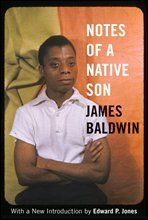
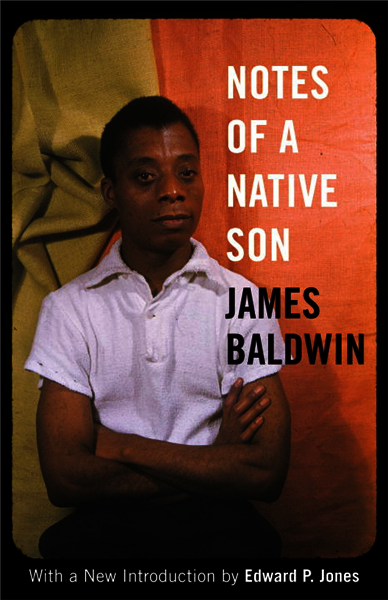
A new edition published on the twenty-fifth anniversary of Baldwin’s death, including a new introduction by an important contemporary writer
Since its original publication in 1955, this first nonfiction collection of essays by James Baldwin remains an American classic. His impassioned essays on life in Harlem, the protest novel, movies, and African Americans abroad are as powerful today as when they were first written. “A straight-from-the-shoulder writer, writing about the troubled problems of this troubled earth with an illuminating intensity.” —Langston Hughes, The New York Times Book Review “Written with bitter clarity and uncommon grace.” —Time From the Trade Paperback edition. |
품목정보
- 발행일
- 2012년 11월 20일
- 이용안내
-
- 배송 없이 구매 후 바로 읽기
- 이용기간 제한없음
- TTS 불가능
- 저작권 보호를 위해 인쇄 기능 제공 안함
- 지원기기
- 크레마,PC(윈도우 - 4K 모니터 미지원),아이폰,아이패드,안드로이드폰,안드로이드패드,PC(Mac)
- 파일/용량
- EPUB(DRM) | 1.80MB ?
- ISBN13
- 9780807006245
출판사 리뷰
|
From the Introduction
I did not know James Baldwin the essayist before my first year of college. I knew only the James Baldwin of novels and short stories and plays, a trusted man who gave me, with his Harlem and his Harlem people, the kind of world I knew so well from growing up in my Washington, D.C. They were all one family, the people in Harlem and the people in Washington, Baldwin told me in that way of all grand and eloquent writers who speak the eternal and universal by telling us, word by hard-won word, of the minutiae of the everyday: The church ladies who put heart and soul into every church service as if to let their god know how worthy they are to step through the door into his heaven. The dust of poor folks’ apartments that forever hangs in the air as though to remind the people of their station in life. The streets of a city where the buildings Negroes live in never stand straight up but lean in mourning every which way. So I knew this Baldwin and, in that strange way of members of the same family, he knew me. When I went off to college in late August 1968, I took few books, anticipating the adequacy of the library that awaited me at Holy Cross College. I packed only two books of nonfiction, both bought in a used bookstore not long after I was accepted to college. Both had never been read. The first was a ponderous 1950s to me on writing logical and well-reasoned essays. I was never to read it in my time at Holy Cross, perhaps because it was so inaccessible. (Seeing it on my dormitory room’s bookshelf, Clarence Thomas, a month before his graduation from Holy Cross in 1971, purchased the book from me for $5; I do not recall what I paid for it.) And the second was Notes of a Native Son. I was going off to a new life, a life of the mind and education among white people, and I felt that since Bald- win’s fiction had taught me so much about black people, his essays might have a similar effect given where I was going. I entered Holy Cross as a mathematics major, primarily because I had done well in math in high school. I was extremely shy then, and I had never had my vision tested and did not know enough about anything to realize that my frequent inability to see the blackboard could be solved with eyeglasses. I sat in the back of the freshman calculus class run by a standoffish professor who spent most of the period with his back to his students as he wrote on the blackboard, and with all of that, I fell further and further behind as the semester progressed. I will go into English, I told myself in December, knowing how much I loved to read and knowing that a calculus D was coming and so there would be no life in mathematics. Before leaving for Christmas vacation, I picked up Notes of a Native Son for the first time, perhaps understanding that now my life would be increasingly one of essay writing. The first thing James Baldwin tells me in “Autobiographical Notes” is, “I was born in Harlem. . . .” A simple, unadorned statement, as if in saying it plainly the reader would have a better sense of the importance of that fact. It was Harlem, but because I was so familiar with the Baldwin of fiction, the Baldwin whose black people could be Washingtonians, he could only have begun to connect in a better way if he had said, “I was born in Washington, D.C. . . .” A good bit of that introductory essay deals with being a writer, something that would not have much meaning for me for many years: the necessity of delving into oneself to be able to tell the truth about the world one writes about; the difficulties of being a Negro writer when “the Negro problem” is so widely written about; the desire, at the end of the day, to be “a good writer.” But within that short essay is a thirty-one-year-old, some- what worldly man (I did not get my first passport unti |