
소개
목차
|
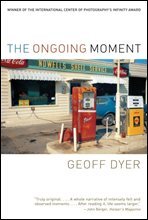
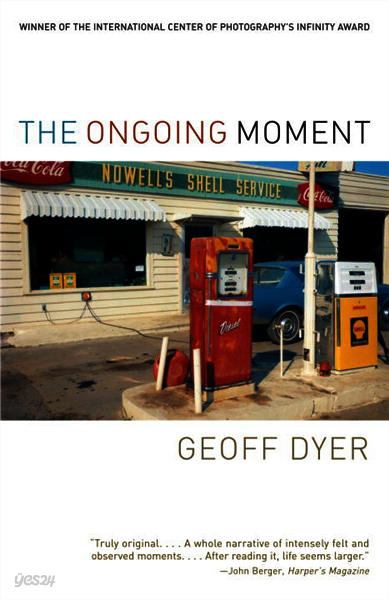
Great photographs change the way we see the world; The Ongoing Moment changes the way we look at both. Focusing on the ways in which canonical figures like Alfred Stieglitz, Paul Strand, Walker Evans, André Kertész, Edward Weston, Dorothea Lange, Diane Arbus, and William Eggleston have photographed the same things—barber shops, benches, hands, roads, signs–award-winning writer Geoff Dyer seeks to identify their signature styles. In doing so, he constructs a narrative in which these photographers–many of whom never met–constantly encounter one another. The result is a kaleidoscopic work of extraordinary originality and insight.
From the Trade Paperback edition. |
품목정보
- 발행일
- 2009년 11월 11일
- 이용안내
-
- 배송 없이 구매 후 바로 읽기
- 이용기간 제한없음
- TTS 불가능
- 저작권 보호를 위해 인쇄 기능 제공 안함
- 지원기기
- 크레마,PC(윈도우 - 4K 모니터 미지원),아이폰,아이패드,안드로이드폰,안드로이드패드,PC(Mac)
- 파일/용량
- EPUB(DRM) | 7.72MB ?
- ISBN13
- 9780307539199
출판사 리뷰
|
I am not the first researcher to draw inspiration from a ‘certain Chinese encyclopaedia’ described by Borges. According to this arcane work ‘animals are divided into: (a) those that belong to the Emperor; (b) embalmed ones; (c) those that are trained; (d) suckling pigs; (e) mermaids; (f) fabulous ones; (g) stray dogs; (h) those that are included in this classification; (i) those that tremble as if they were mad; (j) innumerable ones; (k) those drawn with a very fine camel’s-hair brush; (l) et cetera; (m) those that have just broken the flower vase; (n) those that at distance resemble flies.’
While the survey of photography undertaken in these pages can claim neither this degree of rigour nor eccentricity, it takes heart from earlier, well-intended attempts to marshal the infinite variety of photographic possibilities into some kind of haphazard order. Walker Evans said it was ‘a pet subject’ of his – how writers like James Joyce and Henry James were ‘unconscious photographers’. In the case of Walt Whitman there was nothing unconscious about it. ‘In these Leaves [of Grass] every thing is literally photographed,’ he insisted. ‘Nothing is poeticized.’ Keen to emulate the ‘Priests of the Sun’, Whitman created poems that, at times, read like extended captions in a huge, constantly evolving catalogue of photographs: See, in my poems, cities, solid, vast, inland, with paved streets, with iron and stone edifices, ceaseless vehicles, and commerce, See, the many-cylinder’d steam-printing-press – see, the electric telegraph stretching across the continent, [. . .] See, the strong and quick locomotive as it departs, panting, blowing the steam-whistle, See ploughmen ploughing farms – see, miners digging mines – see, the numberless factories, See mechanics busy at their benches with tools [. . .] For his part Evans, in 1934, compiled a list of picture categories as a way of clarifying his own ideas about what he was trying to do in his work: People, all classes, surrounded by bunches of the new down-and-out. Automobiles and the automobile landscape. Architecture, American urban taste, commerce, small scale, large scale, clubs, the city atmosphere, the street smell, the hateful stuff, women’s clubs, fake culture, bad education, religion in decay. The movies. Evidence of what people of the city read, eat, see for amusement, do for relaxation and not get it. Sex. Advertising. A lot else, you see what I mean. The cultural historian Alan Trachtenberg has pointed out that this list calls to mind Lewis Hine’s earlier Catalogue of Social and Industrial Photographs, ‘only seasoned with Evans’s irony’. But it’s more than irony that sets the two endeavours apart. Hine’s is an entirely logical and rigorous listing – ‘Immigrants’, ‘Women Workers at Work’, ‘Men Workers at Work’, ‘Incidents of a Worker’s Life’ and so on – comprising over a hundred topics and more than eight hundred sub-topics.* A model of orderly arrangement and organization, it is entirely lacking in the provisional, highly contingent and ultimately unsustainable (‘a lot else’) quality of Evans’s catalogue of his own intentions. Some of Evans’s best-known work was done under the auspices of the Farm Security Administration between 1935–37. Known first as the Resettlement Administration, this was one of Roosevelt’s New Deal agencies aimed at improving the lot of poor farmers and sharecroppers brought to the brink of starvation by the Depression. The FSA was headed by the economist Rexford Tugwell who, in 1935, appointed his old teaching assistant Roy Stryker to run the Historical S |
