
소개
목차
|
“To my taste, the greatest American myth of cosmogenesis features the maladjusted, antisocial, genius teenage boy who, in the insular laboratory of his own bedroom, invents the universe from scratch. Masters of Doom is a particularly inspired rendition. Dave Kushner chronicles the saga of video game virtuosi Carmack and Romero with terrific brio. This is a page-turning, mythopoeic cyber-soap opera about two glamorous geek geniuses—and it should be read while scarfing down pepperoni pizza and swilling Diet Coke, with Queens of the Stone Age cranked up all the way.” —Mark Leyner, author of I Smell Esther Williams
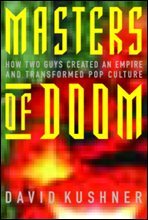
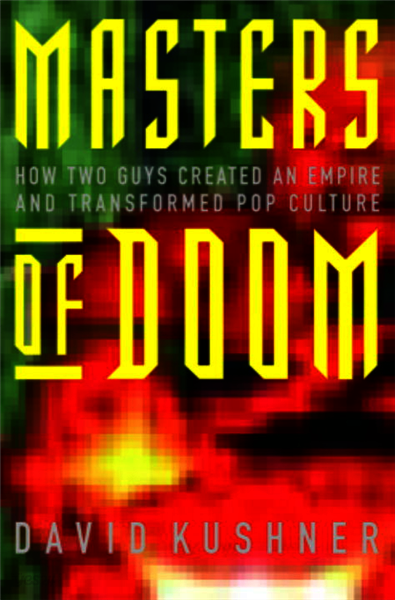
Masters of Doom is the amazing true story of the Lennon and McCartney of video games: John Carmack and John Romero. Together, they ruled big business. They transformed popular culture. And they provoked a national controversy. More than anything, they lived a unique and rollicking American Dream, escaping the broken homes of their youth to co-create the most notoriously successful game franchises in history—Doom and Quake—until the games they made tore them apart. Americans spend more money on video games than on movie tickets. Masters of Doom is the first book to chronicle this industry’s greatest story, written by one of the medium’s leading observers. David Kushner takes readers inside the rags-to-riches adventure of two rebellious entrepreneurs who came of age to shape a generation. The vivid portrait reveals why their games are so violent and why their immersion in their brilliantly designed fantasy worlds offered them solace. And it shows how they channeled their fury and imagination into products that are a formative influence on our culture, from MTV to the Internet to Columbine. This is a story of friendship and betrayal, commerce and artistry—a powerful and compassionate account of what it’s like to be young, driven, and wildly creative. From the Hardcover edition. |
품목정보
- 발행일
- 2003년 04월 24일
- 이용안내
-
- 배송 없이 구매 후 바로 읽기
- 이용기간 제한없음
- TTS 불가능
- 저작권 보호를 위해 인쇄 기능 제공 안함
- 지원기기
- 크레마,PC(윈도우 - 4K 모니터 미지원),아이폰,아이패드,안드로이드폰,안드로이드패드,PC(Mac)
- 파일/용량
- EPUB(DRM) | 0.37MB ?
- ISBN13
- 9781588362896
출판사 리뷰
|
Chapter 1
The Rock Star Eleven-year-old John Romero jumped onto his dirt bike, heading for trouble again. A scrawny kid with thick glasses, he pedaled past the modest homes of Rocklin, California, to the Roundtable Pizza Parlor. He knew he wasn’t supposed to be going there this summer afternoon in 1979, but he couldn’t help himself. That was where the games were. Specifically, what was there was Asteroids, or, as Romero put it, “the coolest game planet Earth has ever seen!” There was nothing else like the feeling he got tapping the control buttons as the rocks hurled toward his triangular ship and the Jaws-style theme music blipped in suspense, dum dum dum dum dum dum; Romero mimicked these video game sounds the way other kids did celebrities. Fun like this was worth risking everything: the crush of the meteors, the theft of the paper route money, the wrath of his stepfather. Because no matter what Romero suffered, he could always escape back into the games. At the moment, what he expected to suffer was a legendary whipping. His stepfather, John Schuneman—a former drill sergeant—had commanded Romero to steer clear of arcades. Arcades bred games. Games bred delinquents. Delinquency bred failure in school and in life. As his stepfather was fond of reminding him, his mother had enough problems trying to provide for Romero and his younger brother, Ralph, since her first husband left the family five years earlier. His stepfather was under stress of his own with a top-secret government job retrieving black boxes of classified information from downed U.S. spy planes across the world. “Hey, little man,” he had said just a few days before, “consider yourself warned.” Romero did heed the warning—sort of. He usually played games at Timothy’s, a little pizza joint in town; this time he and his friends headed into a less traveled spot, the Roundtable. He still had his initials, AJR for his full name, Alfonso John Romero, next to the high score here, just like he did on all the Asteroids machines in town. He didn’t have only the number-one score, he owned the entire top ten. “Watch this,” Romero told his friends, as he slipped in the quarter and started to play. The action didn’t last long. As he was about to complete a round, he felt a heavy palm grip his shoulder. “What the fuck, dude?” he said, assuming one of his friends was trying to spoil his game. Then his face smashed into the machines. Romero’s stepfather dragged him past his friends to his pickup truck, throwing the dirt bike in the back. Romero had done a poor job of hiding his bike, and his stepfather had seen it while driving home from work. “You really screwed up this time, little man,” his stepfather said. He led Romero into the house, where Romero’s mother and his visiting grandmother stood in the kitchen. “Johnny was at the arcade again,” his stepfather said. “You know what that’s like? That’s like telling your mother ‘Fuck you.’ ” He beat Romero until the boy had a fat lip and a black eye. Romero was grounded for two weeks. The next day he snuck back to the arcade. Romero was born resilient, his mother, Ginny, said, a four-and-one-half-pound baby delivered on October 28, 1967, six weeks premature. His parents, married only a few months before, had been living long in hard times. Ginny, good-humored and easygoing, met Alfonso Antonio Romero when they were teenagers in Tucson, Arizona. Alfonso, a first-generation Mexican American, was a maintenance man at an air force base, spending his days fixing air conditioners and heating systems. After Alfonso and Ginny got married, they headed in a 1948 Chrysler with three hundred dollars to Colorado, hoping their interracial relationship would thrive in more tolerant surroundings. |