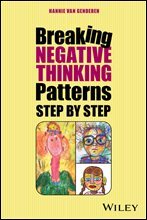


소개
목차
|
List of exercises viii
Preface x 1 Introduction 1 The five steps 1 Introducing: Sarah, Martin and Nora 3 2 What are modes and pitfalls? 10 How do modes arise? 10 Basic needs and pitfalls 11 Coping styles 17 Modes 19 Unhelpful modes 23 Child modes 23 Critical modes 33 Coping modes 42 Helpful modes 58 Healthy adult mode 58 Happy child mode 59 Summary 60 3 Step 1: Discovering your own modes 63 Where do you start? 63 Making your mode model 77 A plan to change your modes 79 Difficult moments 80 Step 1 Overview 87 4 Step 2: Recognising modes in everyday situations 89 Aids in recognising your modes 93 Difficult moments 97 Step 2 Overview 100 5 Step 3: Starting to change modes 102 A closer look at the seven sub- goals 103 How does an appointment with your therapist go? 108 Exercises to change your modes 111 Gaining new experiences 111 Changing thoughts 134 Changing behaviour 137 Difficult moments 141 Step 3 Overview 145 6 Step 4: Changing your modes independently 147 Setting goals 148 How does an appointment with your therapist go? 150 Changing modes in your own way 151 Gaining new experiences 151 Changing thoughts 171 Changing behaviour 178 Strengthening the healthy adult 178 Learning to care for the vulnerable child 183 Learning a balanced way to express your anger 185 Limiting the impulsive, undisciplined or spoilt child 195 Strengthening the Changing thoughts 203 Changing behaviour 204 Difficult moments 205 Step 4 Overview 211 7 Step 5: Continuing to change modes in the future 214 Recognising and changing modes early, and identifying triggers 214 Gaining new experiences 215 Changing thoughts 222 Changing behaviour 222 A plan to prevent relapse 225 Difficult moments 226 Step 5 Overview 230 8 In conclusion 232 Appendix 1: Mode model worksheet 235 Appendix 2: Self- inquiry circle worksheet 237 Appendix 3: Thought journal worksheet 238 Appendix 4: Visualisation exercise worksheet 240 Appendix 5: Role- play worksheet 242 Appendix 6: Homework form worksheet 244 Appendix 7: Positive logbook worksheet 246 Appendix 8: Changing behavioural patterns worksheet 248 Bibliography 250 Index 252 |
저자 소개
HANNIE VAN GENDEREN is a clinical psychologist, psychotherapist, and supervisor and trainer in individual and group Schema Therapy. Since 1990 she has been involved as a senior consultant and clinical psychologist in the treatment and research of anxiety eating and personality disorders at the University of Maastricht. A pioneer in introducing Schema Therapy for personality disorders in the Netherlands, she co-founded the Dutch Schema Therapy Society and the International Society of Schema Therapy, serving in leadership roles in both organizations. She is the founder of the Dutch Schema Therapy Training Institute “Van Genderen Opleidingen”.
품목정보
- 발행일
- 2026년 06월 16일
- 지원기기
- 크레마,PC(윈도우 - 4K 모니터 미지원),아이폰,아이패드,안드로이드폰,안드로이드패드,PC(Mac)
- 파일/용량
- EPUB(DRM) | 6.46MB ?
- ISBN13
- 9781394360369
- ECN