
소득공제
EPUB
eBook
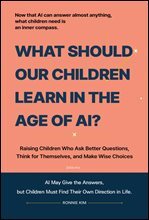
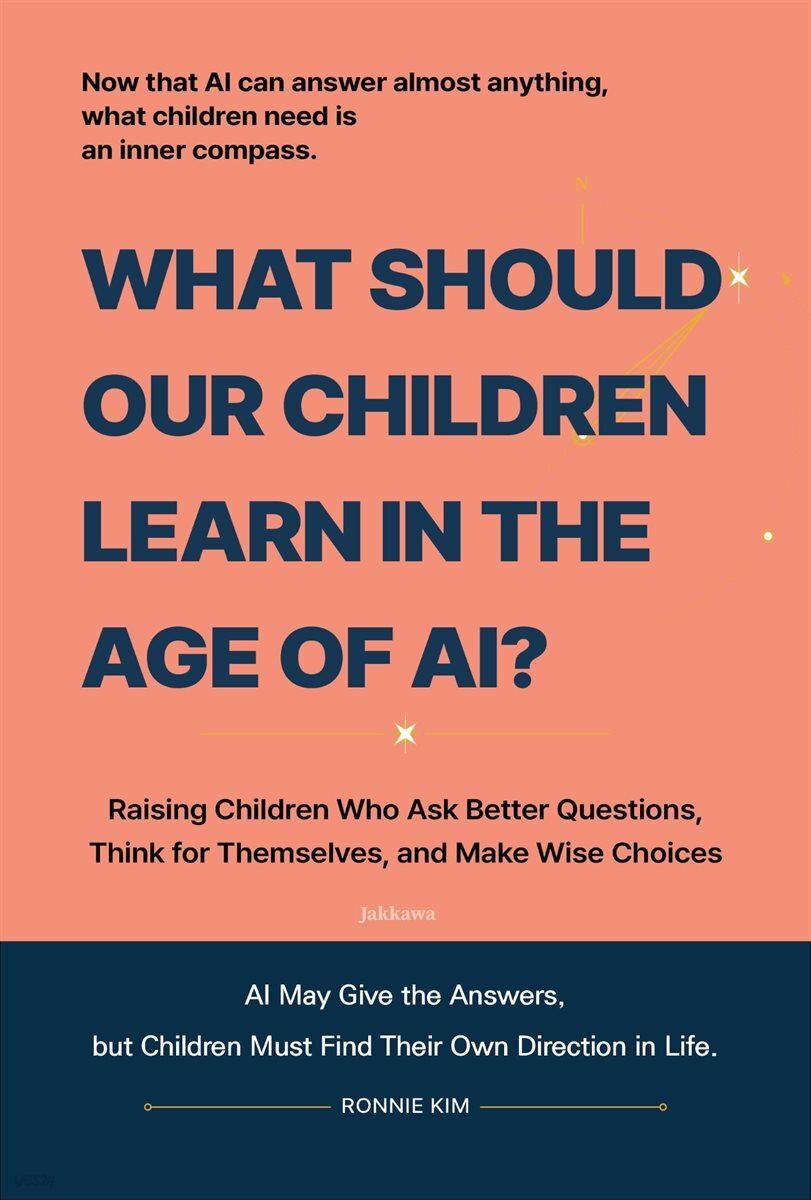
What Should Our Children Learn in the Age of AI?
Raising Children Who Ask Better Questions, Think for Themselves, and Make Wise Choices
EPUB
작가와
2026.08.10.
소개
목차
|
Prologue
? For Parents Who Feel Lost Now That AI Can Answer Almost Anything How to Use This Book ? 1. You Do Not Have to Do Everything ? 2. See Your Child Before Looking for the Right Answer ? 3. The One Question to Keep in Mind While Reading This Book Part 1. Why Parents Feel Lost in the Age of AI ? The More Information We Have, the More We Need an Inner Compass Chapter 1. When Coding, English, and Literacy All Seem Important ? What Should My Child Learn First to Avoid Falling Behind? Chapter 2. If AI Can Give the Answers, Is There Still a Reason to Study? ? Why Does My Child Need to Study When AI Can Do So Much? Chapter 3. Parents Lose Their Way Before Their Children Do ? Is My Anxiety Being Passed On to My Child? Chapter 4. It Is Time to Change the Questions We Ask About Education ? Instead of Asking What to Teach, What Should We Ask? Part 2. Before Seeking Answers, Children Need an Inner Compass ? Children with an Inner Compass Do Not Easily Lose Their Way Chapter 5. Direction Comes Before Independence ? Is Self-Directed Learning Enough? Chapter 6. A Simpler Idea Than an Inner Axis: an Inner Compass ? What Should We Help Our Children Build Within Themselves? Chapter 7. Children with Standards Are Not Easily Led by AI ? What Standards Should We Teach Our Children to Use? Chapter 8. AI May Give the Answers, but Children Must Find Their Own Direction ? What Should Children Do When AI Gives Them the Answer? Part 3. Asking, Reading, and Speaking Move the Inner Compass ? Raising Children Who Ask Better Questions, Not Just Children Who Get Better Grades Chapter 9. Children Who Ask Better Questions, Not Just Children Who Get Better Grades ? Why Is Asking Good Questions So Important? Chapter 10. Good Questions Are Grown, Not Born ? Why Does My Child Not Ask Questions? Chapter 11. Why Children Must Read More Deeply When AI Can Read for Them ? Can Reading a Summary Really Count as Learning? Chapter 12. If You Cannot Explain It, It Is Not Yet Your Own Thought ? Why Can My Child Not Explain Something They Seem to Understand? Part 4. Children Need Standards Before Trusting AI’s Answers ? Children with an Inner Compass Do Not Accept AI’s Answers Without Question Chapter 13. AI Does Not Think; It Combines ? Why Can AI Give Answers That Sound Convincing but Are Wrong? Chapter 14. The Question “Is That Really True?” Protects Children ? How Can We Teach Critical Thinking? Chapter 15. Children Who Check Sources Are Not Easily Misled ? How Can Children Tell Real Information from False Information? Chapter 16. Using AI Without Standards Eventually Becomes Dependence ? Where Is the Line Between Convenience and Dependence? Part 5. Raising Children Who Guide AI, Not Children Who Are Guided by It ? AI Is a Tool, but the Inner Compass Must Remain Within the Child Chapter 17. Should Children Be Allowed to Use ChatGPT, or Should It Be Restricted? ? When Is It Appropriate for Children to Begin Using AI? Chapter 18. How Much AI Help with Homework Should Be Allowed? ? Is This Learning, or Is It Plagiarism? Chapter 19. Can an AI Tutor Replace a Private Academy? ? Is an AI Learning App Enough? Chapter 20. Children Who Consume AI and Children Who Create with AI Are Different ? Can Children Who Mainly Play Games and Watch YouTube Still Be Creative? Part 6. A Career Is Not a Job Title but a Direction ? Children with Direction Do Not Lose Their Way When Jobs Change Chapter 21. Look Beyond Disappearing Jobs to the Abilities That Endure ? Will AI Replace Doctors, Lawyers, and Developers? Chapter 22. Should Children Learn Coding or Computational Thinking? ? Will My Child Fall Behind Without Coding Classes? Chapter 23. English Is Not Just a Score but a Tool for Expanding the World ? Should Children Keep Learning English When AI Can Translate? Chapter 24. A Child’s View of the World Begins with What They Love ? Is It All Right for My Child to Be Absorbed in Things That Seem Useless? Part 7. In the End, What Protects Children Is Their Humanity ? As Technology Accelerates, the Direction of the Heart Matters More Chapter 25. AI Can Imitate Empathy, but It Cannot Replace It ? Is Being Smart Enough? Chapter 26. Resilience Is the Ability to Find Direction Again After Getting Lost ? How Can We Help a Child Who Gives Up When Things Become Difficult? Chapter 27. The More Online Relationships Grow, the More Offline Trust Matters ? Is It All Right for Children to Meet Friends Only Through Social Media or Games? Chapter 28. Using AI Without Ethics Puts Children at Risk ? How Should We Teach Digital Manners and AI Ethics? Part 8. Parents Are Not Controllers but People Who Place a Compass in a Child’s Hand ? A Parent’s Direction Shapes a Child’s Direction Chapter 29. Ask What to Remove, Not Only What More to Add ? What Should We Do When We Cannot Let Go of Anything? Chapter 30. Every Child Needs a Different Kind of Compass ? What Should We Do When Popular Methods Do Not Suit Our Child? Chapter 31. Creating Our Family’s Own Rules for Using AI ? What Should We Do When We Fight Every Day About Smartphones and AI? Chapter 32. The Greatest Gift Parents Can Give ? In the End, What Can Parents Truly Give Their Children? Epilogue ? AI May Give the Answers, but Children Must Find Their Own Direction in Life |
저자 소개
Ronnie Kim
Ronnie Kim is a technology professional with more than twenty years of experience in software development and the father of three children—one in high school, one in middle school, and one in elementary school. He currently works in a software development organization, where he handles technical reviews, discussions about new features, schedule and risk management, coordination across departments, and AI and AX transformation initiatives. Through this work, he has closely observed how technology is changing human roles and the standards by which work is evaluated.
Yet understanding technology and raising children well turned out to be entirely different challenges. Even as an experienced technology professional, he found himself facing the same uncertainty as other parents when deciding what his children should learn about coding, English, literacy, and ChatGPT. The moments when he rushed to provide answers—and unintentionally interrupted his children’s thinking—became the starting point of this book.
Drawing on conversations with his three very different children and on his own mistakes as a parent, he wrote this book to share an “inner compass for thinking”—a standard that helps parents return their attention to the child amid an endless stream of information. Rather than presenting more educational methods, he hopes to offer one clear standard that parents can return to whenever they feel uncertain.
His previous books include How Long Will Developers Still Be Needed?, Arduino Sensors for Everyone, and Game School with Entry and Arduino.
Ronnie Kim is a technology professional with more than twenty years of experience in software development and the father of three children—one in high school, one in middle school, and one in elementary school. He currently works in a software development organization, where he handles technical reviews, discussions about new features, schedule and risk management, coordination across departments, and AI and AX transformation initiatives. Through this work, he has closely observed how technology is changing human roles and the standards by which work is evaluated.
Yet understanding technology and raising children well turned out to be entirely different challenges. Even as an experienced technology professional, he found himself facing the same uncertainty as other parents when deciding what his children should learn about coding, English, literacy, and ChatGPT. The moments when he rushed to provide answers—and unintentionally interrupted his children’s thinking—became the starting point of this book.
Drawing on conversations with his three very different children and on his own mistakes as a parent, he wrote this book to share an “inner compass for thinking”—a standard that helps parents return their attention to the child amid an endless stream of information. Rather than presenting more educational methods, he hopes to offer one clear standard that parents can return to whenever they feel uncertain.
His previous books include How Long Will Developers Still Be Needed?, Arduino Sensors for Everyone, and Game School with Entry and Arduino.
품목정보
- 발행일
- 2026년 08월 10일
- 지원기기
- 크레마,PC(윈도우 - 4K 모니터 미지원),아이폰,아이패드,안드로이드폰,안드로이드패드,전자책단말기(저사양 기기 사용 불가),PC(Mac)
- 파일/용량
- EPUB(DRM) | 1.27MB ?
- 글자 수/ 페이지 수
- 약 36만자, 약 7.9만 단어, A4 약 226쪽 ?
- ISBN13
- 9791143818195