
소개
목차
|
Contents
CHAPTER I. The marriage of Albert Bradley CHAPTER II. The week dragged by CHAPTER III. It was a happy time CHAPTER IV. They had been married eleven days CHAPTER V. They both were destined to learn CHAPTER VI. It was their first Christmas CHAPTER VII. She was still the centre CHAPTER VIII. The Old Hill House CHAPTER IX. When the second boy came CHAPTER X. Nevertheless, she accepted the invitation CHAPTER XI. The dinner was an ordeal CHAPTER XII. But it was almost a year CHAPTER XIII. For a year or two the Bradleys CHAPTER XIV. So the Bradleys had a bank account CHAPTER XV. One day Bert told Nancy CHAPTER XVI. However, on Sunday she forgot CHAPTER XVII. Twenty-five thousand CHAPTER XVIII. An hour later CHAPTER XIX. That same week CHAPTER XX. The rest of that summer CHAPTER XXI. Up to this time CHAPTER XXII. Miraculously CHAPTER XXIII. Life spun on CHAPTER XXIV. There was a brief halt CHAPTER XXV. There was no stopping half way CHAPTER XXVI. Worse than any real CHAPTER XXVII. But Nancy began to ask herself seriously CHAPTER XXVIII. Bert was very late CHAPTER XXIX. No formal reconciliation ended CHAPTER XXX. The whole trouble is that Bert loves CHAPTER XXXI. Dummy again CHAPTER XXXII. The last words were no more than a breath CHAPTER XXXIII. Blinded with an exquisite rush of tears CHAPTER XXXIV. His mother had straightened her hair CHAPTER XXXV. For two hours more the Bradleys sat CHAPTER XXXVI. That night they slept CHAPTER XXXVII. Contentedly, the Bradleys dined CHAPTER XXXVIII. Another silence |
저자 소개
캐슬린 톰프슨 노리스는 20세기 전반 미국에서 가장 널리 읽힌 대중 소설가 가운데 한 사람이다. 1880년 샌프란시스코에서 태어나 유복한 어린 시절을 보냈으나, 열아홉 무렵 부모를 잇달아 여의면서 하루아침에 어린 동생들을 부양해야 하는 처지가 되었다. 이후 몇 해 동안 그녀는 회계원, 상점 점원, 교사, 신문기자 등 손에 닿는 일을 가리지 않고 하며 생계를 꾸렸고, 이때 몸으로 겪은 노동과 궁핍의 감각은 훗날 그녀 소설의 밑바탕이 되었다.
1909년 작가 찰스 길먼 노리스와 결혼해 뉴욕으로 옮겨간 뒤, 1911년 첫 장편 『Mother』를 발표하며 단숨에 이름을 알렸다. 이 작품은 평단과 대중 양쪽의 호응을 얻었고, 그녀는 곧 미국에서 가장 높은 원고료를 받는 작가 대열에 올랐다. 이후 반세기 가까이 그녀는 여든 편이 넘는 소설과 수많은 단편을 써냈다.
노리스의 소설은 대체로 평범한 여성들의 삶을 다룬다. 일과 사랑 사이에서 흔들리는 젊은 여자, 가난에서 벗어나려 애쓰는 딸, 결혼 생활의 환멸을 견디는 아내들이 그녀의 주인공이다. 감상적이고 낙관적인 결말로 흐른다는 비판을 받기도 했지만, 여성의 경제적 자립과 가정 안의 불평등을 정면으로 다룬 점에서 당대 독자들, 특히 여성 독자들의 깊은 공감을 얻었다. 만년에는 캘리포니아로 돌아가 반전 운동과 사형제 폐지 운동에 목소리를 냈으며, 1966년 샌프란시스코에서 세상을 떠났다.
Kathleen Thompson Norris was among the most widely read popular novelists in America during the first half of the twentieth century. Born in San Francisco in 1880, she grew up in comfortable circumstances until, at nineteen, she lost both parents within a matter of weeks and found herself responsible for her younger siblings. For several years afterward she took whatever work she could find ? bookkeeper, shop clerk, teacher, newspaper reporter ? and the experience of labor and near-poverty would later supply the ground beneath much of her fiction.
In 1909 she married the writer Charles Gilman Norris and moved to New York. Her first novel, Mother, appeared in 1911 and brought her immediate recognition from critics and general readers alike; before long she was one of the best-paid writers in the country. Over the next half-century she produced more than eighty novels along with a great many short stories.
Her books are, for the most part, about ordinary women: the young woman caught between work and love, the daughter trying to climb out of poverty, the wife enduring the disillusionments of marriage. She was faulted at times for sentimentality and for endings that came too easily, but her willingness to treat women's economic independence and the inequalities of domestic life as serious subjects won her a devoted readership, particularly among women. In her later years she returned to California and spoke publicly against war and capital punishment. She died in San Francisco in 1966.
1909년 작가 찰스 길먼 노리스와 결혼해 뉴욕으로 옮겨간 뒤, 1911년 첫 장편 『Mother』를 발표하며 단숨에 이름을 알렸다. 이 작품은 평단과 대중 양쪽의 호응을 얻었고, 그녀는 곧 미국에서 가장 높은 원고료를 받는 작가 대열에 올랐다. 이후 반세기 가까이 그녀는 여든 편이 넘는 소설과 수많은 단편을 써냈다.
노리스의 소설은 대체로 평범한 여성들의 삶을 다룬다. 일과 사랑 사이에서 흔들리는 젊은 여자, 가난에서 벗어나려 애쓰는 딸, 결혼 생활의 환멸을 견디는 아내들이 그녀의 주인공이다. 감상적이고 낙관적인 결말로 흐른다는 비판을 받기도 했지만, 여성의 경제적 자립과 가정 안의 불평등을 정면으로 다룬 점에서 당대 독자들, 특히 여성 독자들의 깊은 공감을 얻었다. 만년에는 캘리포니아로 돌아가 반전 운동과 사형제 폐지 운동에 목소리를 냈으며, 1966년 샌프란시스코에서 세상을 떠났다.
Kathleen Thompson Norris was among the most widely read popular novelists in America during the first half of the twentieth century. Born in San Francisco in 1880, she grew up in comfortable circumstances until, at nineteen, she lost both parents within a matter of weeks and found herself responsible for her younger siblings. For several years afterward she took whatever work she could find ? bookkeeper, shop clerk, teacher, newspaper reporter ? and the experience of labor and near-poverty would later supply the ground beneath much of her fiction.
In 1909 she married the writer Charles Gilman Norris and moved to New York. Her first novel, Mother, appeared in 1911 and brought her immediate recognition from critics and general readers alike; before long she was one of the best-paid writers in the country. Over the next half-century she produced more than eighty novels along with a great many short stories.
Her books are, for the most part, about ordinary women: the young woman caught between work and love, the daughter trying to climb out of poverty, the wife enduring the disillusionments of marriage. She was faulted at times for sentimentality and for endings that came too easily, but her willingness to treat women's economic independence and the inequalities of domestic life as serious subjects won her a devoted readership, particularly among women. In her later years she returned to California and spoke publicly against war and capital punishment. She died in San Francisco in 1966.
품목정보
- 발행일
- 2026년 09월 11일
- 지원기기
- 크레마,PC(윈도우 - 4K 모니터 미지원),아이폰,아이패드,안드로이드폰,안드로이드패드,전자책단말기(저사양 기기 사용 불가),PC(Mac)
- 파일/용량
- EPUB(DRM) | 27.68MB ?
- 글자 수/ 페이지 수
- 약 16.7만자, 약 3.6만 단어, A4 약 105쪽 ?
- ISBN13
- 9791176152785
출판사 리뷰
|
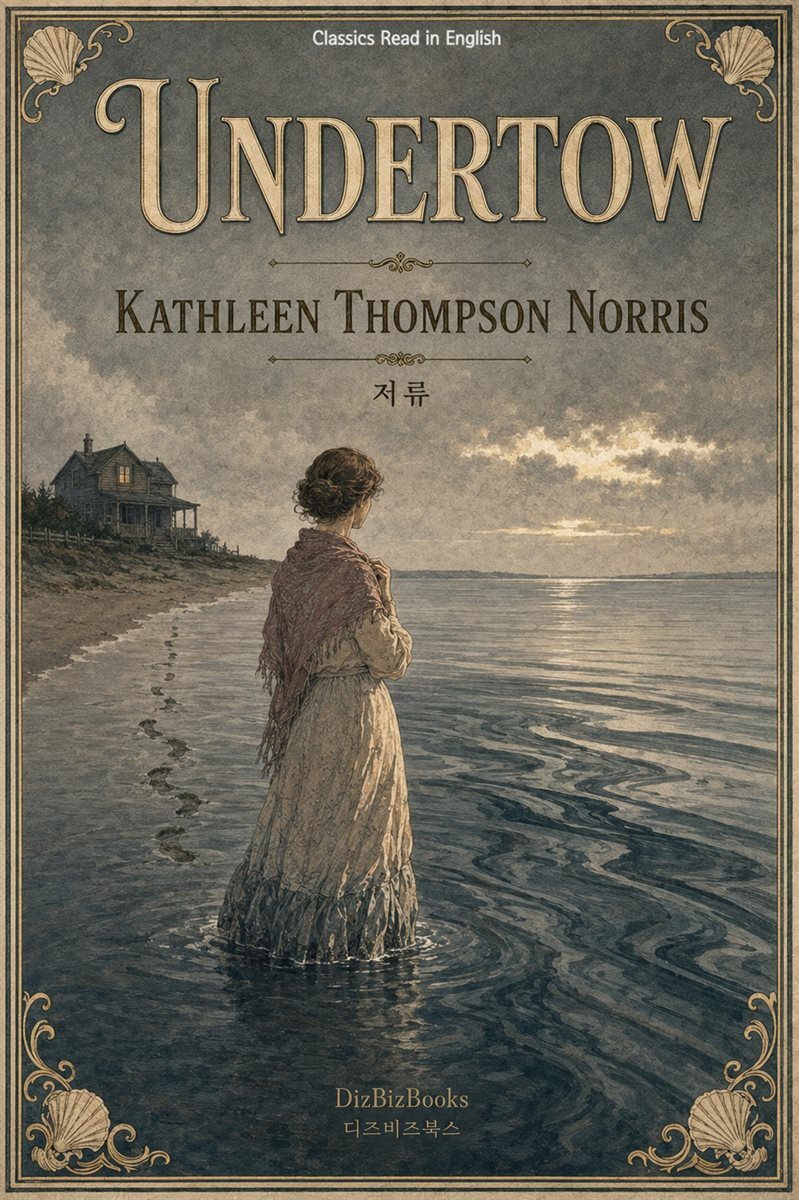
제목이 모든 것을 말한다. 저류(undertow)는 눈에 보이지 않는다. 수면은 잔잔한데 발밑에서 무언가가 계속 끌어당긴다. 노리스는 이 소설에서 결혼을 그렇게 그린다.
낸시와 버트는 반대를 무릅쓰고 결혼한다. 이유는 단순하다. 돈이 없기 때문이다. 그리고 이 소설의 대부분은 그 사실이 몇 해에 걸쳐 두 사람을 어떻게 바꾸어 놓는지를 따라간다. 극적인 배신도, 결정적인 사건도 없다. 대신 셋집이 좁아지고 아이가 늘고 계산이 매달 어긋난다. 노리스가 가장 잘하는 것이 이런 축적의 서술이다. 결혼이 무너질 때 그것은 대개 한순간이 아니라 천천히 마모되는 방식이라는 사실을, 그녀는 알고 있다. 낸시라는 인물이 특히 좋다. 결혼 전에는 스스로 벌어 살던 여자가 어떻게 자기 시간을 잃어 가는지, 그 상실을 스스로도 오래 알아차리지 못한다는 점이 아프게 그려진다. 후반부의 도덕적 결론은 다소 성급하고 관대하다. 그럼에도 이 책은 남는다. 사랑이 부족해서가 아니라 삶이 사랑을 다 써 버릴 수도 있다는 것을, 조용히 그러나 분명하게 말하기 때문이다. The title does the work. An undertow is invisible: the surface stays calm while something below keeps pulling. That is how Norris renders a marriage in this book. Nancy and Bert marry against their families' wishes for the simplest reason ? they have no money ? and most of the novel consists of watching what that fact does to them across a span of years. There is no dramatic betrayal, no decisive catastrophe. There are smaller rooms, more children, and accounts that come out wrong month after month. Accumulation is what Norris does best, and she understands that marriages usually fail not in a moment but by slow wear. Nancy is the finest thing in the book. A woman who earned her own living before her wedding, she loses her hours so gradually that she cannot say when it happened, and the novel is painfully good on that unnoticed subtraction. The moral resolution in the final chapters arrives too quickly and forgives too readily. Even so, the book stays with you, because it says something quietly true: a marriage can fail not for want of love but because ordinary life spends all of it. |