
- PDF 안내
-
이 상품은 구매 후 지원 기기에서 예스24 eBook앱 설치 후 바로 이용 가능한 상품입니다.
소개
목차
|
Preface xiii Chapter 1 Source of Algorithmic Powers 1 Chapter 2 Mechanism of Algorithmic Powers 43 Chapter 3 Algorithmic-Defined Human Worth 91 Chapter 4 Humane Algorithmic Transition 159 Chapter 5 Algorithmic Constitutionality 219 Glossary 301 |
품목정보
- 발행일
- 2026년 09월 22일
- 지원기기
- 크레마, PC(윈도우 - 4K 모니터 미지원), 아이폰, 아이패드, 안드로이드폰, 안드로이드패드, PC(Mac)
- 파일/용량
- PDF(DRM) | 2.41MB ?
- 글자 수/ 페이지 수
- 약 419쪽 ?
- ISBN13
- 9781394449309
- ECN
출판사 리뷰
|
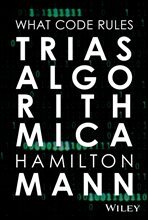
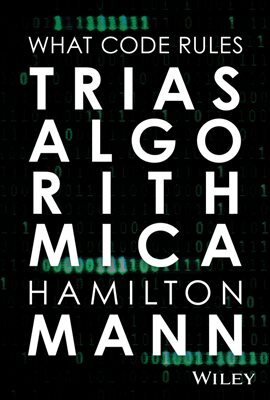
“A fascinating assessment for the age of AI. Who decides, on what basis, and backed by what kind of legitimacy? Everyone who cares about democracy should pay attention.” ??Simon Johnson, Ronald A. Kurtz Professor of Entrepreneurship, head of the Global Economics and Management Group at MIT Sloan; 2024 Nobel Laureate in Economic Sciences; co-author of?Power and Progress ? "Mann comprehensively applies a separation of powers framework to critique current AI and prescribe its better development and use. Trias Algorithmica demonstrates that no AI system should consolidate the power to set goals, to execute them, and to judge whether they have been executed well. This is remarkably creative work that sheds new light on AI governance."? ??Frank Pasquale, Professor of Law at Cornell University; Author of The Black Box Society ? "I build the systems this book is about. This is not a comfortable book for builders. It should not be. Engineering decisions are constitutional decisions wearing technical clothing. The most consequential systems of the coming decade will be judged less by what they can do than by whether their power can be answered for. Mann gives us a vocabulary, and an architecture, for that answering." ??Amnon Shashua, Founder, President and CEO at Mobileye; Sachs Professor of Computer Science at the?Hebrew University of Jerusalem ? "In this fascinating book, Mann argues that opaque, unaccountable algorithmic systems ? like social media platforms, AI chatbots, or predictive policing ? play three governance roles at once: they make policy, they execute the laws they've created, and they distribute justice according to their own notions of fairness. A compelling approach to restoring accountability in algorithmic governance." ? Cathy O’Neil, Mathematician, Founder?of ORCAA; Author of?Weapons of Math Destruction?and?The Shame Machine ? "Trias Algorithmica?reframes AI governance around a simple democratic principle: people must retain the right to question, contest, and reshape the systems that shape them. A timely contribution to a more accountable digital future." ??Audrey Tang, Taiwan's Cyber Ambassador; co-author of Civic AI and Plurality ? "Mann offers a critical warning: As algorithms learn to govern, humanity must relearn how to constrain power. For seventy years we have asked whether machines can think. Hamilton Mann argues we've been asking the wrong question.?The one that matters now is whether machine decisions can in fact be?legitimate." ??Marshall Van Alstyne, Allen and Kelli Questrom Professor in Information Economics at Boston University Questrom School of Business;?Co-author of Platform Revolution ? "As AI systems increasingly shape what we see, choose, and become, Trias Algorithmica is an ambitious call to build transparency, appeal, and human judgment into the architecture of AI itself.”? ??Nita Farahany, Robinson O. Everett Professor of Law and Philosophy at Duke University; Author of The Battle for Your Brain ? “A necessary book for anyone trying to understand how AI is changing power itself. Hamilton Mann brings a rare combination of technological fluency and moral urgency to one of the defining questions of our time.” ??Sinan Aral,?David Austin Professor of Management, Marketing, IT and Data Science at MIT;?Author of The Hype Machine ? "Machines are now deciding. They are fusing the rule-maker, executioner, and judge into a single algorithm. Trias Algorithmica makes the danger unmistakable. An essential and timely read." ??Vivienne Ming, CEO and Founder at Socos Labs; Visiting Professor at UCL Global Business School for Health; Author of Robot-Proof ? "An ambitious and thought-provoking contribution to the growing conversation about governance, accountability and power in the age of AI, one that business and policy leaders can no longer afford to ignore." ??Geoffrey Parker,?Charles E. Hutchinson ’68A Professor of Engineering Innovation at Dartmouth; Co-author of Platform Revolution |
