
이미지 검색을 사용해 보세요
검색창 이전화면 이전화면
최근 검색어
인기 검색어

소득공제 PDF
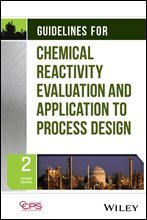
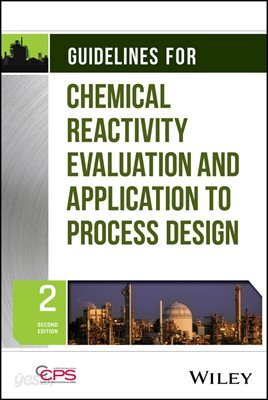
eBook Guidelines for Chemical Reactivity Evaluation and Application to Process Design
스마트한 PDF 필기 기능을 사용해 보세요!
저
Wiley-AIChE 2026.09.23.
가격
218,400원
218,400
YES포인트?
10,920원 (5%)
5만원 이상 구매 시 2천원 추가 적립
결제혜택
카드/간편결제 혜택을 확인하세요
PDF 안내

이 상품은 구매 후 지원 기기에서 예스24 eBook앱 설치 후 바로 이용 가능한 상품입니다.

예스24만의 독보적인 PDF 필기 기능을 경험해 보세요!

소개

목차

List of Figures v
List of Tables ix
List of Symbols x
Acronyms and Abbreviations xiii
Glossary xix
Acknowledgments xxxviii
Dedication xl
Foreword xlii
Preface xliii

1 Introduction 1
1.1 Scope 1
1.2 Overview 2
1.3 Effective Reactive Chemical Management 9
1.4 Summary 11

2 Key Elements of Chemical Reactivity 13
2.1 The Nature of Reactive Chemistry 13
2.2 Energy and Molecular Transformation 17
2.3 Types of Chemistry 20
2.4 Loss of Control of Reaction 21
2.5 Process Risk Assessment 27
2.6 Process Scale-Up and Design 28
2.7 Summary 30

3 Methods for Reactive Hazards Evaluation and Assessment 31
3.1 Qualitative Methods – Benefits and Limitations 32
3.2 Thermochemical Methods 47
3.3 Quantitative Methods – Data Generation and Evaluation 54
3.4 Summary 119

4 Applicability of Reactivity Data to Engineering Design 125
4.1 Batch System Scale-Up 125
4.2 Industrial Design of Batch Reactors 146
4.3 Industrial Design of Continuous and Semi-Batch Reactors 175
4.4 Reactivity Characterization 201
4.5 Secondary Containment/Effluent Handling Systems 213
4.6 Summary 232

5 Hazard Identification and Risk Analysis 233
5.1 Application of the Results in Hazard Identification and Risk Analysis (HIRA) 233
5.2 Use of Reactivity Information in HIRA Processes 237
5.3 Warehousing 278
5.4 Summary 280

6 Implementation of Risk Based Process Safety (RBPS) and the Related Cycle Elements 283
6.1 Introduction 283
6.2 Cycle Element: Inform (Know) 285
6.3 Cycle Element: Implement (Do) 292
6.4 Cycle Element: Communicate (Tell) 319
6.5 Cycle Element: Verify (Check) 343
6.6 Technology Transfer Plan 373
6.7 Roles and Responsibilities 377
6.8 Summary 381

7 Learning from Past Events 383
7.1 Introduction 383
7.2 Contamination 383
7.3 Inadequate Communication to Operations 387
7.4 Failure to Recognize Reactive Potential 392
7.5 Ignoring Warnings in the Literature 405
7.6 Technology Transfer Plan 406
7.7 Extended Period of Downtime/Lack of Monitoring 407
7.8 Events with Significant External Factors 410
7.9 Summary 412

Appendix A1 Other Tests 415

Appendix A2 Key Macroscopic Properties of Reactive Systems 419
A2.1 Heat-Transfer Limiting Models 419
A2.2 Temperature of No Return 421
A2.3 Self-Accelerating Reaction Temperature (SART) – Semenov 425
A2.4 Steady-State Multiplicity 427
A2.5 SART – Frank-Kamenetskii 436
A2.6 Pressure 437
A2.7 Summary 438

Appendix A3 HIRA Checklist 439

References 447
Additional Reading 481
Index 483

저자 소개

The Center for Chemical Process Safety (CCPS) has been the world leader in developing and disseminating information on process safety management and technology since 1985. The CCPS, an industry technology alliance of the American Institute of Chemical Engineers (AIChE), has published over 100 books in its process safety guidelines and process safety concepts series, and over a hundred courses, including more than thirty training modules through its Safety in Chemical Engineering Education (SAChE) series. CCPS is supported by the contributions and voluntary participation of more than 225 companies globally.

관련 분류

품목정보

발행일
2026년 09월 23일
이용안내
  •  배송 없이 구매 후 바로 읽기
  •  이용기간 제한없음
  •   TTS 가능 ?
  •  저작권 보호를 위해 인쇄 기능 제공 안함
지원기기
크레마, PC(윈도우 - 4K 모니터 미지원), 아이폰, 아이패드, 안드로이드폰, 안드로이드패드, PC(Mac)
파일/용량
PDF(DRM) | 27.15MB ?
글자 수/ 페이지 수
약 536쪽 ?
ISBN13
9781394164943
ECN

첫번째 리뷰어가 되어주세요.

첫번째 한줄평을 남겨주세요.

사락 별점0

혜택 및 유의사항

첫번째 별점을 남겨주세요.

첫번째 밑줄을 남겨주세요.
