
직수입외서는 변심/착오로 인해 주문을 취소할 경우 해외주문 취소수수료 20%가 부과됩니다.?
이미 소장하고 있다면 판매해 보세요.
Young people are starting to take some of their most private questions to AI.
Not just homework questions. Questions about friendships. About whether they overreacted. About what a text meant. About why they feel the way they do. About what to say next.
And honestly, it makes sense.
AI is easy to reach. It does not look surprised. It does not get tired. It can help someone put words to something before they are ready to say it out loud.
That can be useful.
It can also change where the early work of growing up begins.
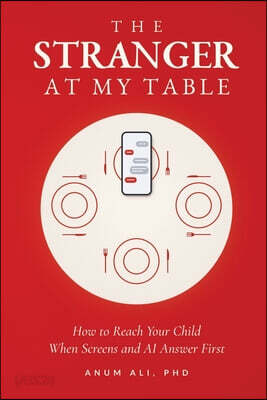
The Stranger at My Table is about that space.
In this book, clinician and researcher Anum Ali, PhD, looks at what happens when AI becomes one of the places young people go to make sense of themselves, their relationships, and the world around them.
The book is not about blaming parents, blaming kids, or treating technology as the enemy. It is about understanding what a young person may be getting from AI, what still needs to happen in real relationships, and how adults can stay close without turning every conversation into an interrogation about screen time.
At the heart of the book is a simple question:
What work is the technology beginning to carry?
The answer will be different for every young person.
Sometimes AI may help them think. Sometimes it may help them rehearse. Sometimes it may simply give them somewhere to begin.
What matters is that it does not have to become the only place they can go.
Young people still need people who know them over time. People who can disagree with them, notice when something changes, repair after getting it wrong, and be there again tomorrow.
The goal is not to make AI disappear.
It is to make sure there are still other places to turn.
AI may answer faster. But to be predicted is not to be known.
첫번째 리뷰어가 되어주세요.
첫번째 한줄평을 남겨주세요.
클린봇으로 착한 글만 확인해보세요!
클린봇이 부적절한 글을 감지 중입니다.
첫번째 별점을 남겨주세요.
첫번째 밑줄을 남겨주세요.
