
직수입외서는 변심/착오로 인해 주문을 취소할 경우 해외주문 취소수수료 20%가 부과됩니다.?
이미 소장하고 있다면 판매해 보세요.
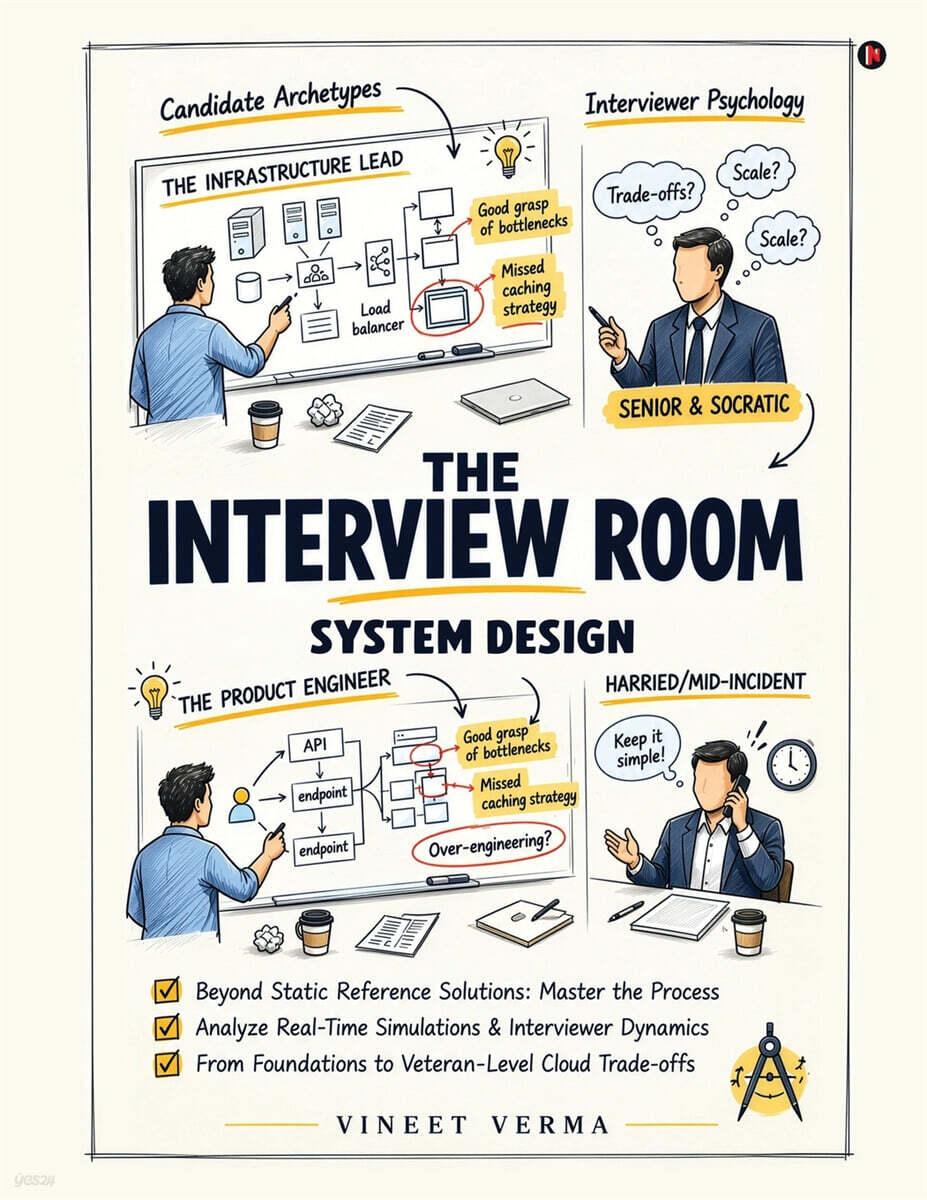
Most candidates walk into a system design interview with the same preparation: memorized patterns, rehearsed answers, a mental library of "correct" architectures. Most of them still stumble. Not because they don't know the material, but because nobody taught them that a good answer to one interviewer can fail completely with another, or that the same problem can demand a different design the moment one detail changes.
This book covers the half of the interview that reference guides leave out entirely: the psychology on both sides of the table. Not just how a candidate thinks under pressure, but how an interviewer's own instincts, urgency, and blind spots quietly decide what actually gets tested. It shows how a single shifted constraint, a cost ceiling, a scale jump, a panel instead of one person, can turn a technically sound design into the wrong one, and why the engineers who succeed are the ones reasoning in the room, not reciting from memory.
By the end, the goal isn't a bigger library of memorized solutions. It's knowing how to think like a person actually in that room, on either side of it, instead of a well-trained answer machine.
첫번째 리뷰어가 되어주세요.
첫번째 한줄평을 남겨주세요.
클린봇으로 착한 글만 확인해보세요!
클린봇이 부적절한 글을 감지 중입니다.
첫번째 별점을 남겨주세요.
첫번째 밑줄을 남겨주세요.
