


소개
목차
|
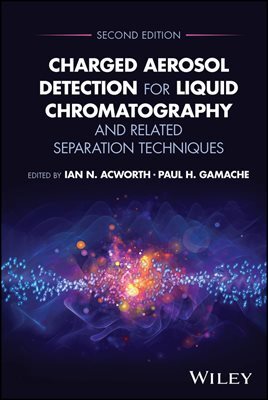
List of Contributors xv Preface xix Acknowledgment xxiii Section 1 Fundamentals of Charged Aerosol Detection 1 1 Principles of Charged Aerosol Detection 3 Paul Henri Gamache and Benjamin Eggart 1.1 Summary 3 1.2 History and Introduction to CAD 4 1.2.1 Aerosol Basics 6 1.3 Charged Aerosol Detection Process 7 1.3.1 Spray Formation and Drying 7 1.3.1.1 Nebulization 7 1.3.1.2 Removal of Large Droplets 10 1.3.1.3 Evaporation 11 1.3.1.4 Volatility and Detector Response 12 1.3.2 Aerosol Charging 15 1.3.2.1 Unipolar Diffusion Charging 15 1.3.2.2 Summary of Aerosol Charging 18 1.3.3 Summary of CAD Process 18 1.4 CAD Response Model 20 1.4.1 Primary Droplet Size Distribution 21 1.4.2 Impactor 21 1.4.3 Drying and Residue Formation 22 1.4.3.1 Residue Particle Parameters 22 1.4.4 Charging of Residue Particles 22 1.4.5 Ion Removal 23 1.4.5.1 Attenuation of Particle Signal by Ion Trap 25 1.4.6 Signal Current 26 1.4.7 Signal from an Eluting Peak: Peak Shape 27 1.4.8 Peak Area Versus Injected Mass 28 1.4.9 Summary 28 1.5 Expected Performance 29 1.5.1 Response Curve: Shape and Dynamic Range 29 1.5.1.1 Signal Output—Power Function 32 1.5.1.2 Semivolatile Analytes 33 1.5.2 Sensitivity Limits 34 1.5.2.1 Eluent Impurities 35 1.5.3 Peak Shape 35 1.5.4 Mass Versus Concentration Sensitivity 35 1.5.5 Response Uniformity 37 1.5.5.1 Solvent Gradient Effects 37 1.5.5.2 Analyte Volatility and Salt Formation 38 1.5.5.3 Ionizable Solutes 38 1.5.5.4 Analyte Density 38 1.5.5.5 Dependence of Aerosol Measurement Technique on Residue Particle Material 39 References 41 2 Charged Aerosol Detection—Application Overview 47 Ian Niel Acworth and Paul Henri Gamache 2.1 Summary 47 2.2 Introduction 47 2.3 CAD History and Background 48 2.3.1 Liquid Flow Range 53 2.3.2 Temperature Control 53 2.3.3 Power Function Value 54 2.3.4 The Use of CAD with Different Chromatographic Techniques 54 2.4 CAD Publication Overview 55 2.5 CAD Publications by Analyte Classes 58 2.5.1 Carbohydrates 59 2.5.2 Drugs 60 2.5.3 Excipients 61 2.5.4 Lipids 62 2.5.5 Phytochemicals 64 References 65 3 Practical Use of CAD—Achieving Optimal Performance 85 Paul Henri Gamache, Ian Niel Acworth, Troy Handlovic, and Imad Haidar Ahmad 3.1 Summary 85 3.2 Introduction 86 3.3 Factors Affecting Performance 87 3.3.1 Eluent Impurities 87 3.3.2 Mobile Phase Additives 89 3.3.3 Column Bleed 91 3.3.4 Mobile Phase Preparation 92 3.3.5 Chromatographic System 93 3.4 Evaporation Temperature 93 3.5 Calibration and Sensitivity Limits 94 3.5.1 Overview of CAD Response Curves 94 3.5.2 Approaches for Linearization of the CAD Signal in the Literature 96 3.5.3 Brief Theory of Power Transforms 98 3.5.4 Internal Power Function and User-Defined PFV 99 3.5.5 Optimizing the PFV 100 3.5.6 Sensitivity Limits 103 3.5.6.1 Recommended Practices for Calibration 104 3.5.7 Summary of Calibration and Sensitivity Limits 104 References 104 4 Practical Realization of Response Uniformity and its Benefits for Global Quantification 109 Frank Steiner, Katherine S. Lovejoy, and Paul Henri Gamache 4.1 Summary 109 4.2 Introduction 110 4.3 Response Uniformity of EADs 113 4.4 Factors Affecting the Response Uniformity of CAD 114 4.4.1 Analyte Volatility 115 4.4.2 Salt Formation with Ionizable Analytes 116 4.4.3 Composition of Mobile Phase 120 4.4.4 Influence of Solute Density 121 4.5 Practical Strategies for Obtaining Uniform Response to Realize Global Quantification 122 4.5.1 Uniform Response Using Isocratic Methods 122 4.5.2 Uniform Response with Inverse Gradient Compensation 123 4.5.3 Troubleshooting Inverse Gradient Compensation 126 4.5.4 The Benefits of Linearizing Response to Universal Quantitation 135 4.6 Conclusions 136 References 137 Section 2 Charged Aerosol Detection of Specific Analyte Classes 143 5 Analysis of Lipids with Charged Aerosol Detection 145 Paul Henri Gamache 5.1 Summary 145 5.2 Introduction 146 5.3 Direct Comparisons of CAD and ELSD 148 5.4 Case Studies 150 5.4.1 Volatility and Evaporation Temperature (Te) 150 5.4.2 Calibration and Power Function Value (PFV) 153 5.4.3 Response Uniformity 157 5.4.4 Analysis of Diverse Lipid Classes 160 5.4.5 Chromatographic Variables Affecting CAD Performance 161 References 166 6 Analysis of Inorganic and Organic Ions with Charged Aerosol Detection 171 Paul Henri Gamache 6.1 Summary 171 6.2 Introduction 172 6.3 Practical Considerations 173 6.3.1 Column Selectivity 174 6.3.2 Column Bleed 176 6.3.3 Mobile Phase 178 6.3.4 Solvent Composition 178 6.3.5 Additives 179 6.3.6 Impurities, Contaminants, and Other Potential Issues 181 6.3.7 Sensitivity and Linearity 182 6.4 Applications 184 6.4.1 Pharmaceutical and Biopharmaceutical Applications 184 6.4.1.1 Counterions 184 6.4.1.2 Raw Material Identification 188 6.4.1.3 Impurity Ions in Pharmaceutical Products 188 6.4.1.4 Parenteral Electrolyte-Amino Acid Solution 189 6.4.1.5 Intracellular Ions 189 6.4.1.6 Excipients Ions in Monoclonal Antibody (mAb) Formulations 190 6.4.1.7 Excipient Ions in Antisense Oligonucleotide Drugs 190 6.4.1.8 Ions in Drug-Loaded Liposomal Products 191 6.4.1.9 Identification and Quantitation of Ionic Impurities in an Investigational Drug 192 6.4.2 Analysis of Ions in Dietary Supplements 192 6.4.3 Bisphosphonate 193 6.4.4 Ionic Liquids 195 References 196 7 Analysis of Carbohydrates with Charged Aerosol Detection 201 Paul Henri Gamache 7.1 Summary 201 7.2 HPLC Analysis of Carbohydrates 202 7.3 Practical Considerations with CAD 204 7.3.1 Column Bleed 205 7.3.2 Additives and Eluent pH 209 7.3.3 Sensitivity, Linearity, and Calibration 210 7.4 Representative Applications 211 7.4.1 Therapeutic Glycoproteins and Vaccines 213 7.4.2 Pharmaceuticals 216 7.4.3 Food, Beverages, Plants and Traditional Herbs, and Medicines 220 References 224 8 Analysis of Pharmaceutical Excipients with Charged Aerosol Detection 229 Ulrike Holzgrabe 8.1 Summary 229 8.2 Introduction 229 8.3 Polyethylene glycols (Macrogols) and Derivatives 231 8.4 Fatty Acids and Derivatives 233 8.5 Carbohydrate Polymers and Derivatives 236 8.6 Conclusions 238 References 238 9 Application of Charged Aerosol Detection in Traditional Herbal Medicines Analysis 243 Baiping Ma, Ping Hu, Haizhen Liang, Yan Jin, and Guobin Shen 9.1 Introduction 243 9.2 Basic Ideas for Method Development of HPLC-CAD Analysis 245 9.2.1 Factors Affecting CAD Sensitivity 245 9.2.1.1 Effect of Mobile Phase Composition and Gradient on CAD Sensitivity 245 9.2.1.2 Effect of Mobile Phase Flow Rate on CAD Sensitivity 246 9.2.1.3 Effect of Evaporator Temperature on CAD Sensitivity 246 9.2.1.4 Effect of Column Bleed on CAD Sensitivity 246 9.2.2 Application of Fingerprint Chromatogram and Characteristic Chromatogram of TCM 247 9.2.3 Quantitative and Semiquantitative Application in TCM 250 9.2.3.1 Quantitative Analysis of Multi-components with a Single Marker 250 9.2.3.2 Semiquantitative Method 252 9.2.3.3 External Standard Method 253 9.2.4 Combined Application of 2D-LC and CAD 255 9.2.5 Fraction Collection Triggered by CAD 258 9.3 Application of CAD in Quality Analysis of THMs 259 9.3.1 Terpenoids/Saponins 260 9.3.2 Carbohydrates 263 9.3.3 Organic Acids 265 9.3.4 Alkaloids 269 9.3.5 Other Applications of CAD 270 9.4 Conclusion 274 References 274 Section 3 Industrial Applications of Charged Aerosol Detection 281 10 Analysis of Small Molecule Pharmaceuticals with Charged Aerosol Detection 283 Ulrike Holzgrabe 10.1 Summary 283 10.2 Introduction 284 10.3 Driving the Sensitivity of CAD 285 10.4 Problem of the Nonlinear Response 287 10.5 Advantage of a Universal Detector for Drug Quality Analysis 289 10.6 Hyphenation of CAD and UV 291 10.7 CAD in the International Pharmacopoeias 294 References 295 11 Analysis of Lipid-Based Formulations with Charged Aerosol Detection 299 Claudia Seidl, Gabriel M. Leme, Charles R. Bupp, Andrei Blasko, and Imad A. Haidar Ahmad 11.1 Introduction 299 11.2 Chromatographic Considerations in the Analysis of LBFs 303 11.2.1 Sample Preparation and Dilution Strategies 303 11.2.2 Choosing the Chromatographic Mode for Analyzing LBFs 304 11.2.3 Stationary-Phase Chemistry and Pore Size 306 11.2.4 Mobile Phase Considerations 307 11.3 Quantitation and Validation 310 11.4 Applications of LC-CAD in LBFs Analysis 319 11.4.1 Stability Assessment 319 11.4.2 Formulation Development 321 References 322 12 Application of Charged Aerosol Detection in Polysorbate Analysis 325 Jessica Lin, Juan Bian, Frank Hrovat, and Kelly Zhang 12.1 Introduction 325 12.1.1 Overview of Polysorbates in Biopharmaceuticals 325 12.1.2 Challenges in Polysorbate Analysis 326 12.2 Analytical Technology of Polysorbates 326 12.2.1 Separation of Polysorbates 326 12.2.2 Detection of Polysorbates 328 12.3 Applications of CAD in Polysorbate Analysis 330 12.3.1 Characterization of Polysorbate Components 330 12.3.2 Polysorbate Stability in Biopharmaceutical Formulations 331 12.3.3 Quantification of Polysorbates 337 12.4 Emerging Trends and Future Directions 338 12.4.1 Advancements in CAD Technology 338 12.4.2 Automated and High-Throughput Applications 339 12.4.3 Multi-Detector Systems 339 12.5 Conclusion 340 References 340 13 Use of Orthogonal Detectors in Comprehensive Analyses: A Focus on Safety Assessment of Pharmaceuticals, Including Botanicals 345 Katherine Lovejoy and Frank Steiner 13.1 Summary 345 13.2 Introduction to Comprehensive Analysis 346 13.2.1 Advantages of Untargeted Analysis by CAD 346 13.2.2 LC× LC with CAD 347 13.3 Principles of the Implementation of Orthogonal Detectors 348 13.3.1 Sensitivity in Multidetector Setups 348 13.3.2 Quantification and Uniform Response of CAD 348 13.3.3 Control of the Split to Destructive Detectors 351 13.3.4 Eluent Compatibility, System Back Pressure and System Dead Volume 354 13.3.5 Strategies for Data Analysis 355 13.4 Application Examples for Comprehensive Analysis 356 13.4.1 Comprehensive Analysis by CAD: Safety Assessment of Botanicals 356 13.4.2 Comprehensive Analysis by CAD: Extractables and Leachables 360 13.5 Conclusions 363 References 364 14 CAD in Drug Discovery 369 Wesley W. Barnhart, Troy T. Handlovic, Brian A. Lanman, David Bauer, and Imad A. Haidar Ahmad 14.1 Summary 369 14.2 Introduction 370 14.3 Streamlining Drug Discovery 370 14.4 Chromatography-BasedWorkflows in Drug Discovery 372 14.5 Use and Benefits of CAD in Discovery 374 14.6 Microgram High-Throughput Purification PlatformWorkflow 376 14.6.1 Purification 376 14.6.2 Drying and Reformatting 378 14.6.3 Post-QC Analysis 379 14.6.4 Data Analysis 380 14.6.5 CAD Optimization, Calibration, and Results 380 14.7 Conclusion 383 References 383 15 Applications of Charged Aerosol Detection for Characterization of Industrial Polymers 389 Paul Cools and Ton Brooijmans 15.1 Introduction 389 15.2 Liquid Chromatography of Polymers 390 15.3 Solvents 393 15.4 Quantitative Detection of Polymer Molecules 395 15.4.1 Ultraviolet Detection 395 15.4.2 Differential Refractive Index Detection 395 15.4.3 Evaporative Detection 396 15.4.4 Charged Aerosol Detection 396 15.4.5 Molar Mass-Dependent Detection 397 15.4.6 Mass Spectrometry 397 15.5 Size Exclusion Chromatography and Charged Aerosol Detection 398 15.6 Gradient Polymer Elution Chromatography and CAD 405 15.7 Liquid Chromatography Combined with UV, CAD, and MS Detection 409 15.7.1 LC-ESI-TOF-MS System at DSM Coating Resins 410 15.8 Typical Examples of Industrial Applications Using LC-MS-CAD 411 15.8.1 Raw Material Analysis 412 15.8.2 Intermediates 413 15.8.3 End Products 414 15.9 Epilogue 416 Acknowledgments 416 References 416 Index 421 |
저자 소개
IAN N. ACWORTH, DPhil, is a specialist supporting the Thermo Fisher chromatography marketing department with a focus on charged aerosol detection. He brings over 30 years of experience in the analytical industry, contributing deep knowledge of CAD technology and its practical applications across pharmaceutical, biopharmaceutical, and related scientific fields.
PAUL H. GAMACHE is an independent consultant specializing in universal detection for liquid chromatography. He has worked for more than 40 years within the analytical instrument industry, serving various roles in both R&D and applications development, with a career focused predominantly on chromatographic techniques.
품목정보
- 발행일
- 2026년 10월 09일
- 지원기기
- 크레마,PC(윈도우 - 4K 모니터 미지원),아이폰,아이패드,안드로이드폰,안드로이드패드,PC(Mac)
- 파일/용량
- EPUB(DRM) | 396.26MB ?
- ISBN13
- 9781394300617
- ECN