
직수입외서는 변심/착오로 인해 주문을 취소할 경우 해외주문 취소수수료 20%가 부과됩니다.?
이미 소장하고 있다면 판매해 보세요.
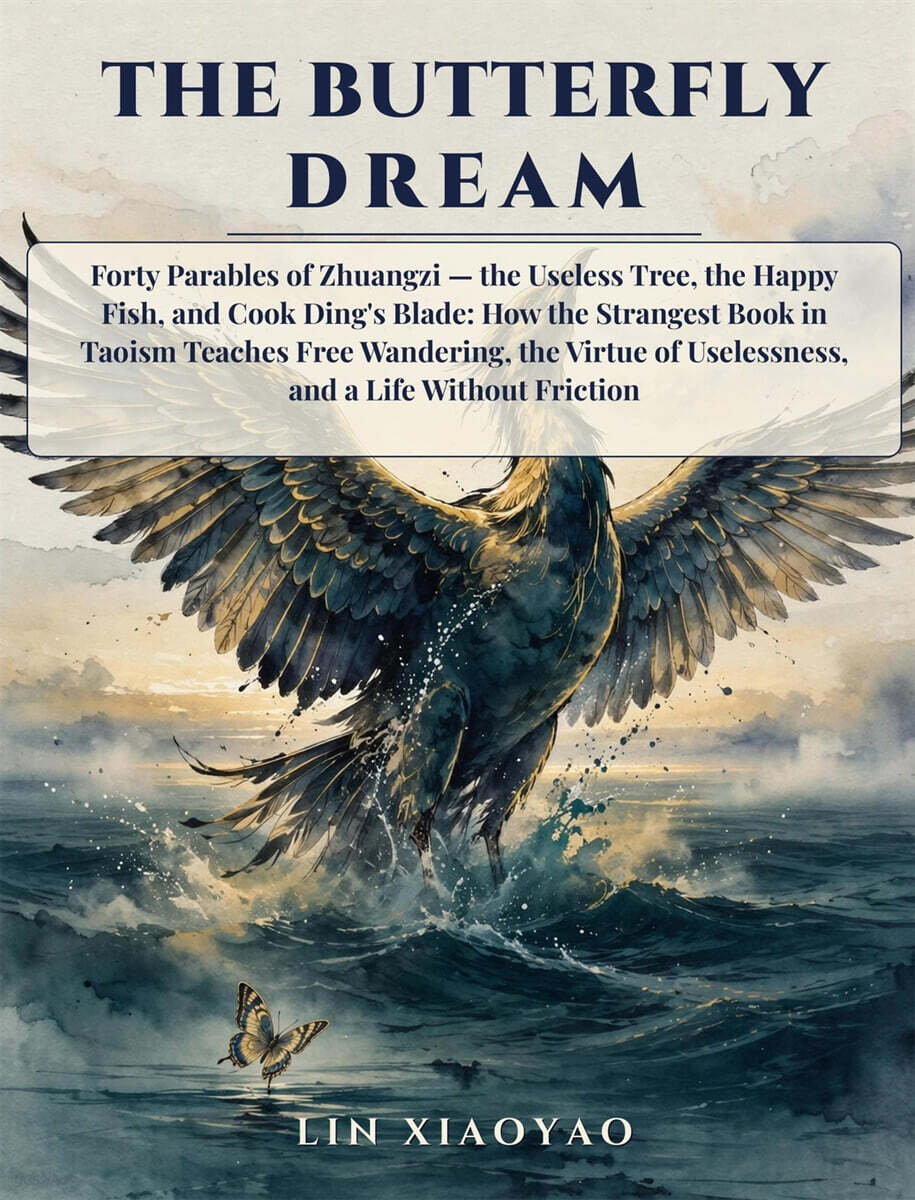
A fish becomes a bird so large that no one can measure the span of its back. A cook carves oxen for nineteen years and his blade is still sharp. A man drums on a tub and sings at his wife's funeral - and means it kindly. These are the parables of Zhuangzi, the freest, funniest, and strangest voice in Taoism - and for most readers they sit locked inside academic translations or thinned into greeting-card excerpts. The Butterfly Dream retells forty of them whole: the useless tree no axe would touch, the happy fish on the Hao bridge, Cook Ding's blade, the sacred tortoise dragging its tail in the mud, Robber Zhi lecturing Confucius, and the butterfly that still has not decided who dreamed whom. Every chapter gives you the complete story first. Then it opens the story up: what Zhuangzi is arguing underneath, which chapter of the Zhuangzi it comes from, the modern shape of the same friction - the performance review, the offer you should refuse, the grief that will not keep its shape - and one concrete practice for living the story instead of just admiring it. Inside: 40 complete parable chapters in four movements: wandering free, the blade and the body, death and change, and the world turned upside down; The argument under every story, with its source - Inner, Outer, or Miscellaneous chapter - named; One practice per chapter: small, concrete, and entirely optional, as Zhuangzi would insist; An introduction to the man, the book, and how two thousand years of editors layered it. No background in Chinese philosophy is assumed, and no system is imposed. Zhuangzi never built one. He left stories instead - forty loosenings of the fist around your ambitions, your usefulness, and your plans. Start at the butterfly. Work backward if you like. He would not mind.
첫번째 리뷰어가 되어주세요.
첫번째 한줄평을 남겨주세요.
클린봇으로 착한 글만 확인해보세요!
클린봇이 부적절한 글을 감지 중입니다.
첫번째 별점을 남겨주세요.
첫번째 밑줄을 남겨주세요.