

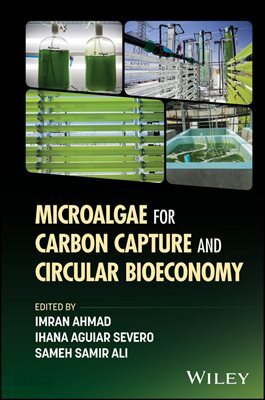
소개
목차
|
List of Contributors xxiii Foreword xxxi Preface xxxiii Acknowledgments xxxvii 1 Microalgae for Carbon Sequestration: An Introduction to Concepts and Applications 1 Muhammad Shahid, Abdul Wahid, Umer Hayat, Alnour Mahmmoud Bokhary, Muhammad Usman Khan, Muhammad Mubashar Omar, Shuaishuai Ma, and Mahnoor Chishty 1.1 Introduction 1 1.2 Microalgae Biology and Carbon Fixation Mechanism 3 1.2.1 Overview of Species 3 1.2.2 Photosynthesis and Carbon Capture: Role of RuBisCO and the Calvin Cycle 6 1.2.3 Carbon Concentrating Mechanism 8 1.3 Microalgae Cultivation Techniques for Carbon Sequestration 10 1.3.1 Open Pond Systems 10 1.3.2 Photobioreactors 10 1.3.3 Hybrid Systems 11 1.3.4 Use of Flue Gas 12 1.4 Carbon Sequestration Potential of Microalgae 12 1.4.1 CO2 Fixation Rates 12 1.4.2 Mass Balance and Carbon Conversion Efficiency: From CO2 to Biomass 13 1.4.3 Carbon Storage Forms 15 1.4.4 Life Cycle Assessment (LCA): Evaluating Carbon Net Savings 16 1.5 Applications of Microalgal Biomass from Carbon Sequestration 17 1.5.1 Biofuels 17 1.5.2 Biofertilizers 18 1.5.3 Animal Feed 18 1.5.4 Bioplastics 19 1.5.5 Pharmaceuticals and Nutraceuticals 19 1.6 Technological Innovations and Recent Advances 19 1.6.1 Genetic Engineering 20 1.6.2 Artificial Intelligence (AI) and IoT: Smart Monitoring of Cultivation Systems 21 1.6.3 Nanotechnology: Improving Light Penetration and Nutrient Absorption 22 1.6.4 Co-cultivation Systems: Symbiotic Growth with Other Microorganisms 23 1.7 Economic and Environmental Considerations 24 1.7.1 Cost Analysis: Capital and Operational Costs of Different Cultivation Systems 24 1.7.2 Market Potential: Demand for Bio-based Products from Microalgal Biomass 25 1.7.3 Environmental Impact: Reduction of Greenhouse Gases, Water Use, and Land Footprint 26 1.7.4 Policy and Incentives 27 1.8 Challenges to Carbon Emission and Sequestration 27 1.8.1 Technical Challenges: Scaling Up Production While Maintaining Efficiency 27 1.8.2 Economic Barriers: High Initial Investment and Competition with Fossil Fuels 28 1.8.3 Environmental Concerns: Water Use and Potential Contamination 29 1.9 Conclusions 30 1.10 Future Outlook 30 References 31 2 Advances in Heterotrophic Microalgal Cultivation for Optimized Carbon Sequestration 37 Shaswatee Bhattacharjee, Nilamjyoti Kalita, Hunmily Teronpi, Bhargish Nandan Gogoi, Shanydul Islam, and Partha Pratim Baruah 2.1 Introduction 37 2.2 Strategies for Carbon Trapping 38 2.2.1 Biological Carbon Sequestration 39 2.2.2 Geological Carbon Sequestration 40 2.2.3 Chemical and Technological Carbon Trapping 40 2.3 Microalgae as a Carbon Sequester 41 2.4 Process Optimization for Enhanced Carbon Sequestration 42 2.4.1 pH 42 2.4.2 Temperature 43 2.4.3 Light/Photoperiod 43 2.4.4 Macro and Micronutrients 43 2.5 Cultivation Techniques 44 2.5.1 Circular Ponds 44 2.5.2 Unstirred Open Ponds 44 2.5.3 Raceway Pond 45 2.6 Bioreactor Design 45 2.7 Strain Engineering 46 2.8 Prospects of Carbon Sequestered Microalgae 47 2.8.1 Biofuels 47 2.8.2 Bioethanol 48 2.8.3 Bio-oil 49 2.8.4 Bioremediation 50 2.8.5 Fertilizer 50 2.8.6 Others 50 2.9 Challenges in Carbon Sequestration 51 2.10 Conclusion 52 Acknowledgments 53 References 53 3 Flue Gas Utilization in Microalgal Systems: A Sustainable Approach for Carbon Capture 61 Saadia Ijaz and Shahida Hasnain 3.1 Introduction 61 3.2 Flue Gas Mitigation Strategies 62 3.3 Flue Gas Mitigation with Microalgae 63 3.3.1 Microalgal Flue Gas Utilization Process 64 3.4 Mechanism of CO2 Fixation in Microalgae 65 3.4.1 Autotrophic Metabolism 65 3.4.2 Carbon Concentration Mechanism 67 3.5 Microalgal Cultivation Systems 68 3.5.1 Open Systems 68 3.5.2 Closed System 70 3.5.3 Hybrid System 71 3.6 Factors Affecting Flue Gas Mitigation by Microalgae 72 3.6.1 Effect of Flue Gas Composition 72 3.6.2 Types of Microalgal Strains 75 3.6.3 Effect of pH 76 3.6.4 Effect of Temperature 76 3.6.5 Effect of Light Irradiance 77 3.6.6 Effect of Flow and Mixing 78 3.6.7 Effect of Mass Transfer 79 3.7 Strategies to Enhance Flue Gas Capture 79 3.7.1 Biotechnological Strategies 79 3.7.2 Process Control and Engineering Strategies 82 3.8 Conclusion 85 References 85 4 Optimizing Flue Gas-derived Nutrients for Algal Cultivation and Carbon Reduction 99 Savita Singh, Avinash Singh, Mrinal, and Krishna Kumar Jaiswal 4.1 Introduction 99 4.2 Flue Gas: Source and Characteristics 100 4.3 Flue Gas-derived CO2 Separation via Adsorbents for Microalgal-based Bioremediation 102 4.3.1 CO2 Separation Technologies 102 4.3.2 Membrane Materials and Applications 102 4.3.3 Technical and Operational Challenges 103 4.3.4 Energy and Logistical Constraints 103 4.3.5 Integration with Microalgal Systems 103 4.4 CO2 Capture from Flue Gas via Chemical Absorbents and Their Regeneration for Algal Cultivation 104 4.5 Microalgal CO2 Mitigation Using Liquid Phase Carbon Carriers and Direct Flue Gas Application 105 4.6 Direct Flue Gas Utilization in Microalgal Cultivation Systems 106 4.7 Microalgae Reduce NOx, SOx, and Heavy Metal Ions in Industrial Flue Gas 108 4.7.1 NOx Reduction by Microalgae 109 4.7.2 SOx Reduction by Microalgae 109 4.7.3 Reduction of Heavy Metal Ions by Microalgae 110 4.7.4 Microalgae for Carbon Dioxide Capture from Flue Gas 111 4.8 Microalgae Cultivation Systems 113 4.8.1 Open Pond Systems 114 4.8.2 Raceway Ponds 114 4.8.3 Multilayer Bioreactors 116 4.8.4 Closed Cultivation Systems 116 4.8.5 Genetic Enhancement and Enzymatic Strategies for Flue Gas Sequestration Using Microalgae 116 4.8.6 Downstream Applications of Microalgal Biomass 117 4.8.7 Life Cycle Assessment of Algal Cultivation 119 4.8.8 Future Directions 120 4.9 Conclusion 121 References 122 5 Integrating Microalgae with Power Plants: Carbon Sequestration and Emission Reduction Strategies 129 Ahmed Elsayed Mahmoud Fodah, Taha Abdelfattah Mohammed Abdelwahab, Haiping Yang, and Sameh Samir Ali 5.1 Introduction 129 5.1.1 Background on Climate Change and Emissions 129 5.1.2 Microalgae for Carbon Fixation 130 5.1.3 Carbon Concentrating Mechanisms (CCMs) in Microalgae 131 5.2 Power Plant Emissions 134 5.2.1 Emission Points for Integration of Power Plant with Microalgae 136 5.2.2 Challenges in Using Untreated Flue Gas Directly 136 5.2.3 Emission Profiles from Different Power Plants 137 5.3 Designs of Cultivation Systems 138 5.3.1 Microalgae Integration Strategies with Power Plants 140 5.3.2 Enhancing the Compatibility of Flue Gas Components with Microalgal Growth 145 5.3.3 Integrated Systems for Wastewater Treatment 146 5.4 Practical Applications and Economics 148 5.4.1 Partnerships Between Power Plant Facilities and Algal Firms 148 5.4.2 Carbon Pricing and ETS 149 5.4.3 Incentives for Carbon Mitigation 150 5.4.4 Evaluations of Techno-economic Analysis (TEA) 151 5.5 Challenges and Future Perspectives in the Integration of Microalgae with Energy Generation Facilities 152 5.6 Conclusion 154 Abbreviation List 154 References 154 6 Integrating Microalgae in Wastewater Remediation and Biodiesel Production: Advancing Toward Carbon Neutrality 167 Sameh S. Ali, Yasser El-Halmouch, Mohammad Magdy El-Metwally, Ahmed E. Fodah, Imran Ahmad, Katerina Klavdianou, Michael Kornaros, and Faizal Bux 6.1 Introduction 167 6.2 Major Pollutants in Aquatic Environments 169 6.3 Microalgae in Wastewater Remediation 172 6.3.1 Role of Microalgae in Wastewater Treatment 176 6.3.2 Nutrient and Pollutant Removal Mechanisms 176 6.3.3 Biomass Production and Biodiesel Potential 178 6.3.4 Lipid Accumulation, Extraction, and Biodiesel Production 179 6.3.5 Carbon Neutrality and Sustainability Assessment 183 6.4 Conclusion 185 References 186 7 Utilizing Wastewater for Microalgal Cultivation: A Dual Approach to Carbon Capture and Water Treatment 197 Sameh S. Ali, Hamad Qaiser, Ahmed E. M. Fodah, Amr H. H. Hashem, Eirini Sventzouri, Michael Kornaros, and Imran Ahmad 7.1 Introduction 197 7.2 Biology and Role of Microalgae in Environmental Remediation 199 7.2.1 Overview of Microalgae (Types, Characteristics, Photosynthetic Efficiency) 199 7.2.2 Growth Requirements: Light, CO2, Nutrients 200 7.2.3 Mechanisms of Nutrient Removal: Nitrogen, Phosphorus, Heavy Metals 202 7.2.4 Advantages Over Conventional Wastewater Treatment Methods 207 7.3 Wastewater Characteristics and Suitability for Microalgal Cultivation 208 7.3.1 Types of Wastewaters 208 7.3.2 Key Parameters 209 7.3.3 Pretreatment Requirements and their Effects on Algae Growth 214 7.4 Carbon Capture Potential of Microalgae 215 7.4.1 Photosynthetic CO2 Fixation Pathway 216 7.4.2 Role of Flue Gas and Industrial CO2 Streams as Carbon Sources 217 7.4.3 Integrating Microalgal Cultivation into Carbon Sequestration Strategies 218 7.5 Wastewater Treatment Efficiency 219 7.5.1 Case Studies or Examples Demonstrating COD, BOD, and TSS Reduction 220 7.5.2 Regulatory Implications and Alignment with Environmental Standards 224 7.6 Challenges and Future Perspectives 226 7.7 Conclusion 227 References 228 8 Application of Microalgae and Other Microorganisms Co-cultivation Systems for a Circular Bioeconomy 247 Villamil J.A., Levío-Raimán M., González-Fernández C., and Tomás-Pejó E 8.1 Introduction 247 8.2 Key Considerations When Co-culturing Microalgae With Other Microorganisms 249 8.3 Applications of Microalgae Co-cultivation Systems 251 8.3.1 Wastewater Treatment and Nutrients Recovery 252 8.3.2 Biofuels Production 256 8.3.3 Carbon Dioxide Biofixation 259 8.4 Limitations and Challenges 262 8.5 Conclusion 264 Acknowledgments 264 References 265 9 Fundamentals and Applications of Photobioreactors for Carbon Capture—Part I 273 Ihana Aguiar Severo, Walter José Martínez-Burgos, José Ignacio Gayo-Peláez, Alla Silkina, Jeremy Alexander Axle Sabo, and Payton Jade Walker 9.1 Introduction 273 9.2 Fundamentals of PBRs 274 9.2.1 Design Types and Configurations 275 9.3 Carbon Capture Using Photobioreactors 282 9.3.1 Mechanisms of CO2 Uptake by Microalgae 282 9.3.2 Environmental and Species-specific Factors 289 9.3.3 Integration of Flue-gas and Industrial CO2 into PBRs 293 9.3.4 Mass Transfer and Absorption Kinetics 298 9.3.5 Case Studies 303 9.4 Conclusion 305 References 306 10 Microalgae-based Photobioreactors for Carbon Capture: Challenges, Scale-Up, and Integration for Zero-discharge Systems—Part II 315 Ihana Aguiar Severo, Walter José Martínez-Burgos, José Ignacio Gayo-Peláez, Alla Silkina, Jeremy Alexander Axle Sabo, and Payton Jade Walker 10.1 Introduction 315 10.2 Challenges to Industrial Deployment of Microalgal Systems 316 10.2.1 Operational and Process-Level Challenges 316 10.3 Regulatory, Infrastructure, and System Integration Barriers 321 10.3.1 Policy Gaps and Uncertainty 322 10.3.2 Environmental and Social Concerns 323 10.3.3 Infrastructure Mismatch 324 10.3.4 Pathways for Alignment 324 10.4 Emerging Solutions and Pilot-scale Success Stories 325 10.4.1 Technological Innovations Enabling Efficient CO2 Capture 325 10.4.2 Pilot and Demonstration Projects 327 10.4.3 Integration into the Circular Economy 329 10.4.4 Lessons Learned and Scaling Opportunities 331 10.5 Lifecycle Flowchart for Zero-Discharge Algal Carbon Capture 333 10.6 Conclusion and Future Perspectives 335 References 335 11 Microalgae-based Solutions for Zero-discharge Concepts in Industrial Applications 341 Nilay Kumar Sarker and Prasad Kaparaju 11.1 Introduction 341 11.2 Principles of Zero-discharge in Industrial Systems 343 11.3 Microalgal Biology Relevant to ZDCs 344 11.4 Waste Streams Suitable for Microalgae-based ZDCs 346 11.4.1 High-nutrient Effluents 347 11.4.2 High-salinity and Brine-based Effluents 347 11.4.3 High-organic Load Streams 348 11.4.4 Gas Emissions as Inputs 348 11.5 Microalgal Integration into Zero-discharge System Designs 349 11.5.1 PBR-based ZDC Modules 349 11.5.2 HRAPs as Pre-treatment for ZDC 350 11.5.3 Algal Biofilms and Attached-growth Systems 351 11.6 Bioremediation Functions of Microalgae for Achieving Zero Discharge 351 11.6.1 Nutrient Removal (N, P, K) 352 11.6.2 Heavy Metal and Toxic Compound Removal 352 11.6.3 Organic Pollutant Degradation 352 11.6.4 Pathogen Reduction and Water Disinfection 353 11.6.5 Practical Dimension 353 11.7 Biomass Valorization Pathways Supporting Zero-discharge 354 11.7.1 Bioenergy Routes 354 11.7.2 High-value Products 355 11.7.3 Biochar and Biofertilizers from Residual Biomass 356 11.7.4 Circular Integration Model 356 11.7.5 Practical Dimension 356 11.8 Case Studies Across Industrial Sectors 356 11.8.1 Textile and Dyeing Industry 357 11.8.2 Mining and Metallurgical Industries 358 11.8.3 Power Plants and Cement Kilns 358 11.8.4 Aquaculture and Fisheries Processing 359 11.8.5 Food and Beverage Processing Plants 359 11.9 Technical Analysis 359 11.9.1 Techno-economic Considerations 359 11.9.2 Bottlenecks, Limitations, and Engineering Challenges 360 11.10 Conclusion 361 References 362 12 Microalgae in Circular Bioeconomy: Closing the Loop in Carbon Utilization 365 Charu Deepika and Roong Jien Wong 12.1 Introduction 365 12.2 Microalgae and CO2 Sequestration 370 12.2.1 CO2 Fixation Pathways in Microalgae 370 12.2.2 Photosynthetic Efficiency and Productivity Metrics 372 12.2.3 CO2 Capture Potential: Quantitative Comparisons with Terrestrial Plants and CCS 373 12.3 Microalgal Cultivation Strategies for Circularity 376 12.3.1 Microalgae Cultivation Systems 377 12.3.2 Utilization of Industrial Flue Gas as CO2 Source 378 12.3.3 Wastewater as Nutrient Input: Closing the Nutrient Loop 378 12.3.4 Energy and Resource Efficiency in Cultivation 379 12.4 Biorefinery Concept and Biomass Valorization 380 12.5 Circular Bioeconomy Models and Industrial Integration 383 12.6 Sustainability and Economic Assessments (LCA and TEA) 384 12.6.1 Environmental Trade-offs and System Boundaries 386 12.6.2 Circularity Indicators and Metrics 387 12.7 Challenges, Innovations, and Future Perspectives 387 12.7.1 Key Challenges in Scaling Microalgal Solutions 387 12.7.2 Technological and Bioprocess Innovations 389 12.7.3 Towards a Net-zero and Circular Carbon Future 390 References 391 13 Harnessing Microalgae for Carbon Sequestration in Circular Bioeconomy Frameworks 399 Eleni Pagkaki, Katerina Klavdianou, Eirini Sventzouri, Myrsini Sakarika, Rania Al-Tohamy, Sameh S. Ali, and Michael Kornaros 13.1 Introduction: The Intersection of Decarbonization and Bioeconomy 399 13.1.1 The Global Carbon Challenge 399 13.1.2 Defining the Circular Bioeconomy 400 13.1.3 Microalgae as a Green Platform 400 13.2 Biological Mechanisms of Carbon Fixation 401 13.2.1 Photosynthetic Efficiency 402 13.2.2 Strain Selection for High-carbon Environments 404 13.2.3 Metabolic Engineering 405 13.3 Technologies for Harnessing Microalgae 406 13.3.1 Cultivation Systems 406 13.3.2 Coupling with Industrial Flue Gas 408 13.3.3 Wastewater as a Nutrient Source 412 13.4 Integration into Circular Bioeconomy Frameworks: The Algal Biorefinery Concept 414 13.4.1 From Waste to Wealth: Product Pathways 414 13.4.2 Closing the Loop: Recycling Residual Biomass 417 13.5 Environmental Assessment 417 13.6 Future Perspectives and Challenges 418 13.6.1 Scaling Up: From Pilot to Industrial Implementation 418 13.6.2 Regulatory and Policy Frameworks 422 13.7 Conclusion 422 References 423 14 Production of Biofuel from Microalgae as a Strategy for Replacing Fossil Oil 431 Cyro Hernandez Calixto and André Bellin Mariano 14.1 The Global Energy Challenge and the Role of Biomass 431 14.2 Potential of Microalgae as an Energy Feedstock 433 14.3 Fundamentals and Thermochemical Routes for Synthetic Fuels 434 14.3.1 Biochemical Composition of Microalgae and Conversion Implications 437 14.3.2 Pyrolysis of Microalgae and Biocrude Production 437 14.3.3 Hydrothermal Processing and Hydrothermal Liquefaction 440 14.4 Microalgae Gasification and the Syngas Platform 442 14.5 Intermediate Platforms: Biocrude and Syngas 443 14.6 Refining and Synthesis from Intermediate Platforms: Distillation, Upgrading, and Catalytic Routes 444 14.6.1 Atmospheric Distillation and Fractionation of Biocrude 444 14.6.2 Biocrude Upgrading: Principles and Challenges 445 14.6.3 Hydroprocessing: Hydrotreatment and Hydrocracking 446 14.6.4 Integration with FCC (Fluid Catalytic Cracking) 447 14.6.5 FT Synthesis and Methanol Route 450 14.6.6 Process Integration 453 14.7 Technical-economic and Cost-benefit Analysis of Routes 456 14.8 Innovative Business Models and Industrial Integration 457 14.9 Conclusions and Future Prospects 458 References 460 15 Life Cycle and Techno-economic Analysis (LCA and TEA) of Microalgal Systems: Evaluating Environmental and Economic Sustainability 463 Katerina Klavdianou, Eirini Sventzouri, Eleni Pagkaki, Rania Al-Tohamy, Sameh S. Ali, and Michael Kornaros 15.1 Introduction 463 15.1.1 An Overview of Life Cycle Assessment (LCA) and Techno-economic Analysis (TEA) 464 15.1.2 Establishing System Boundaries and Functional Unit 465 15.2 Bibliometric Analysis 466 15.3 Methodology and Standards 471 15.3.1 LCA Frameworks and Standards 471 15.3.2 TEA Frameworks 471 15.3.3 Harmonization of Models: The Problem of Inconsistent Data and Assumptions in Current Literature 472 15.4 LCA: Environmental Impacts 476 15.4.1 Life Cycle Inventory (LCI) Analysis 478 15.4.2 Impact Categories 482 15.5 Techno-economic Analysis 484 15.5.1 Capital Expenditures 484 15.5.2 Operational Expenditures 485 15.6 Comparative Scenarios and Trade-offs 486 15.6.1 Cultivation System 486 15.6.2 Product Value Pyramid 487 15.7 Strategies for Improving Economics and Sustainability 488 15.7.1 The Biorefinery Approach 488 15.7.2 Circular Integration 489 15.8 Conclusion and Future Outlook 490 References 491 16 Future Direction Scaling Microalgae-driven Carbon Capture in a Circular Bioeconomy 503 Mohamad Padri and Ananda Nuryadi Pratama 16.1 Introduction 503 16.2 Engineering and Scientific Considerations for Scaling Up 504 16.2.1 Laboratory Development to Actual Scale Cultivation 504 16.2.2 Large-scale Cultivation System 506 16.2.3 Key Scale-up Challenges 509 16.2.4 Strains Sources for Carbon Capture Process 511 16.2.5 Digitalization, Automation, and Artificial Intelligence 512 16.3 Integration into Circular Biorefineries 514 16.3.1 Biorefinery Concept for Microalgae Carbon Capture System 514 16.3.2 Wastewater Utilization for Carbon Capture 516 16.3.3 Application of Close Loop System for Microalgae-based Carbon Capture 517 16.4 Current Challenges in Microalgae-based Carbon Capture 518 16.4.1 Cultivation Instability and Operational Limitations 518 16.4.2 Harvesting, Dewatering, and Downstream Constrains 519 16.4.3 Nutrient Level and Culture Demand 520 16.4.4 Economic Aspects and Scalability 520 16.4.5 Scientific and Engineering Gaps for Field Execution 521 16.5 Future Directions and Development Projection 522 16.5.1 Advancements in Biological Engineering and Strain Development 522 16.5.2 Engineering and Operational Aspects 522 16.5.3 Integration with Actual System and Utilization of Emission Sources 523 16.5.4 Continuation of Application by Applying Circular Bioeconomy Concept 524 16.6 Conclusion 524 References 525 17 Case Studies in Microalgal Technologies: Real-world Applications and Lessons for Carbon Sequestration and Circular Bioeconomy 531 Muhammad Shahid, Abdul Wahid, Umer Hayat, Alnour Mahmmoud Bokhary, Muhammad Usman Khan, Muhammad Mubashar Omar, Shuaishuai Ma, and Mahnoor Chishty 17.1 Introduction 531 17.2 Microalgae Distribution and Abundance 534 17.3 Carbon Sequestration by Microalgae 535 17.3.1 Major Economically Useful Microalgal Species in the Oceanic World 535 17.3.2 Efficiency of Microalgal Species in Carbon Sequestration 538 17.4 Carbon Sequestration and Microalgae-based Technologies 540 17.4.1 Power Plants: Capturing CO2 from Industrial Flue Gases 541 17.4.2 Cement Industry: Reducing CO2 Emissions through Algal Absorption 541 17.4.3 Breweries: Utilizing Fermentation Emissions for Algal Growth 541 17.4.4 Steel Industry: Microalgae-based Carbon Capture 542 17.5 Microalgae as a Key Player in the Circular Bioeconomy 542 17.5.1 Microalgae in Bioenergy and Biofuels 542 17.5.2 Microalgae in Bioplastics and Packaging 543 17.5.3 Microalgae in Nutraceuticals and Animal Feed 544 17.5.4 Microalgae in Wastewater Treatment and Soil Restoration 544 17.5.5 Microalgae in Health and Cosmetics 544 17.6 Conclusion 545 17.7 Future Outlook 546 References 546 18 Public Perceptions, Policy Frameworks, and Regulatory Pathways: Overcoming Challenges for Microalgae Adoption 555 Nilay Kumar Sarker and Prasad Kaparaju 18.1 Introduction 555 18.2 Public Perceptions: Barriers and Opportunities 556 18.2.1 Awareness and Understanding of Microalgae-based Products 556 18.2.2 Consumer Acceptance of Algae-derived Foods and Bioproducts 557 18.2.3 Social Acceptance of Algae Cultivation Facilities 558 18.2.4 Strategies to Improve Public Perception 559 18.3 Policy Frameworks Shaping Microalgae Adoption 560 18.3.1 Overview of Relevant Policy Domains 561 18.3.2 National and Regional Differences 561 18.3.3 Cross-sector Policy Inconsistencies 562 18.3.4 The Role of Incentives, Subsidies, and Market Instruments 563 18.4 Regulatory Pathways: Current Landscape and Bottlenecks 564 18.4.1 Regulatory Actors and Responsibilities 564 18.4.2 Legal Classification Challenges 564 18.4.3 Facility Permitting and Compliance 565 18.4.4 International Trade and Standards 566 18.5 Case Studies 566 18.5.1 Wastewater Treatment and Biofertilizer Production: A Case of Operational Success With Regulatory Hesitation 567 18.5.2 Functional Food and Feed Industries: High Commercial Potential with Cost and Compliance Failures 567 18.5.3 Wastewater Bioremediation and Pollution Control 568 18.5.4 Bioprocessing and Industrial Scale-Up 569 18.5.5 Comparative Analysis 570 18.6 Integrative Framework: Linking Public Perceptions, Policy, and Regulation 571 18.6.1 The Socio-technical Adoption Model for Microalgae 571 18.6.2 Identifying Leverage Points 572 18.6.3 Role of Multi-stakeholder Collaboration 572 18.7 Pathways to Overcome Adoption Challenges 573 18.7.1 Policy Reforms 573 18.7.2 Public Engagement Strategies 574 18.7.3 Industry Best Practices 575 18.7.4 Research and Innovation Priorities 575 18.8 Conclusion and Future Perspectives 576 References 577 19 Emerging Frontiers in Microalgal Innovation: AI Integration, Genetic Engineering, and Next-generation Technologies 581 Tarek Mahrous, Tamer Elsamahy, Esraa A. Abdelkarim, Osama Abdalla Abdelshafy Mohamad, and Ahmed Elsayed Mahmoud Fodah 19.1 Introduction 581 19.2 AI in Microalgal Systems 583 19.2.1 AI in Strain Identification, Classification, and Process Optimization 583 19.2.2 Real-time Monitoring and Control 586 19.3 Genetic Engineering and Synthetic Biology Approaches 587 19.3.1 Genome Editing Tools 587 19.3.2 Metabolic Pathway Engineering 591 19.4 Next-generation Cultivation Technologies 594 19.4.1 Smart and AI-driven Photobioreactors 594 19.4.2 Microfluidics and High-throughput Screening 595 19.5 Integration and Synergy: Building Programmable Biofactories 597 19.6 Challenges and Ethical Considerations 600 19.6.1 Biosafety and Ecological Risks of Genetically Modified Algae 600 19.6.2 Data Privacy and Transparency in AI-driven Processes 600 19.6.3 Regulatory Landscapes and Public Perception 601 19.7 Outlook 601 19.7.1 Emerging Trends: Quantum AI, Self-evolving Strains, and Biofoundries 602 19.7.2 Interdisciplinary Training and Collaboration 602 19.7.3 Roadmap for Commercial and Ecological Deployment 603 19.8 Conclusion 603 References 604 Index 613 |
저자 소개
IMRAN AHMAD is a Postdoctoral Researcher at the Institute for Water and Wastewater Technology, Durban University of Technology, South Africa. He specializes in photobioreactor engineering, microalgal biotechnology, and sustainable wastewater treatment for carbon capture, nutrient recovery, and circular bioeconomy. He has authored and edited scholarly books and publications with leading international publishers while advancing scalable environmental technologies through research innovation.
IHANA AGUIAR SEVERO is a researcher specializing in microalgae biotechnology, sustainable bioprocesses, and bioenergy, with active research collaborations at Florida State University and the Federal University of Parana. Her research focuses on sustainable microalgae cultivation, bioprocess engineering, bioenergy, and circular bioeconomy, with an extensive record of scientific publications and international collaborations.
SAMEH SAMIR ALI is Distinguished Professor at Tanta University, Egypt, and Full Professor at the Biofuels Institute, Jiangsu University, China. His research focuses on biological conversion of recalcitrant organic wastes into biofuels and integrating bioremediation with biorefinery technologies.
품목정보
- 발행일
- 2026년 10월 29일
- 지원기기
- 크레마,PC(윈도우 - 4K 모니터 미지원),아이폰,아이패드,안드로이드폰,안드로이드패드,PC(Mac)
- 파일/용량
- EPUB(DRM) | 16.37MB ?
- ISBN13
- 9781394362943
- ECN