

- PDF 안내
-
이 상품은 구매 후 지원 기기에서 예스24 eBook앱 설치 후 바로 이용 가능한 상품입니다.
소개
목차
|
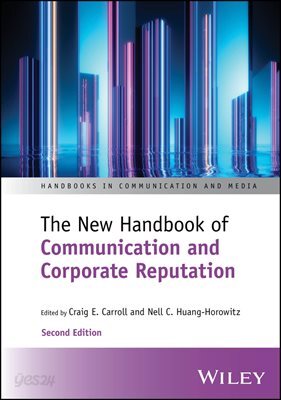
About the Editors ix 1 Corporate Reputation Reconsidered: Communication, Constitution, and Conditions 1 Section 1 Communication Elements 15 2 Corporate Reputation Management as Design Work: Theory and Practice of Communication Skill 17 3 How Message Design Constructs Corporate Reputation 30 4 Corporate Communication 50 5 Corporate Branding and Corporate Reputation 63 6 Digital Communication and Corporate Reputation 76 7 The Internet, Social Media, and Digital Reputation 89 8 Corporate Reputation and the Law: Navigating Reputational Challenges in the 2020s 104 9 Experiencing the Reputational Synergy of Success and Failure Through Organizational Learning 116 10 Corporate Communication as Corporate Listening: Theory and Practice 128 11 Stakeholder Engagement and Corporate Reputation in the Era of Sustainability 140 12 Stakeholder Engagement as the Communicative Basis of Reputation Management 152 Section 2 Theoretical Foundations 165 13 How Media Shape What We Think About Companies: Agenda Setting, Agenda Building, and the Dimensional Matching Framework 167 14 The Communicative Constitution of Reputation as Conversation and Text 183 15 Complexity Theory and the New Dynamics of Reputation 194 16 Beyond Perception: Reputation as an Emergent Property of Complex Adaptive Systems 212 17 Relating Corporate Reputation and Autopoietic Systems Theory 226 18 Institutional Theory, Communication, and Corporate Reputation 241 19 Narrative and Storytelling in Corporate Reputation 254 20 Relating Rhetoric and Reputation 265 21 Crisis Communication and Corporate Reputation: An Illustration of Their Close Bond Through Situational Crisis Communication Theory 276 22 Building Bridges: How Can Social Capital Enhance Corporate Reputation via Trust 282 Section 3 Reputational Dimensions 299 23 Leadership and Communication 301 24 Corporate Social Responsibility in the Context of Corporate Reputation 315 25 Corporate Reputation and Diversity, Equity, and Inclusion 328 26 Products, Services, and Corporate Reputation: Communication's Untheorized Domain 341 27 Are Good Reputations Built on Financial Successes or Are Financial Successes Built on Good Reputations? 355 28 Navigating Corporate Reputation Through Strategic Partnerships: The Role of Communication, Stakeholders, and Crisis Management 366 29 Corporate Governance as Communicative Process: Extending Governance Research Through Communication Theory 379 Section 4 Threats, Contexts, and Conditions 397 30 Corporate Social Advocacy and Corporate Reputation 399 31 Bridging Organizational and Corporate Domains: Identity, Identification, and Reputation Through a Communicative Perspective 410 32 Perceived Authenticity in Strategic Communication: Building Trust Through Organizational Voice 423 33 Narrative Governance and Corporate Reputation: A Framework for Managing Organizational Storytelling 435 34 Character Assassination in Subversive Campaigns Targeting Corporate Reputation 451 35 Reputation of, Through, and in Artificial Intelligence: Three Perspectives on AI and Corporate Reputation 466 36 Is it a Mis or a Dis? Understanding and Countering Misinformation, Disinformation, Fake News, and Malinformation in a Corporate Reputation Context 475 37 Tailored Relational Reputation Model: An Integrated Framework 489 38 Is the Reputation of Reputation Management Fatally Damaged? 502 39 Labor Unions and Corporate Partnerships: Reimagining the Symbiotic Sustainability Model 515 40 Reputation Resilience: An Exploration 528 Section 5 Measurement, Evaluation, and Valuation 539 41 Corporate Communication Planning and Relationships, Identity, and Reputation 541 42 A Multidimensional Model of Business Acumen in Corporate Communication: Implications for Corporate Reputation 555 43 The Evaluative Contents of Corporate Reputation: Relationates, Measurement Functions, and Reputation Contrasts 572 44 The Economic Case for Corporate Reputation: From ROI to Operating Condition 589 45 Construct, Driver, and Consequence: Measuring Corporate Reputation Across Stakeholder Groups 605 Section 6 Conclusion 623 46 Corporate Reputation as Communicative Infrastructure: Ontology, Governance, and the Next Phase of the Field 625 Author Index 649 |
저자 소개
Craig E. Carroll is Founder and Executive Director of the Observatory on Corporate Reputation and Lecturer of Management at Rice University's Jones Graduate School of Business. Before Rice, he was at the University of North Carolina at Chapel Hill and USC's Annenberg School for Communication. He has edited three reference works, including The SAGE Encyclopedia of Corporate Reputation, and received PR News's Educator of the Year award.
Nell C. Huang-Horowitz is Associate Dean for Personnel and Academic Resources and Professor of Communication in the College of Letters, Arts, and Social Sciences at California State Polytechnic University, Pomona. Her research examines how organizations construct and negotiate identity under conditions of reputational challenge and how communication strategies influence institutional legitimacy. She has published in Public Relations Review, Corporate Reputation Review, and International Journal of Business Communication.
품목정보
- 발행일
- 2026년 11월 03일
- 지원기기
- 크레마, PC(윈도우 - 4K 모니터 미지원), 아이폰, 아이패드, 안드로이드폰, 안드로이드패드, PC(Mac)
- 파일/용량
- PDF(DRM) | 6.57MB ?
- 글자 수/ 페이지 수
- 약 747쪽 ?
- ISBN13
- 9781394257669
- ECN
