
직수입외서는 변심/착오로 인해 주문을 취소할 경우 해외주문 취소수수료 20%가 부과됩니다.?
이미 소장하고 있다면 판매해 보세요.
Nothing has happened yet. Your body has already gone in.
It arrives at about six. Sometimes earlier, if the weekend has been good. You are doing something ordinary - the washing up, a programme, the last of the light in the garden - and there is a small drop in the middle of you, as if a lift has moved one floor without asking.
Nobody has said anything. The week is still fourteen hours away and it is already in the room.
And the odd thing is that Monday is usually fine. You get there, you start, and by half past nine the thing you were dreading has become a list of ordinary tasks, none of them frightening on their own. Which means the Sunday version was never really about Monday.
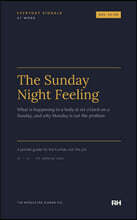
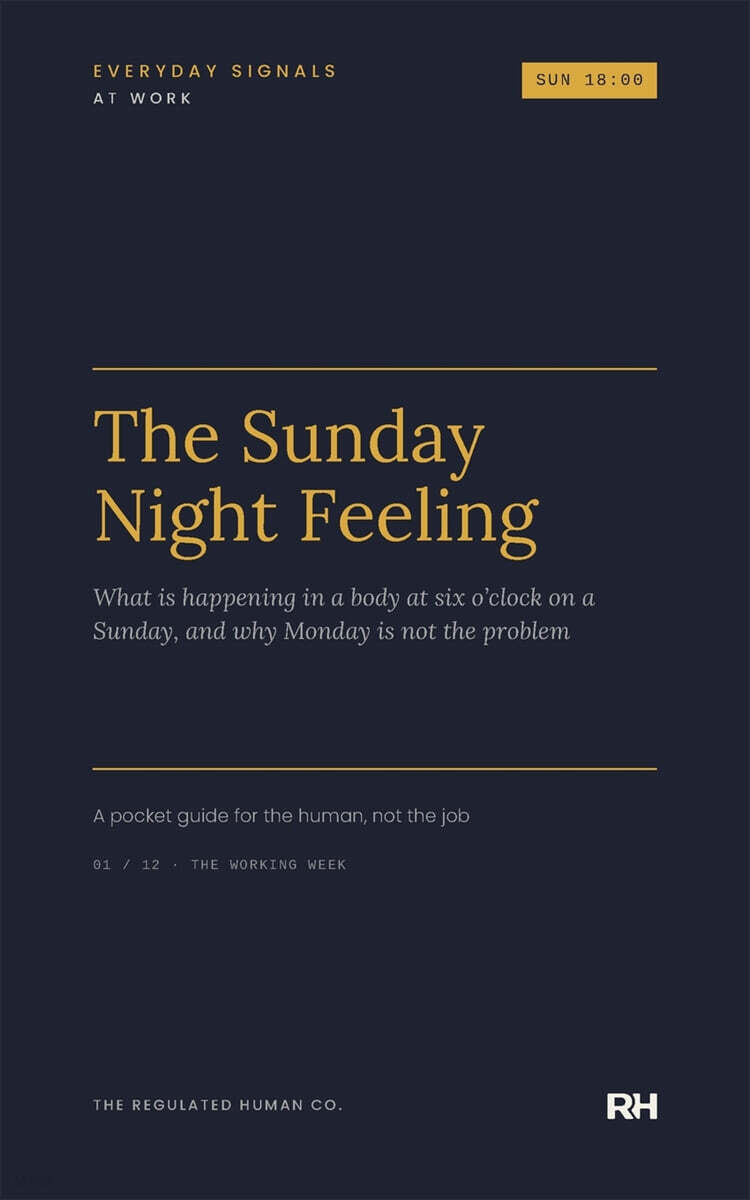
A short book about the hour before the week.
What is in it:
Why it does not follow the rules you would expect. It comes in weeks when there is nothing much on. It stays away in the week before something huge. It survives a job you are good at and a boss you like.
What the body is doing at six o'clock, and the four ways it shows: the high breath, the shoulders, the tea that does not sit right, the sleep that will not come.
Five things that make it heavier, including the ones most people reach for. Trying to enjoy the evening harder. Arguing with the feeling, which the body cannot hear. Going to bed early to get it over with. A drink that works for an hour and wakes you at three. And deciding, at eight o'clock on a Sunday, that tonight is the night to sort your life out.
Saying it out loud, once, which moves the state from the body to the front of the mind, where it is smaller.
Then putting the kettle on - not as a treat, as a signal. A body believes an ordinary action it recognises more than it believes an argument.
Letting the breath out first. Not a deep breath in; that is what the body is already doing.
Giving the week five minutes on paper - not planning it, emptying it - and then closing the week until morning. The laptop shut, the phone in another room, the bag by the door. The body reads the room.
Keeping Sunday evening the same shape every week, because prediction is most of what it wanted.
Eating before seven, moving before it gets dark, and doing one thing for Monday morning. One thing tells the body the morning is handled. Three things tell it the week has started.
Noticing when it leaves, which it does, usually by half past nine.
What to say to the person in the room, to somebody who has it too, and to yourself on Monday.
And the part nobody tells you: the Sunday night feeling is not a verdict on the job, or on you.
There is nothing here about loving your job, or leaving it, or being better at it. Those are real questions and they are a different book.
The aim is not a Sunday without the feeling. It is a Sunday where the feeling arrives, gets named, and does not get to run the evening.
"Say it out loud. Then put the kettle on."
For the human, not the job. Sixty-four pages, small enough for a coat pocket.
This book supports everyday emotional awareness. It is not a screening tool and it is not a substitute for professional guidance.
Everyday Signals at Work: short guides for the hard bits of an ordinary working day. No quick fixes. No hype. Regulation before optimisation.
첫번째 리뷰어가 되어주세요.
첫번째 한줄평을 남겨주세요.
클린봇으로 착한 글만 확인해보세요!
클린봇이 부적절한 글을 감지 중입니다.
첫번째 별점을 남겨주세요.
첫번째 밑줄을 남겨주세요.