
- PDF 안내
-
이 상품은 구매 후 지원 기기에서 예스24 eBook앱 설치 후 바로 이용 가능한 상품입니다.
소개
목차
|
Contents
List of Figures xii List of Tables xiii Acknowledgments xiv About the Companion Website xv 1 Introduction 1 The Nature of Language 3 Knowledge of Language 4 Competence and Performance 4 Variation 5 Variants and the Linguistic Variable 7 Language Users and Their Groups: Identities 7 Language and Culture 10 Directions of Influence 10 The Whorfian Hypothesis 10 Correlations 12 The Interdisciplinary Legacy of Sociolinguistics 12 Overview of the Book 14 Chapter Summary 15 Exercises 15 Further Reading 16 References 16 Part I Languages, Communities, and Contexts 19 2 Languages, Dialects, and Varieties 21 What Is a Language? 21 Language or Dialect? 22 Mutual Intelligibility 23 Language and Social Identity 24 Standardization 25 The Standard as an Abstraction 26 The Standardization Process 27 The Standard and Language Change 27 Standard Language? 28 The Standard–Dialect Hierarchy 29 Regional Dialects 30 Dialect Geography 30 Everyone Has an Accent 30 Social Dialects 31 Kiezdeutsch “Neighborhood German” 32 Ethnic Dialects 33 African American Language 34 Features of AAL 34 Development of AAL 35 Societal Aspects of AAL Use 36 Styles and Indexes: The Social Meanings of Linguistic Forms 37 Chapter Summary 41 Exercises 41 Further Reading 42 References 42 3 Defining Groups 47 Speech Communities 48 Linguistic Boundaries 48 Shared Norms 49 Communities of Practice 52 Social Networks 54 Social Identities 55 Beliefs About Language and Social Groups 57 Language Ideologies 57 The Standard Language Ideology 58 The Purist Ideology 59 Monoglossic Ideologies 59 Oralist/Ableist Ideologies 60 Iconicity, Erasure, and Recursivity 60 Language Attitudes 61 Perceptual Dialectology 62 Matched/Verbal Guises 63 Implicit Association Task 64 Chapter Summary 65 Exercises 66 Further Reading 67 References 67 4 Language in Context: Pragmatics 72 Speech Acts 72 Speech as Action 72 Implicature 75 Maxims 75 Politeness 76 Face 77 Positive and Negative Politeness 77 Beyond Politeness Theory 78 Politeness and Indirectness 79 Pronouns 80 Tu and Vous: Power and Solidarity 80 Pronouns and Positioning 81 Politeness Beyond Pronouns: Japanese Honorifics 82 Naming and Titles 83 Fluidity and Change in Address Terms 84 Chapter Summary 85 Exercises 85 Further Reading 86 References 86 Part II Theory and Methods 91 5 Language Variation and Change 93 Variables and Correlations 93 Types of Linguistic Variables 94 Indicators, Markers, and Stereotypes 95 Independent Variables 96 Data Collection and Analysis 97 The Observer’s Paradox 97 The Sociolinguistic Interview 97 Sampling 98 Doing Quantitative Research: What Do the Numbers Really Mean? 99 Regional Variation 100 Mapping Dialects 100 Methods in Dialectology 102 Dialect Mixture and Free Variation 103 Language Variation and Change 103 The First Wave of Variation Studies 104 Martha’s Vineyard 104 Change from Above and Below 105 The Fourth Floor 106 “Social Class” Membership 108 Change in Progress 110 Change over Time or Age-Grading? 111 Gender, Language Change, and the Linguistic Marketplace 113 The Second Wave of Variation Studies 115 Social Networks 116 Social Network Theory and Language Change 116 Gender Variation in the Second Wave 117 Jocks and Burnouts 118 The Third Wave of Variation Studies 119 Stance, Stylistic Bricolage, and Persona 120 Affect and Control 121 Chapter Summary 122 Exercises 122 Further Reading 123 References 124 6 Ethnographic Approaches in Sociolinguistics 129 Ethnography: Participant Observation 129 Doing Ethnography 131 Ethnography of Communication 132 Communicative Competence 132 The Communicative Event 133 The SPEAKING Device 134 Critical Ethnography 135 (Socio)linguistic Ethnography 136 Digital Ethnography 139 Ethnography in Combination with Other Sociolinguistic Methods 140 Chapter Summary 142 Exercises 142 Further Reading 144 References 144 7 Discourse Analysis 149 Conversation Analysis (CA) 150 Adjacency Pairs 151 Openings 151 Closings 153 Turn-taking 154 Repair 154 Institutional Talk 154 Membership Categorization Analysis 155 Interactional Sociolinguistics 155 Data and Methodologies 158 Identities 159 Critical Discourse Studies 161 Contrasts and Critiques 162 Data, Methodologies, and Connections 162 Corpus Linguistics and Discourse Analysis 165 Chapter Summary 167 Exercises 168 Further Reading 169 References 169 Part III Multilingual Matters 177 8 Languages in Contact: Multilingual Societies and Multilingual Discourse 179 Multilingualism as a Societal Phenomenon 179 Language Competencies in Multilingual Societies 180 Language Ideologies Surrounding Multilingualism 181 Linguistic Landscapes 182 Language Attitudes in Multilingual Settings 185 Language Maintenance and Shift 186 Diglossia 188 Domains 188 Extended Diglossia and Language Maintenance 189 Questioning Diglossia 190 Code-Switching 191 Metaphorical and Situational Code-Switching 191 Communication Accommodation Theory 192 The Markedness Model 192 Multilingual Identities 194 Bricolage 196 Chapter Summary 197 Exercises 197 Further Reading 201 References 201 9 Contact Varieties: Structural Consequences of Social Factors 207 The Structure of Code-Switching 207 Code-Blending in Sign Languages 209 Loanwords and Calques 210 Convergence 212 Ethnicized and Social Dialects as Contact Varieties 213 Latinx Englishes 214 Straattaal “Street Language” 215 Mixed Languages 216 Pidgin and Creole Languages 217 Pidgins 217 Creoles 218 Theories of Creole Genesis 219 Linguistic Characteristics of P/C Languages 221 Phonology 222 Morphosyntax 222 Vocabulary 223 From Pidgins to Creoles 223 Creole Continuum? 225 Chapter Summary 227 Exercises 227 Further Reading 228 References 228 10 Language, the Nation, and Beyond 233 Language and Nation 233 Nationalism and Language 235 Linguistic Citizenship 238 Language and National Identity Categories 239 Belonging Beyond the Nation 240 Language and Globalization 242 Global English: Threat or Promise? 243 Language and the Digital World 245 Language and Migration 247 Identity Construction in the Context of Migration 247 Identity Over Time and Space 249 Diversity and Superdiversity 252 Discourses of Migration and Integration 252 Chapter Summary 256 Exercises 256 Further Reading 257 References 257 Part IV Sociolinguistics and Social Justice 265 11 Language, Gender, and Sexuality 267 Defining Terms: Sex Category, Gender, and Sexuality 267 Early Language and Gender Research: Deficit, Dominance, and Difference 269 Gender and Sexuality in Language 271 Gender Marking in Language(s) 272 Gender-Inclusive Language 273 Discourses of Gender and Sexuality 275 Normative Gender Roles and Heteronormativity 276 Cisnormativity 278 Transnormativity 279 Gender and Sexuality Identities 280 Masculinities and Femininities 280 Performing Sexualities 282 At the Intersection of Gender and Sexuality 283 Further Intersectionalities: Racial, Ethnic, and Deaf Identities 284 Chapter Summary 286 Exercises 286 Further Reading 287 References 287 12 Sociolinguistics and Education 294 Social Dialects and Education 295 Restricted Codes and the Language Gap 295 Difference not Deficit 296 Role of the Home Dialect in Education 298 An Achievement Gap? 299 Education in Multilingual Contexts 301 Ideologies 301 Use of Minoritized Languages in the Classroom 305 Elite and Immigrant Bilingualism 307 Education and Worldwide English 308 Circles of English 308 English in Worldwide Education 309 Elite Closure 310 English in Europe 312 Chapter Summary 314 Exercises 314 Further Reading 315 References 315 13 Language Policy and Planning 323 Terminology, Concepts, and Development of the Field 323 Types of Language Planning 324 The Intellectual History of LPP 327 Data and Methods 328 LPP and Nationalization 330 LPP in Turkey: Orthography and Purity 330 LPP in the Soviet Union and the Post-Soviet Era: From Russification to Nationalization 331 Official Monolingualism in France 332 LPP in Post- and Neocolonial Contexts 333 Kenya 334 India 334 Officially Multilingual Countries and LPP 335 Canada 336 Belgium 336 Papua New Guinea 337 Singapore 338 Endangered Languages and the Spread of English 339 Endangered Languages 339 Family Language Policy, New Speakers, and LPP 341 English Worldwide 342 Chapter Summary 344 Exercises 344 Further Reading 345 References 345 Glossary 352 Index 365 |
저자 소개
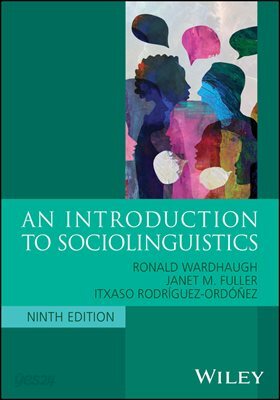
RONALD WARDHAUGH was Professor Emeritus in the Department of Linguistics at the University of Toronto, Canada. He was the author of number of books, including Proper English (Wiley Blackwell, 1998) and Understanding English Grammar, Second Edition (Wiley Blackwell, 2003).
JANET M. FULLER is Professor of Language and Society at the University of Groningen and formerly Professor of Anthropology at Southern Illinois University Carbondale. Her research addresses language contact, identity construction, language ideologies, and?media discourses of migration. Her books include Speaking Spanish in the US and Spanish Speakers in the USA.
ITXASO RODRIGUEZ-ORDONEZ is Associate Professor in Linguistics at California State University Long Beach. Her research combines New Speaker theory, variationist sociolinguistics, and language acquisition to investigate contact-induced change and language ideologies in the Basque revitalization context. Her publications appear in Language Variation and Change and Journal of Sociolinguistics.
품목정보
- 발행일
- 2026년 11월 17일
- 지원기기
- 크레마, PC(윈도우 - 4K 모니터 미지원), 아이폰, 아이패드, 안드로이드폰, 안드로이드패드, PC(Mac)
- 파일/용량
- PDF(DRM) | 4.24MB ?
- 글자 수/ 페이지 수
- 약 413쪽 ?
- ISBN13
- 9781394315888
- ECN