
- PDF 안내
-
이 상품은 구매 후 지원 기기에서 예스24 eBook앱 설치 후 바로 이용 가능한 상품입니다.
소개
목차
|
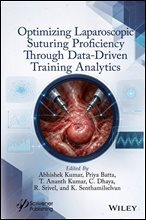
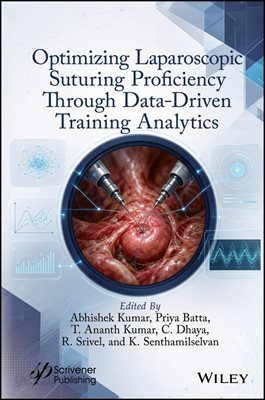
Preface xxiii Part I: Foundations and Conceptual Paradigms 1 1 Foundations of Laparoscopic Suturing: Challenges, Skills, and the Need for Advanced Training Approaches 3 1.1 Introduction 4 2 Cognitive Augmentation in Laparoscopic Suturing: A Paradigm Shift via Intelligent Analytics 33 2.1 Introduction 34 3 From Data to Dexterity: The Role of Computational Intelligence and Analytics in Laparoscopic Skill Development 63 3.1 Introduction 64 4 Symbiosis of Machine Cognition and Surgical Dexterity: Toward Autonomous Proficiency Evaluation 91 4.1 Introduction 92 Part II: Computer Vision and Machine Learning Frameworks 115 5 Computer Vision-Based Evaluation of Laparoscopic Suturing: Automated Skill Assessment, Error Detection, and Training Integration 117 5.1 Introduction 118 6 Data-Driven Machine Learning Framework for Optimizing Laparoscopic Suturing Skills 143 6.1 Introduction 144 7 Explainable Artificial Intelligence Techniques for Medical Imaging in Laparoscopic Skill Assessment 165 7.1 Introduction 166 8 Neuro-Inspired Adaptive Learning Architectures for Precision-Driven Surgical Training 189 8.1 Introduction 190 Part III: Advanced Optimization and Heuristic Models 217 9 Enhancing Deep Learning Model Training Using Image Processing-Aware, Quantum-Inspired, and Bio-Inspired Machine Learning Optimization Strategies 219 9.1 Introduction 220 10 Quantum-Heuristic Optimization for Enhancing Psychomotor Skill Acquisition in Laparoscopy 239 10.1 Introduction 240 11 Particle Swarm Optimization-Guided Dermatoglyphic Pattern Recognition for Precision Laparoscopic Suture Tension Calibration in Abdominal Wall Reconstruction 255 11.1 Introduction 256 12 Quantum-Inspired and Nature-Inspired Optimization for Intelligent Laparoscopic Training Enhancement 285 12.1 Introduction 286 13 Exploring Data-Driven Optimization in Contemporary Surgical Training 311 13.1 Introduction 312 Part IV: Integration, Trust, and Human-Centric Design 329 14 Cross-Modal Artificial Intelligence Architectures for Multisensory Integration in Surgical Training Environments 331 14.1 Introduction 332 15 User-Centered Explainability Design for Clinician-Friendly Feedback in Laparoscopic Suturing Training 359 15.1 Introduction 360 16 Counterfactual Reasoning and Causal Explanations in Laparoscopic Decision-Support and Training Systems 397 16.1 Introduction 398 17 Building Trust-Centered Artificial Intelligence Systems for Laparoscopic Training: Framework, Implementation, and Validation 417 17.1 Introduction 418 18 Future Directions in Laparoscopic Training: Artificial Intelligence-Enabled Multimodal Assessment, Adaptive Coaching, and Patient-Specific Rehearsal 441 18.1 Background and Gaps in Current Laparoscopic Training 442 References 464 |
저자 소개
Abhishek Kumar, PhD is an Assistant Director and Professor in the Computer Science and Engineering Department at Chandigarh University, Punjab, India. With over 13 years of teaching experience, he has published more than 170 peer-reviewed papers, seven authored books, and 51 edited volumes. His research interests span artificial intelligence, renewable energy systems, image processing, and data mining.
Priya Batta, PhD is an Associate Professor in the Amity School of Engineering and Technology at Amity University Punjab, Mohali, India, with more than 12 years of experience. She has published 22 books and more than 55 publications in reputed, peer-reviewed national and international journals and conferences. Her research areas include artificial intelligence, blockchain, and IoT.
T. Ananth Kumar, PhD is a Research Head and Associate Professor in Computer Science and Engineering at the Indo-French Education Trust's College of Engineering, India. He has published seven books, several book chapters, and several patents, and presented papers in various national and international conferences and journals. His fields of interest include networks on chips, computer architecture, and ASIC design.
C. Dhaya, PhD is a Professor and Head of Computer Science and Engineering at Adhiparasakthi Engineering College, Melmaruvathur, Tamil Nadu, India. She has published more than 20 research papers in reputed international journals and conferences and several patents. Her areas of specialization include machine learning, data science, big data, software architecture evaluation, and genetic algorithms.
R. Srivel, PhD is an Assistant Professor in the Computer Science and Engineering Department and Research Coordinator in the Civil Engineering Department at Adhiparasakthi Engineering College, Melmaruvathur, Tamil Nadu, India. He has published more than 30 research papers in science citation journals, a number of book chapters, and several patents. His expertise encompasses diverse fields, including drone technology, artificial intelligence, and healthcare applications.
K. Senthamilselvan, PhD is a Senior Resident at the Dr. Shankarrao Chavan Government Medical College, Nanded, Maharashtra, India. He received his Masters of Science in General Surgery from Dr. Shankarrao Chavan Government Medical College at the Maharashtra University of Health Sciences and has presented posters at a number of state conferences.
품목정보
- 발행일
- 2026년 11월 19일
- 지원기기
- 크레마, PC(윈도우 - 4K 모니터 미지원), 아이폰, 아이패드, 안드로이드폰, 안드로이드패드, PC(Mac)
- 파일/용량
- PDF(DRM) | 14.15MB ?
- 글자 수/ 페이지 수
- 약 510쪽 ?
- ISBN13
- 9781394465019
- ECN