
- PDF 안내
-
이 상품은 구매 후 지원 기기에서 예스24 eBook앱 설치 후 바로 이용 가능한 상품입니다.
소개
목차
|
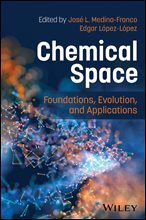
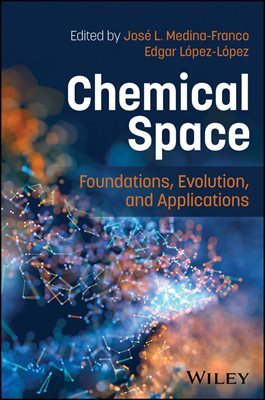
List of Contributors xv 1 History and Evolution of Chemical Space 1 1.1 Introduction: The Chemical Space as a Dynamic Archive 1 2 Approaches to Represent and Interpret Chemical Space 29 2.1 Introduction 29 3 New Frontiers: Beyond Classical Drug-like Chemical Space 69 3.1 Introduction 69 4 Chemical and Predictive Spaces: Convergent Constructs, Distinct Intent 103 4.1 Introduction 103 5 Unconventional Chemical Spaces and Their Implications: Chemical Weapons 123 5.1 Introduction: Chemical Space and Its Boundaries 123 6 Chemical Space for Green Energy Harvesting and Storage 151 6.1 Introduction 151 7 Navigating Chemical Space Frontiers: Leveraging Generative Methods for Novel and Lead-driven Bioactive Compounds Discovery 225 7.1 Introduction 225 8 Chemical Space, Its Subspaces, Their Representation, and Characterization 271 8.1 The Evolving Concept of Space 271 9 Navigating the Chemical Multiverse: Toward Consensus Chemical Spaces via Data Fusion 321 9.1 Introduction 321 10 Successful Uses and Frontiers of the Chemical Multiverse Concept 363 10.1 Introduction 363 11 Reflections About the Use of Chemical Space and Multiverse Concepts in the AI Era 411 11.1 Introduction 411 Acknowledgments 440 |
저자 소개
Jose L. Medina-Franco, PhD, is the leader of the DIFACQUIM research group at the Universidad Nacional Autonoma de Mexico and was named Fellow of the Royal Society of Chemistry in 2017. His research focuses on the development and application of chemoinformatics and molecular modeling methods for bioactive compounds, with an emphasis on drug discovery.
Edgar Lopez-Lopez, PhD, is an accomplished researcher in chemoinformatics. In 2024, he received the Top 100 Future Leaders award from the American Chemical Society and was recognized as a member of the Royal Society of Chemistry. In 2025, he was awarded the Nobel Alumni distinction by the Lindau Nobel Laureate Meetings organization.
품목정보
- 발행일
- 2026년 11월 23일
- 지원기기
- 크레마, PC(윈도우 - 4K 모니터 미지원), 아이폰, 아이패드, 안드로이드폰, 안드로이드패드, PC(Mac)
- 파일/용량
- PDF(DRM) | 7.60MB ?
- 글자 수/ 페이지 수
- 약 499쪽 ?
- ISBN13
- 9781394364268