
이미지 검색을 사용해 보세요
검색창 이전화면 이전화면
최근 검색어
인기 검색어

소득공제 EPUB
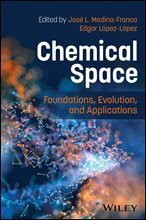
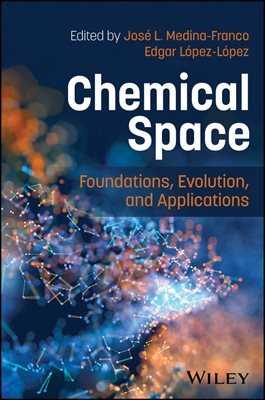
eBook Chemical Space
Foundations, Evolution, and Applications EPUB
저
Wiley 2026.11.23.
가격
210,600원
210,600
YES포인트?
10,530원 (5%)
5만원 이상 구매 시 2천원 추가 적립
결제혜택
카드/간편결제 혜택을 확인하세요

소개

목차

List of Contributors xv
Preface xxi
Acknowledgments xxiii
List of Abbreviations xxv

1 History and Evolution of Chemical Space 1
Guillermo Restrepo

1.1 Introduction: The Chemical Space as a Dynamic Archive 1
1.2 Defining the Chemical Space: A Framework for Analysis 2
1.3 The Size of the Chemical Space 5
1.4 Conclusions: Rethinking the Exploration of the Chemical Space 20

2 Approaches to Represent and Interpret Chemical Space 29
Ye Buehler and Jean-Louis Reymond

2.1 Introduction 29
2.2 General Workflow for Chemical Space Analysis 30
2.3 Constructing Chemical Spaces 31
2.4 Dimensionality Reduction and Map-based Visualization 33
2.5 Hierarchical and Network-based Visualization 40
2.6 Interpreting Chemical Spaces 48
2.7 Conclusion 52

3 New Frontiers: Beyond Classical Drug-like Chemical Space 69
Dragos Horvath, Alexey A. Orlov, and Alexandre Varnek

3.1 Introduction 69
3.2 Size Matters 73
3.3 Chemical Library Spaces 77
3.4 Beyond Drug-likeness 83
3.5 Match Spaces 87
3.6 Reaction Spaces 90
3.7 Conclusions 93

4 Chemical and Predictive Spaces: Convergent Constructs, Distinct Intent 103
David Ignacio Ramírez-Palma and Karina Martinez-Mayorga

4.1 Introduction 103
4.2 Descriptor Frameworks 104
4.3 The Role of the Dataset 109
4.4 Chemical Space vs. Predictive Space: Intent, Not Supervision 111
4.5 Conclusions and Outlook 118

5 Unconventional Chemical Spaces and Their Implications: Chemical Weapons 123
Luis Diego Méndez, Daniel Acuña, Alejandro Cristóbal, Israel Espinoza-Castañeda, Silvana De Souza, José L. Medina-Franco, and William J. Zamora R.

5.1 Introduction: Chemical Space and Its Boundaries 123
5.2 The Unconventional Chemical Space of Chemical Weapons 125
5.3 Classes of Chemical Weapons in Chemical Space 131x Contents
5.4 Implications of Unconventional Chemical Spaces 138
5.5 Concluding Remarks 141

6 Chemical Space for Green Energy Harvesting and Storage 151
Ana María Juárez Marckwordt and Hanoch Senderowitz

6.1 Introduction 151
6.2 Population of the Chemical Space 153
6.3 Visualization and Interpretation of the Chemical Space 167
6.4 Navigation and Expansion of the Chemical Space 185
6.5 Conclusions 203

7 Navigating Chemical Space Frontiers: Leveraging Generative Methods for Novel and Lead-driven Bioactive Compounds Discovery 225
Yuliana Zabolotna, Eduardo Harguindey, Niraj Verma, and Srilok Srinivasan

7.1 Introduction 225
7.2 Traditional Generative Methods in Drug Discovery 227
7.3 AI-based Generative Methods for Navigating Chemical Space in Drug Design 245
7.4 Conclusions 260

8 Chemical Space, Its Subspaces, Their Representation, and Characterization 271
Gerald M. Maggiora, Edgar López-López, and José L. Medina-Franco

8.1 The Evolving Concept of Space 271
8.2 Overview of Chemical Space 273
8.3 Representing Chemical Subspaces 276
8.4 Mathematics of Chemical Subspaces 293
8.5 Conclusions 312

9 Navigating the Chemical Multiverse: Toward Consensus Chemical Spaces via Data Fusion 321
Fernanda I. Saldívar-González, Ana C. Murrieta, and Flavio F. Contreras-Torres

9.1 Introduction 321
9.2 Multiverse: Theoretical Foundations 323
9.3 From Chemical Space to Chemical Multiverse 324
9.4 Descriptor Dimensions in the Chemical Multiverse 326
9.5 Methods for Exploring and Modeling the Chemical Multiverse 334
9.6 Data Fusion and Consensus Chemical Space 341
9.7 Integrated Frameworks for Chemical Space Exploration and Prediction 348
9.8 Conclusions 353

10 Successful Uses and Frontiers of the Chemical Multiverse Concept 363
Diana L. Prado-Romero, Juan F. Avellaneda-Tamayo, Emanuele Carosati, Cyril T. Namba-Nzanguim, Alessia De Piero, Leonardo Milos, and Bruno Broshka

10.1 Introduction 363
10.2 Chemical Multiverse for Different Libraries 370
10.3 ChemArt 397
10.4 Challenges and Future Applications 399
10.5 Conclusions 400

11 Reflections About the Use of Chemical Space and Multiverse Concepts in the AI Era 411
Edgar López-López, Luis Itza Vazquez-Salazar, and José L. Medina-Franco

11.1 Introduction 411
11.2 Chemical Multiverse 415
11.3 Exploring Chemical Space in the AI Era 420
11.4 New Opportunities for Chemical Astronauts 432
11.5 Practical Tips and Tricks 437
11.6 Conclusions 439

Acknowledgments 440
References 440
Index 457

저자 소개

Jose L. Medina-Franco, PhD, is the leader of the DIFACQUIM research group at the Universidad Nacional Autonoma de Mexico and was named Fellow of the Royal Society of Chemistry in 2017. His research focuses on the development and application of chemoinformatics and molecular modeling methods for bioactive compounds, with an emphasis on drug discovery.

Edgar Lopez-Lopez, PhD, is an accomplished researcher in chemoinformatics. In 2024, he received the Top 100 Future Leaders award from the American Chemical Society and was recognized as a member of the Royal Society of Chemistry. In 2025, he was awarded the Nobel Alumni distinction by the Lindau Nobel Laureate Meetings organization.

관련 분류

품목정보

발행일
2026년 11월 23일
이용안내
  •  배송 없이 구매 후 바로 읽기
  •  이용기간 제한없음
  •   TTS 가능 ?
  •  저작권 보호를 위해 인쇄 기능 제공 안함
지원기기
크레마,PC(윈도우 - 4K 모니터 미지원),아이폰,아이패드,안드로이드폰,안드로이드패드,PC(Mac)
파일/용량
EPUB(DRM) | 12.32MB ?
ISBN13
9781394364251
ECN

첫번째 리뷰어가 되어주세요.

첫번째 한줄평을 남겨주세요.

사락 별점0

혜택 및 유의사항

첫번째 별점을 남겨주세요.

첫번째 밑줄을 남겨주세요.
