
이미 소장하고 있다면 판매해 보세요.
- 국내배송만 가능
- 해외 거래처 사정에 의하여 품절/지연 가능
- 도서 정보 중 미표기 사항 안내?
- 문화비소득공제 가능
책소개
목차
|
PREFACE xi
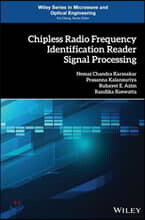
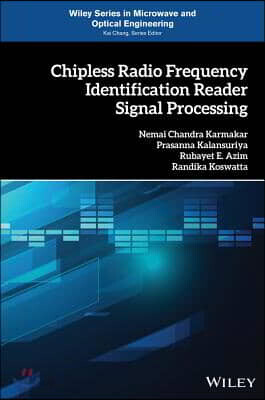
1 INTRODUCTION 1 1.1 Chipless RFID 1 1.2 Chipless RFID Tag Reader 7 1.3 Conclusion 12 References 13 2 Signal Space Representation of Chipless RFID Signatures 15 2.1 Wireless Communication Systems and Chipless RFID Systems 15 2.1.1 The Conventional Digital Wireless Communication System 15 2.1.2 Chipped RFID System 16 2.1.3 Chipless RFID System 17 2.2 The Geometric Representation of Signals in a Signal Space 18 2.2.1 Representing Transmit Signals Using Orthonormal Basis Functions 18 2.2.2 Receiving Signals and Decoding Information 20 2.3 Novel Model for the Representation of Chipless RFID Signatures 22 2.3.1 Signal Space Representation of Frequency Signatures 24 2.3.2 Application of New Model 27 2.4 Performance Analysis 32 2.5 Experimental Results Using the Complete Tag 34 2.6 Conclusion 36 References 38 3 TimeA?-Domain Analysis of Frequency Signature-Based Chipless RFID 39 3.1 Limitations of Current ContinuousA?-Wave Swept Frequency Interrogation and Reading Methods for Chipless RFID 39 3.2 UWBA?-IR Interrogation of TimeA?-Domain Reflectometry-Based Chipless RFID 43 3.3 TimeA?-Domain Analysis of Frequency Signature-Based Chipless RFID 47 3.4 Analysis of Backscatter from a Multiresonator Loaded Chipless Tag 47 3.4.1 System Description and Mathematical Model for Backscatter Analysis 49 3.4.2 Chipless RFID Tag Design 53 3.5 Simulation Results 55 3.6 Processing Results 56 3.7 Analysis of Backscatter from a Multipatch-Based Chipless Tag 59 3.7.1 System Model and Expressions for Backscatter 59 3.7.2 The Design and Operation of the MultipatchA?-Based Chipless RFID 61 3.8 Electromagnetic Simulation of System 62 3.8.1 FourA?-Patch Backscattering Chipless Tag 62 3.8.2 Investigation into Reading Distance and Orientation of Tag 66 3.8.3 Measurement Results 67 3.9 Conclusion 68 References 70 4 Singularity Expansion Method for Data Extraction for Chipless RFID 71 4.1 Introduction 71 4.2 The SEM 72 4.2.1 The Complex Frequency Domain 74 4.2.2 Extraction of Poles and Residues 77 4.2.3 Matrix Pencil Algorithm 77 4.2.4 Case Study 81 4.3 Application of SEM for Chipless RFID 84 4.4 Conclusion 89 References 91 5 Denoising and Filtering Techniques for Chipless RFID 93 5.1 Introduction 93 5.2 Matrix Pencil AlgorithmA?]Based Filtering 95 5.3 Noise Suppression Through Signal Space Representation 99 5.4 SSI 103 5.5 Wavelet-Based Filtering of Noise 107 5.6 Conclusion 108 References 109 6 Collision and Error Correction Protoco ls in Chipless RFID 111 6.1 Introduction 111 6.2 RFID System and Collision 113 6.2.1 Reader?Reader Collision 114 6.2.2 Reader?Tag Collision 114 6.2.3 Tag?Tag Collision 115 6.3 Applications that Involve Multiple Tags 115 6.4 Anticollision Algorithm in Chipped RFID Tags 118 6.4.1 SDMA 119 6.4.2 FDMA 122 6.4.3 CDMA 123 6.4.4 Time Division Multiple Access: TDMA 125 6.5 Anticollision Algorithm for Chipless RFID 128 6.5.1 Linear Block Coding 129 6.5.2 Correlative Signal Processing-Based Approach 131 6.5.3 WalshA?-Domain Matched Filtering 131 6.5.4 Spatial Focusing (SDMA) 132 6.5.5 Other Anticollision/Multi-Access Methods 134 6.6 Collision Detection and Multiple Access for Chipless RFID System 135 6.7 Introducing Block Coding in Chipless RFID 138 6.7.1 Coding 139 6.7.2 Block Coding for Collision Detection 141 6.7.3 Block Coding for Improving Data Integrity 144 6.7.4 Advantages and Challenges of Block Coding 146 6.8 Conclusion 148 References 148 7 MultiA?-Tag Identification Through Time?Frequency Analysis 153 7.1 Introduction 153 7.2 t?f Analysis and Chipless RFID Systems 154 7.3 FrFT: Background Theory 157 7.3.1 Linear Frequency Modulated Signal 157 7.3.2 FrFT 161 7.4 System Description 167 7.4.1 ADS Simulation Environment 170 7.4.2 Postprocessing in MATLAB 171 7.5 Results and Discussion 174 7.6 Conclusion 180 References 180 8 FMCW RADARA?-Based MultiA?-Tag Identification 183 8.1 Introduction 183 8.2 Background Theory 186 8.2.1 Overview of FMCW RADAR 186 8.2.2 FMCW RADAR Technique for Chipless RFID Systems: Multi-Tag Identification 189 8.3 System Description 196 8.3.1 ADS Simulation Environment 196 8.3.2 Postprocessing in MATLAB 199 8.4 Results and Discussion 201 8.4.1 Collision Detection and Range Extraction 202 8.4.2 Tag Identification 206 8.5 Conclusion 212 References 213 9 Chipless Tag Localization 215 9.1 Introduction 215 9.2 Significance of Localization 216 9.3 Tag localization: Chipless Versus Conventional RFID 217 9.4 Conventional RFID Tag Localization Techniques 218 9.4.1 RTOF Estimation 218 9.4.2 RSSA?-Based Localization 220 9.4.3 Phase Evaluation Method 220 9.5 Chipless RFID Tag Localization 221 9.6 Benefits of Chipless Tag Localization 222 9.7 Proposed Localization for Chipless RFID Tags 223 9.7.1 Backscattered Signal from Chipless Tag 223 9.7.2 Maximum Detection Range 225 9.7.3 Localization of Tag 228 9.7.4 Ranging of Tag 230 9.7.5 Positioning of Tag 231 9.8 Results and Discussion 233 9.8.1 Simulation Environment 233 9.8.2 Experimental Setup 234 9.8.3 Results and Discussion 236 9.8.4 Unknown Tag Localization 240 9.9 Conclusion 241 References 242 10 State-of-theA?-Art Chipless RFID Reader 247 10.1 Introduction 247 10.2 Challenges in Mass Deployment 249 10.3 Smart RFID Reader 252 10.3.1 Physical Layer (Front End) 253 10.3.2 IT Layer (Back End) 255 10.4 Various Smart Readers 261 10.5 Conclusion 263 References 264 Index 265 |
저자 소개
Nemai Karmakar, PhD, is the lead researcher at the RFID and Antenna Research Group at Monash University, Australia. He received his PhD in ITEE from the University of Queensland, Australia, in February 1999. Dr. Karmakar is a pioneer in fully printable Chipless RFID tags, readers, signal processing, and smart antennas. He has published more than 350 scientific journal and conference articles, 9 books, 35 book chapters, and 9 patent applications.
Prasanna Kalansuriya, PhD, is an electrical engineer at Clarinox Technologies, Australia. He obtained a PhD in electrical and computer systems engineering at Monash University, Australia in 2014. In 2012, he was a visiting researcher with the Auto-ID Laboratory, Massachusetts Institute of Technology, Cambridge, MA.
Rubayet E Azim is working toward her PhD on Chipless RFID signal processing in electrical and computer systems engineering at Monash University, Australia.
Randika Koswatta, PhD, is a RF design engineer with Hawk Measurement Systems in Melbourne, Australia. He obtained his PhD from the Electrical and Computer Systems Engineering Department of Monash University, Australia in 2013 and completed a bachelor’s degree in electrical and electronics engineering with first class honors from the University of Peradeniya, Sri Lanka in 2007.
품목정보
- 발행일
- 2016년 04월 11일
- 쪽수, 무게, 크기
- 292쪽 | 163*239*23mm
- ISBN13
- 9781119215752
사락 별점0
혜택 및 유의사항밑줄0
혜택 및 유의사항상품정보안내
(판형과 판수 등이 다양한 도서는 찾으시는 도서의 ISBN을 알려 주시면 보다 빠르고 정확한 안내가 가능합니다.)
해외거래처에서 품절인 경우, 2차 거래선을 통해 유럽과 미국 출판사로 직접 수입이 진행될 수 있습니다.
수입 진행 시점으로 부터 2~3주가 추가로 소요되며, 해외에서도 유통이 원활하지 않은 도서는 품절 안내가 지연될 수 있습니다.
해당 경우, 문자와 메일로 별도 안내를 드리고 있사오니 마이페이지에서 휴대전화번호와 메일주소를 다시 한번 확인해주시기 바랍니다.