
이미 소장하고 있다면 판매해 보세요.
- 국내배송만 가능
- 해외 거래처 사정에 의하여 품절/지연 가능
- 도서 정보 중 미표기 사항 안내?
- 문화비소득공제 가능
책소개
관련 분류
품목정보
- 발행일
- 2016년 05월 05일
- 쪽수, 무게, 크기
- 32쪽 | 242g | 366*420*3mm
- ISBN13
- 9781783444250
출판사 리뷰
|
Big Books are an essential resource to support the teaching of reading; they make the whole activity of reading visible for children, allowing them to see a text from a shared viewpoint. Reading is increasingly seen by children as a social activity; big books allow small and larger groups of children to work collaboratively with a text, sharing ideas and knowledge and forming mutual ideas and opinions around a text. They are just as supportive with groups, pairs or with individuals, who will often choose them as an opportunity to read and re-read favourites, such as Elmer, at their own pace.
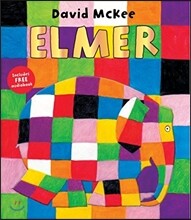
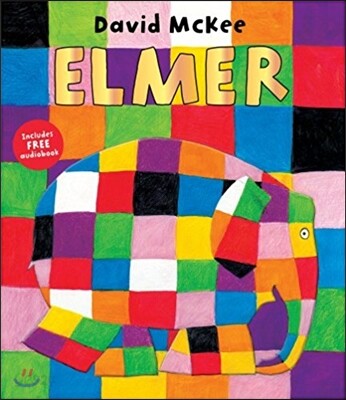
Using the Elmer Big Book: Using this big book will help teachers and other adults to demonstrate many of the different aspects of reading and the essential behaviours involved to groups of children and to the whole class. It is important first to take time to introduce the text to the group. You could invite children to discuss the front cover first, looking at the print and illustration: Who is this character? What do you notice about him? What do you think his story might be? You can also point out the title and the name of the author, David McKee. Ask the children if they know any other books by him, such as Not Now, Bernard, Two Monsters or any of the Elmer stories. Reading the book aloud is an essential art. It involves acting out the text for the children, to bring out both its full meaning and its style and rhythms, so it is important that the adult reading has read the book themselves first to get an idea of the flow of the story before reading to the children. The big book version is particularly supportive for this as the text and illustrations are clear enough for all to see and children can join in with repeated words and phrases and patterned language such as: ‘Elephants young, elephants old, elephants tall or fat or thin’ or ‘Same old jungle, same old bright sky, same old rain cloud, same old elephants.’ Adults can also read to the punctuation to show what impact this has on the way we read and our understanding, with questions such as: ‘But What?’ and ‘Whoever heard of a patchwork elephant?’ or exclamations such as: ‘BOOO!’ or ‘Oh my gosh and golly!’. While reading, it helps to pause and invite the children to discuss important moments in the story or imagine and predict what might happen next. It is important not to interrupt the reading by doing this too often, but talking about the book can not only be a way into the text for inexperienced readers, but also a way of extending understanding for those already on their journey into reading. On the page where ‘Elmer slipped quietly away unnoticed’ you may wish to pause and reflect: Why he is slipping away from the herd? Where do you think he might be going? What will the other elephants say when they realise? With a text such as Elmer, the illustrations play a key role in children’s enjoyment and understanding of the story. A big book version allows children to see illustrations clearly, note finer details and share understanding and opinions. Children will need time and opportunities to enjoy and respond to the pictures, and to talk together about what the illustrations contribute to their understanding of the text. You may wish to discuss the first spread where the herd is introduced to talk about the similarities and differences between the elephants, exploring and introducing some of the language in the printed text: Which is the old/tall/thin elephant? How do you know? You could also discuss the spread: ‘It was Elmer who kept the elephants happy’; how do we know how the elephants feel about Elmer from the illustration? At the end of the reading, it is important to take time to discuss the book. Children need frequent, regular and sustained opportunities to talk together about the books that they are reading as a whole class, which makes the big book format an ideal focus for discussing ideas and referring back to parts of the text as these ideas are explored. Such discussions are supportive to all readers and writers, but are especially empowering for children who find literacy difficult. It helps the class as a whole to reach shared understandings. You may explore opportunities to put yourselves in the shoes of a character, by exploring ideas such as: ‘How do you think Elmer feels about being patchwork?’ or ‘Would you rather be like Elmer or the rest of the herd?’ You could also relate ideas from the texts into a wider, real-life context: ‘What would life be like if everyone was the same?’ and use this as a forum to explore and celebrate diversity. It is also important to help children to focus on the detail of the print and using their knowledge of letter-sound relationships to read unfamiliar words. Regular words like shook, good, thin, fat, pink, red and black can be an opportunity for children to apply blending and segmenting skills. They can also learn to break a word down into its main parts in words such as patchwork, sometimes, walked, coloured, morning, unnoticed and read new words by analogy with words they know, e.g. while/smile, yellow/show/know. After the book has been read, it is a good opportunity to practise the reading of new words, choosing words from the book it would be useful to focus on. Elmer provides a good opportunity to focus on colour words: yellow, orange, red, pink, purple, blue, green, black and white. These could be made into a matching game using coloured templates of Elmer where the children can place the colour words on the corresponding patches. There are also lots of words which are commonly seen across reading, which are useful for children to focus on after reading, such as: the, was, like, all, who, they, little, me, he, said, so, looked, off, of, were, saw, time, my. Remember that revisiting familiar texts is one of the most important ways in which children consolidate their skills as beginning readers. It is important to make regular time for children to read and re-read big books they have enjoyed in groups, pairs or individually. This is a very supportive context for children to practise their reading, working with a known text, at their own pace. Children can also listen to an audio version, accessible with the QR code on the back cover of this book, or make story props or puppets and role play the story alongside the big book. |
리뷰/한줄평0
상품정보안내
직수입외서의 경우, 해외거래처에서 제공하는 정보가 부족하여 제목, 표지, 가격, 유통상태 등의 정보가 미비하거나 변경되는 경우가 있습니다. 정확한 확인을 원하시는 경우, 일대일 상담으로 문의하여 주시면 답변 드리겠습니다.
(판형과 판수 등이 다양한 도서는 찾으시는 도서의 ISBN을 알려 주시면 보다 빠르고 정확한 안내가 가능합니다.)
해외거래처에서 품절인 경우, 2차 거래선을 통해 유럽과 미국 출판사로 직접 수입이 진행될 수 있습니다.
수입 진행 시점으로 부터 2~3주가 추가로 소요되며, 해외에서도 유통이 원활하지 않은 도서는 품절 안내가 지연될 수 있습니다.
해당 경우, 문자와 메일로 별도 안내를 드리고 있사오니 마이페이지에서 휴대전화번호와 메일주소를 다시 한번 확인해주시기 바랍니다.
(판형과 판수 등이 다양한 도서는 찾으시는 도서의 ISBN을 알려 주시면 보다 빠르고 정확한 안내가 가능합니다.)
해외거래처에서 품절인 경우, 2차 거래선을 통해 유럽과 미국 출판사로 직접 수입이 진행될 수 있습니다.
수입 진행 시점으로 부터 2~3주가 추가로 소요되며, 해외에서도 유통이 원활하지 않은 도서는 품절 안내가 지연될 수 있습니다.
해당 경우, 문자와 메일로 별도 안내를 드리고 있사오니 마이페이지에서 휴대전화번호와 메일주소를 다시 한번 확인해주시기 바랍니다.