


이미 소장하고 있다면 판매해 보세요.
- 국내배송만 가능
- 해외 거래처 사정에 의하여 품절/지연 가능
- 도서 정보 중 미표기 사항 안내?
- 문화비소득공제 가능
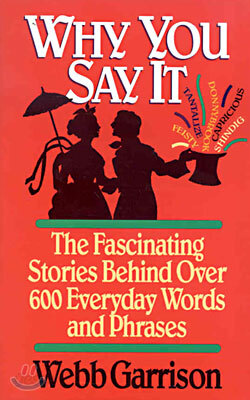
책소개
목차
|
1. The World of Entertainment
2. Many Were Famous, Others Merely Rich 3. Feathers and Fur 4. Names and Games 5. Sports Talk Often Follows the Ball 6. These make Sense! 7. Distance Lends Enchantment - Words From Afar 8. Money, Gusiness, and Commerce 9. Why Don't Folk Say Precisely What They Mean? 10. The Great Outdoors 11. Making Fun of Others 12. Some Things Are Not What They Seem 13. Going Places-Then and Now 14. One Person's Food 15. Borrowed from the British 16. Stories to Be Taken with a Grain of Salt 17. Comparisons That Froze in Speech 18. Action Is the Name of the Game 19. Say, Did You Know...? Bibliography |
관련 분류
품목정보
- 발행일
- 1992년 11월 01일
- 쪽수, 무게, 크기
- 356쪽 | 440g | 크기확인중
- ISBN13
- 9781558531284
책 속으로
|
End of One's Rope
Europeans invented and used a number of elaborate devices designed to give a horse freedom to graze, gut not to run away. Intricate hobbles and tethers seldom proved more effective than a length of rope, however. with one end of a rope fastened to the bridle and the other to a post, a rider could rest while his mount filed its stomach. Many and animal moved to the end of the rope, then strained to eat grass barely witjin reach. Like a tethered horse, a human who has exhausted all resources is at the end of his or her rope. p.103 Adam's Apple Many a man, such as Abraham Lincoln, has had a prominent Adam's apple. Male chauvinism is responsible for the centuries-old name. Pioneer English anatomists were puzzled by the section of cartilage that refussed to stay in one spot. Folktales explained that Adam should not have taken that apple from Eve in the Garden of Eden. When he yielded to her temptation, a piece of fruit stuck on the way down. Ever since, it has moved when men eat or talk in order to warn: "Beware of the temptress!" In truth, the growth of the visible knot is stimulated by male hormones. because women have a small amount of this hormone, they also have a small version of the Adam's apple. |
사락 별점0
혜택 및 유의사항밑줄0
혜택 및 유의사항상품정보안내
직수입외서의 경우, 해외거래처에서 제공하는 정보가 부족하여 제목, 표지, 가격, 유통상태 등의 정보가 미비하거나 변경되는 경우가 있습니다. 정확한 확인을 원하시는 경우, 일대일 상담으로 문의하여 주시면 답변 드리겠습니다.
(판형과 판수 등이 다양한 도서는 찾으시는 도서의 ISBN을 알려 주시면 보다 빠르고 정확한 안내가 가능합니다.)
해외거래처에서 품절인 경우, 2차 거래선을 통해 유럽과 미국 출판사로 직접 수입이 진행될 수 있습니다.
수입 진행 시점으로 부터 2~3주가 추가로 소요되며, 해외에서도 유통이 원활하지 않은 도서는 품절 안내가 지연될 수 있습니다.
해당 경우, 문자와 메일로 별도 안내를 드리고 있사오니 마이페이지에서 휴대전화번호와 메일주소를 다시 한번 확인해주시기 바랍니다.
(판형과 판수 등이 다양한 도서는 찾으시는 도서의 ISBN을 알려 주시면 보다 빠르고 정확한 안내가 가능합니다.)
해외거래처에서 품절인 경우, 2차 거래선을 통해 유럽과 미국 출판사로 직접 수입이 진행될 수 있습니다.
수입 진행 시점으로 부터 2~3주가 추가로 소요되며, 해외에서도 유통이 원활하지 않은 도서는 품절 안내가 지연될 수 있습니다.
해당 경우, 문자와 메일로 별도 안내를 드리고 있사오니 마이페이지에서 휴대전화번호와 메일주소를 다시 한번 확인해주시기 바랍니다.
