
이미 소장하고 있다면 판매해 보세요.
- 국내배송만 가능
- 문화비소득공제 가능
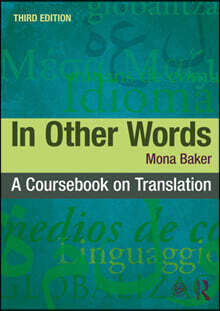
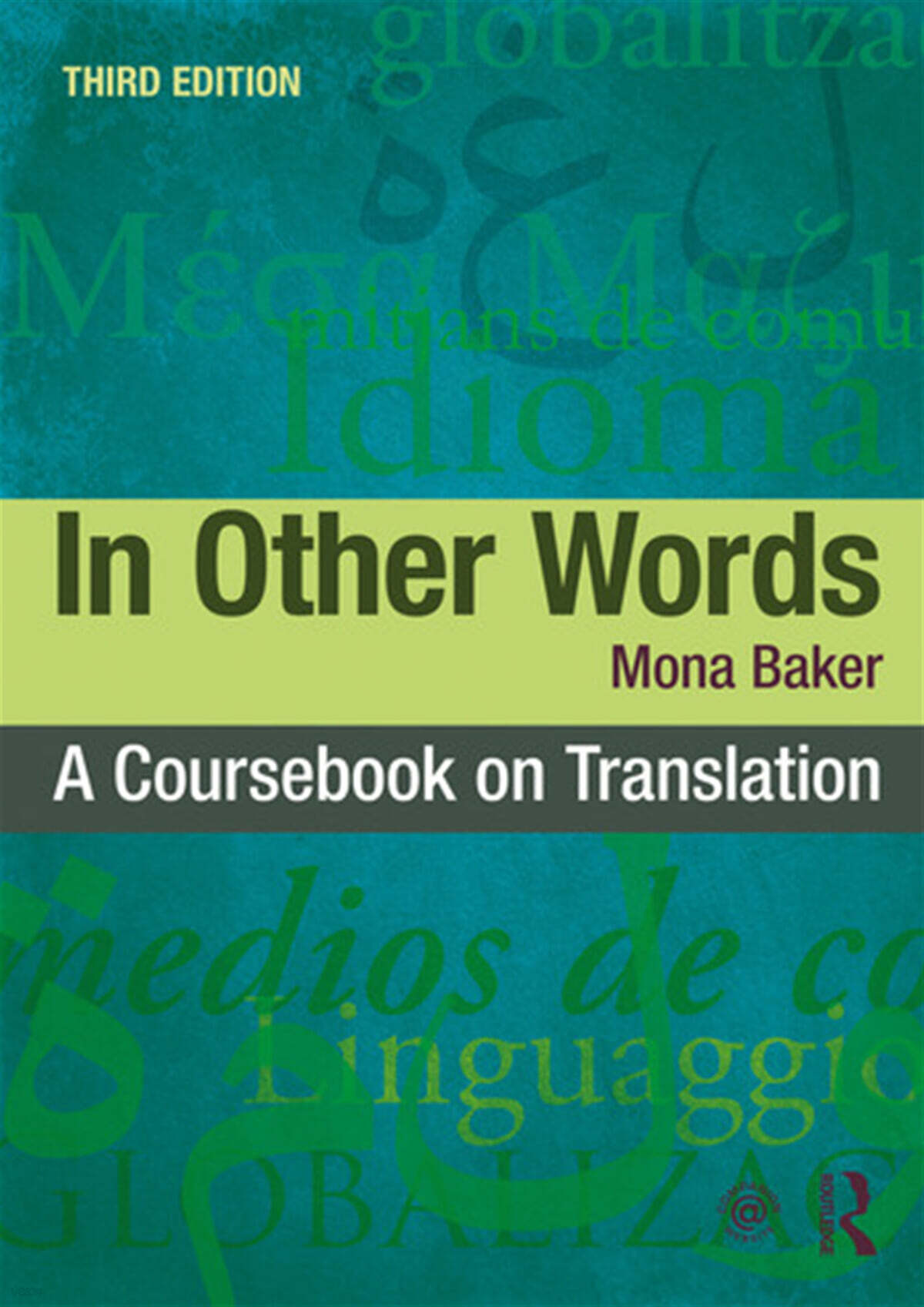
책소개
목차
|
Contents List of figures List of tables Preface to the second edition Preface to the first edition Acknowledgements Credits 1 Introduction 1.1 About the organization of this book 1.2 Examples, back-translations and the languages of illustration Suggestions for further reading Note 2 Equivalence at word level 2.1 The word in different languages 2.2 Lexical meaning 2.3 The problem of non-equivalence Exercises Suggestions for further reading Notes 3 Equivalence above word level 3.1 Collocation 3.2 Idioms and fixed expressions Exercises Suggestions for further reading Notes 4 Grammatical equivalence 4.1 Grammatical versus lexical categories 4.2 The diversity of grammatical categories across languages 4.3 A brief note on word order 4.4 Introducing text Exercises Suggestions for further reading Notes 5 Textual equivalence: thematic and information structures 5.1 A Hallidayan overview of information flow 5.2 The Prague School position on information flow: functional sentence perspective Exercises Suggestions for further reading Notes 187 6 Textual equivalence: cohesion 6.1 Reference 6.2 Substitution and ellipsis 6.3 Conjunction 6.4 Lexical cohesion Exercises Suggestions for further reading Notes 7 Pragmatic equivalence 7.1 Coherence 7.2 Coherence and processes of interpretation: implicature 7.3 Coherence, implicature and translation strategies Exercises Suggestions for further reading Notes 8 Semiotic equivalence 8.1 Semiotic resources and semiotic regimes 8.2 Creative deployment of semiotic resources 8.3 Translating semiotically complex material Exercises Suggestions for further reading Notes 9 Beyond equivalence: ethics and morality 9.1 Ethics and morality 9.2 Professionalism, codes of ethics and the law 9.3 The ethical implications of linguistic choices 9.4 Concluding remarks Exercises Suggestions for further reading Notes Glossary References Name index Language index Subject index |
관련 분류
품목정보
- 발행일
- 2018년 11월 06일
- 쪽수, 무게, 크기
- 436쪽 | 크기확인중
- ISBN13
- 9781138666887
리뷰/한줄평0
상품정보안내
직수입외서의 경우, 해외거래처에서 제공하는 정보가 부족하여 제목, 표지, 가격, 유통상태 등의 정보가 미비하거나 변경되는 경우가 있습니다. 정확한 확인을 원하시는 경우, 일대일 상담으로 문의하여 주시면 답변 드리겠습니다.
(판형과 판수 등이 다양한 도서는 찾으시는 도서의 ISBN을 알려 주시면 보다 빠르고 정확한 안내가 가능합니다.)
해외거래처에서 품절인 경우, 2차 거래선을 통해 유럽과 미국 출판사로 직접 수입이 진행될 수 있습니다.
수입 진행 시점으로 부터 2~3주가 추가로 소요되며, 해외에서도 유통이 원활하지 않은 도서는 품절 안내가 지연될 수 있습니다.
해당 경우, 문자와 메일로 별도 안내를 드리고 있사오니 마이페이지에서 휴대전화번호와 메일주소를 다시 한번 확인해주시기 바랍니다.
(판형과 판수 등이 다양한 도서는 찾으시는 도서의 ISBN을 알려 주시면 보다 빠르고 정확한 안내가 가능합니다.)
해외거래처에서 품절인 경우, 2차 거래선을 통해 유럽과 미국 출판사로 직접 수입이 진행될 수 있습니다.
수입 진행 시점으로 부터 2~3주가 추가로 소요되며, 해외에서도 유통이 원활하지 않은 도서는 품절 안내가 지연될 수 있습니다.
해당 경우, 문자와 메일로 별도 안내를 드리고 있사오니 마이페이지에서 휴대전화번호와 메일주소를 다시 한번 확인해주시기 바랍니다.