
이미 소장하고 있다면 판매해 보세요.
- 국내배송만 가능
- 문화비소득공제 가능
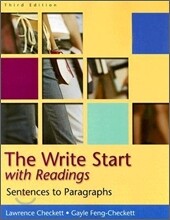
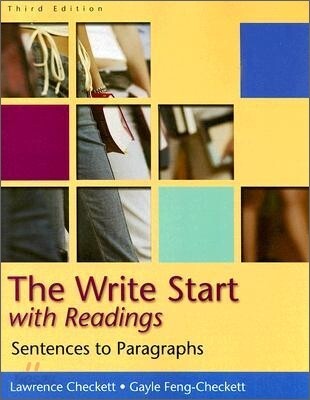
책소개
목차
|
Note: Chapters 2-22 include a Chapter Review. Each chapter in Parts II and III also includes a Topic Bank and Writing Opportunities.
1. The Importance of Writing Avoiding the Two Major Problems of Poor Writing Writing as a Life Skill 2. Elements of Good Writing Good Writing: Four Misconceptions Good Writing Doesn't Have to Be Complicated Good Writing Doesn't Have to Be Long Good Writing Is More Formal Than Talking Good Writing Needs Proper Punctuation The Computer, Writing, and You I. Writing Effective Sentences 3. The Simple Sentence and the Independent Clause The Subject Subjects and Prepositional Phrases The Verb Verb Tense (Time) Compound Subjects Compound Verbs Correcting Sentence Fragments 4. Linking Independent Clauses Using the Comma and Coordinators Coordinating Conjunctions Correcting Run-on and Comma Splice Sentences 5. Combining Independent Clauses Using the Semicolon 6. Combining Independent Clauses Using the Adverbial Conjunction 7. Adding a List Punctuating and Placing the List Parallelism in a Series 8. Adding a Colon for Variety 9. The Dependent Clause Independent versus Dependent Clauses Punctuating Dependent Clauses 10. The Introductory Phrase Introductory Phrase Variety 11. Starting a Sentence with an Introductory Word Punctuating the Introductory Word When to Use Introductory Words 12. Adding Interrupters to the Sentence II. Writing Effective Paragraphs Prewriting Activities 13. The Paragraph The Topic Sentence Support Sentences Creating the Working Outline of a Paragraph Writing the First Draft Revising the First Draft Proofreading: The Final Step 14. Description Types of Description Dominant Impressions Sensory Images Comparisons A Ten-Step Process for Writing the Descriptive Paragraph 15. Narration The Point of the Story Developing the Narrative Paragraph Model Narrative Paragraphs Transitional Expressions: Showing Time Sequence 16. Using Examples The Topic Sentence Transitional Expressions: Introducing Examples Using One Extended Example 17. Classification Breaking Down a Topic The Topic Sentence Transitional Expressions: Linking Your Classifications 18. Process Types of Process Organizing the Process Paragraph Transitional Expressions: Connecting the Steps The Topic Sentence 19. Comparison and Contrast Deciding to Compare or Contrast The Topic Sentence Organizing Comparisons and Contrasts Transitional Expressions: Connecting Your Comparisons and Contrasts 20. Definition Simple Definitions Extended Definition The Topic Sentence of an Extended Definition 21. Persuasion (Including Cause and Effect) Building the Persuasive Paragraph The Pro/Con List Support in Persuasion Paragraphs Organization Patterns Transitional Expressions for Persuasion Persuasive Logic: Cause and Effect Reasoning Transitional Expressions for Cause/Effect Writing The Topic Sentence in a Cause/Effect Paragraph III. Writing Effective Essays 22. The Essay The Five-Paragraph Essay The Introductory Paragraph The Thesis Sentence Putting It All Together Introductory Sentences The Body Paragraphs The Concluding Paragraph Sample Student Essay The Writer's Resources Grammar Nouns Pronouns Verbs Adjectives Adverbs Conjunctions Interjetinos Clauses and Phrases Types of Sentences Additional Practice with Sentences Preposition Combinations Articles Capitalization and Numbers Capitalization Numbers Additional Punctuation Rules The Apostroph Quotation Marks Parentheses Brackets The Dash The Hyphen Underlining or Italics Interrupters: Restricive and Nonrestrictive Clauses and Phrases (Modifiers) Words and Meanings Commonly Misspelled Words Words That Sound Alike Contractions That Sound Like Other Words Words That Sound or Look Almost Alike Confusing Verbs That Sound Alike: Lie/Lay; Rise/Raise; Sit/Set Two- and Three-Word Verb Phrases Readings Description The Mute Sense, Diane Ackerman The Ice Cream Truck, Luis J. Rodriguez Halloween Havoc, Erin Nelson (Student) Narration The Roommate's Death, Jan Harold Brunvand The Eye of the Beholder, Grace Suh Shattered Sanctuary, Stephanie K. Higgs (Student) Example Extremely Cool, A. J. Jacobs The Culture of Violence, Myriam Miedzian Virtual Violence, Nate Kistner (Student) Classification Why We Carp and Harp, Mary Ann Hogan The Plot Against People, Russell Baker Michelangelo Madness, Martin Brink (Student) Process Conversational Ballgames, Nancy Masterson Sakamoto Strive to Be Fit, Not Fanatical, Timothy Gower How to Become a Successful Student, Aaron Breite (Student) Comparison and Contrast Grant and Lee: A Study in Contrasts, Bruce Catton Hasta la Vista, Arnold, Margaret Talbot The Family Sedan Versus Dad's Sports Car, Yvonne Olson (Student) Definition Discrimination Is a Virtue, Robert Keith Miller The Handicap of Definition, William Raspberry What Is Success? Hannah Glascock (Student) Persuasion The Recoloring of Campus Life, Shelby Steele Indistinguishable from Magic, Robert L. Forward Unconditional Support, Beth Glenn (Student) The Family Collective, Denise Hillis (Student) |
관련 분류
품목정보
- 발행일
- 2006년 07월 15일
- 쪽수, 무게, 크기
- 쪽수확인중 | 크기확인중
- ISBN13
- 9780618918874
관련 자료
|
New! Each Mode of Development section now has examples of both professional and student essays that facilitate instruction and generate student interest.
New! Chapter Warm-Up pre-writing exercises and Topic Bank writing prompts give students practice at developing their ideas. New! "The Writer's Resources" section provides clear, concise, basic grammar instruction coupled with a vast number of exercises. Exercises with an ESL emphasis also have been added. New! Instruction tips and activity instructions in the Annotated Instructor's Edition are based on the authors' combined thirty years of experience in teaching writing. An ESL logo marks the tips and activities that are particularly helpful with ESL students. "Writing Opportunities" exercises with photos provide personal, academic, and workplace writing prompts and stimulate creativity. Flexibility and modularity, key features of The Write Start, make this book easy to use and allow instructors to customize the text to meet the needs of their individual students or classes. A chapter on essay writing serves as a useful introduction to the essay form. |
사락 별점0
혜택 및 유의사항밑줄0
혜택 및 유의사항상품정보안내
직수입외서의 경우, 해외거래처에서 제공하는 정보가 부족하여 제목, 표지, 가격, 유통상태 등의 정보가 미비하거나 변경되는 경우가 있습니다. 정확한 확인을 원하시는 경우, 일대일 상담으로 문의하여 주시면 답변 드리겠습니다.
(판형과 판수 등이 다양한 도서는 찾으시는 도서의 ISBN을 알려 주시면 보다 빠르고 정확한 안내가 가능합니다.)
해외거래처에서 품절인 경우, 2차 거래선을 통해 유럽과 미국 출판사로 직접 수입이 진행될 수 있습니다.
수입 진행 시점으로 부터 2~3주가 추가로 소요되며, 해외에서도 유통이 원활하지 않은 도서는 품절 안내가 지연될 수 있습니다.
해당 경우, 문자와 메일로 별도 안내를 드리고 있사오니 마이페이지에서 휴대전화번호와 메일주소를 다시 한번 확인해주시기 바랍니다.
(판형과 판수 등이 다양한 도서는 찾으시는 도서의 ISBN을 알려 주시면 보다 빠르고 정확한 안내가 가능합니다.)
해외거래처에서 품절인 경우, 2차 거래선을 통해 유럽과 미국 출판사로 직접 수입이 진행될 수 있습니다.
수입 진행 시점으로 부터 2~3주가 추가로 소요되며, 해외에서도 유통이 원활하지 않은 도서는 품절 안내가 지연될 수 있습니다.
해당 경우, 문자와 메일로 별도 안내를 드리고 있사오니 마이페이지에서 휴대전화번호와 메일주소를 다시 한번 확인해주시기 바랍니다.
