
소득공제
수입
직수입양서
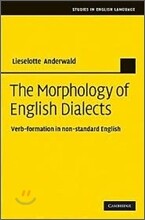
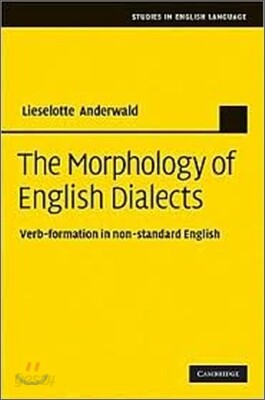
The Morphology of English Dialects: Verb-Formation in Non-Standard English
Verb-Formation in Non-standard English
Hardcover, POD 주문제작도서
Anderwald, Lieselotte
Cambridge University Press
2009.04.27.
- 주문 제작 (POD) 도서로 제본 및 인쇄 품질이 다소 미흡할 수 있습니다 (해당 사유 반품 불가)
이미 소장하고 있다면 판매해 보세요.
- 국내배송만 가능
- 해외 거래처 사정에 의하여 품절/지연 가능
- 도서 정보 중 미표기 사항 안내?
- 문화비소득공제 가능
책소개
목차
|
List of figures xii
List of maps xiv List of tables xv Preface and thanks xvii Acknowledgement of sources xviii 1 Introduction 1 1.1 The past tense - a descriptive approach 1 1.2 Terminology: strong-weak vs. irregular-regular 3 1.3 Classification of strong verbs 5 1.3.1 Ablaut series, vowel gradation 5 1.3.2 Dental suffix 6 1.3.3 Abstract formal identity 7 1.4 Standard vs. non-standard English 12 1.5 Materials employed 13 2 Past tense theories 17 2.1 Introduction 17 2.2 Chomsky and Halle (1968) 18 2.3 Lexical Phonology and Morphology 21 2.4 Optimality Theory 26 2.5 Stochastic Optimality Theory 32 2.6 Psycholinguistic theories 33 2.7 Connectionist approaches 36 2.8 Network model 38 2.9 Natural morphology 40 2.9.1 Universal morphological naturalness 40 2.9.2 Language-specific morphological naturalness 42 2.9.3 Criticism 45 2.9.4 Compatibility with other models 45 2.10 Conclusion 46 3 Naturalness and the English past tense system 49 3.1 General features of the English verb system 49 3.2 Dominant features 51 3.3 Standard English verb classes 51 3.3.1 Verb class 1: PRES ≠ PAST ≠ PPL 52 3.3.1.1 Vpres ≠ Vpast ≠ Vppl 53 3.3.1.2 &1t:-en>-participle 53 3.3.2 Verb class 2: PRES ≠ PAST = PPL 55 3.3.2.1 Vpres ≠ Vpast = Vppl 55 3.3.2.2 No vowel change 57 3.3.3 Verb class 3: PRES = PPL ≠ PAST 58 3.3.4 Verb class 4: PRES = PAST ≠ PPL 58 3.3.5 Verb class 5: PRES = PAST = PPL 59 3.3.6 Summary 59 3.4 The central characteristics 61 3.5 Non-standard verb paradigms as test cases 61 3.5.1 New non-standard weak verbs 62 3.5.2 New non-standard strong verbs 62 3.5.3 Differentnon-standard strong verbs 63 3.5.3.1 Two- instead of three-part paradigms 63 3.5.3.2 One- instead of two-part paradigms 65 3.5.4 Summary 65 4 Sellt and knowed: non-standard weak verbs 66 4.1 Introduction 66 4.2 Data from FRED: what to count? 68 4.3 Regional comparison 69 4.4 Individual verbs 70 4.4.1 Northern features 73 4.4.1.1 Past tense gaed and gi'ed 73 4.4.1.2 Past tense tellt and sellt 73 4.4.2 Southern features 77 4.4.2.1 Past tense runned 77 4.4.2.2 Past tense gived 78 4.4.2.3 Past tense knowed, growed, blowed and throwed 79 4.4.2.4 Historical dialect data 81 4.4.2.5 Past tense drawed 82 4.4.2.6 Relative frequencies 83 4.4.3 Western feature 84 4.4.3.1 Past tense seed 84 4.4.4 General features 87 4.4.4.1 Past tense knowed 87 4.4.4.2 Past tense catched 89 4.5 Verb classes 91 4.6 Statistical models 92 4.7 Comparison with COLT 95 4.8 Summary 96 5 Drunk, seen, done and eat: two-part paradigms instead of three-part paradigms 98 5.1 Introduction 98 5.2 'Bybee' verbs 98 5.2.1 History 101 5.2.1.1 Past tense forms of begin 103 5.2.1.2 Past tense forms of drink 105 5.2.1.3 Past tense forms of sink 106 5.2.1.4 Past tense forms of sing 107 5.2.1.5 Past tense forms of ring 108 5.2.2 Historical dialects 109 5.2.3 Data from FRED 110 5.2.3.1 Verbs 110 5.2.3.2 Singular vs. plural? 110 5.2.3.3 Regions 111 5.2.4 Comparison with COLT 113 5.2.5 Cognitive explanation 114 5.3 Past tense seen 120 5.3.1 Introduction 120 5.3.2 History 120 5.3.3 Historical dialects 121 5.3.4 Data from FRED 121 5.3.5 Conclusion 125 5.4 Past tense done 125 5.4.1 Introduction 125 5.4.2 History 126 5.4.3 Previous studies 127 5.4.4 Historical dialects 127 5.4.5 Data from FRED 129 5.4.6 Data from COLT 132 5.4.7 Done in American English 133 5.4.8 Cognitive explanation 134 5.5 Counterexamples: past tense eat, give and see 136 5.5.1 Introduction 136 5.5.2 Past tense eat 136 5.5.2.1 History 137 5.5.2.2 Historical dialects 137 5.5.2.3 Data from FRED 138 5.5.2.4 Conclusion past tense eat 140 5.5.3 Past tense give 141 5.5.3.1 History 141 5.5.3.2 Historical dialects 141 5.5.3.3 Data from FRED 142 5.5.4 Past tense see 144 5.5.4.1 Historical dialects 144 5.5.4.2 Data from FRED 144 5.5.4.3 Data from COLT 145 5.5.5 Conclusions 146 5.6 Chapter conclusion 147 6 Come and run: non-standard strong verbs with a one-part paradigm 149 6.1 Past tense come 149 6.1.1 Introduction 149 6.1.2 History 150 6.1.2.1 Regular development 150 6.1.2.2 Standard English past tense came 153 6.1.3 Historical dialects 158 6.1.4 Data from FRED 163 6.1.5 Data from COLT 165 6.1.6 Summary and explanation 166 6.2 Past tense run 168 6.2.1 Introduction 168 6.2.2 History 168 6.2.2.1 Present tense 168 6.2.2.2 Past tense 174 6.2.3 Historical dialects 176 6.2.4 Data from FRED 176 6.2.4.1 Procedure 176 6.2.4.2 Quantification 178 6.2.5 Data from COLT 179 6.2.6 Cognitive explanation 179 6.3 Chapter conclusion 180 7 Conclusion: supralocalization and morphological theories 183 7.1 Summary of findings 183 7.2 Supralocalization? 185 7.3 Morphological theories revisited 188 7.3.1 Rules vs. representations 188 7.3.2 The role of frequency 191 7.3.3 Accounting for diachronic developments 191 7.3.4 Non-standard data 194 7.4 Summary 197 Appendix 1 Verb classification 198 Appendix 2 SED localities and list of counties 205 Bibliography 207 Index 216 |
품목정보
- 발행일
- 2009년 04월 27일
- 쪽수, 무게, 크기
- 224쪽 | 크기확인중
- ISBN13
- 9780521884976
사락 별점0
혜택 및 유의사항밑줄0
혜택 및 유의사항상품정보안내
직수입외서의 경우, 해외거래처에서 제공하는 정보가 부족하여 제목, 표지, 가격, 유통상태 등의 정보가 미비하거나 변경되는 경우가 있습니다. 정확한 확인을 원하시는 경우, 일대일 상담으로 문의하여 주시면 답변 드리겠습니다.
(판형과 판수 등이 다양한 도서는 찾으시는 도서의 ISBN을 알려 주시면 보다 빠르고 정확한 안내가 가능합니다.)
해외거래처에서 품절인 경우, 2차 거래선을 통해 유럽과 미국 출판사로 직접 수입이 진행될 수 있습니다.
수입 진행 시점으로 부터 2~3주가 추가로 소요되며, 해외에서도 유통이 원활하지 않은 도서는 품절 안내가 지연될 수 있습니다.
해당 경우, 문자와 메일로 별도 안내를 드리고 있사오니 마이페이지에서 휴대전화번호와 메일주소를 다시 한번 확인해주시기 바랍니다.
(판형과 판수 등이 다양한 도서는 찾으시는 도서의 ISBN을 알려 주시면 보다 빠르고 정확한 안내가 가능합니다.)
해외거래처에서 품절인 경우, 2차 거래선을 통해 유럽과 미국 출판사로 직접 수입이 진행될 수 있습니다.
수입 진행 시점으로 부터 2~3주가 추가로 소요되며, 해외에서도 유통이 원활하지 않은 도서는 품절 안내가 지연될 수 있습니다.
해당 경우, 문자와 메일로 별도 안내를 드리고 있사오니 마이페이지에서 휴대전화번호와 메일주소를 다시 한번 확인해주시기 바랍니다.
150,500원
총 1개
150,500원