
이 분야의 이벤트

목차
|
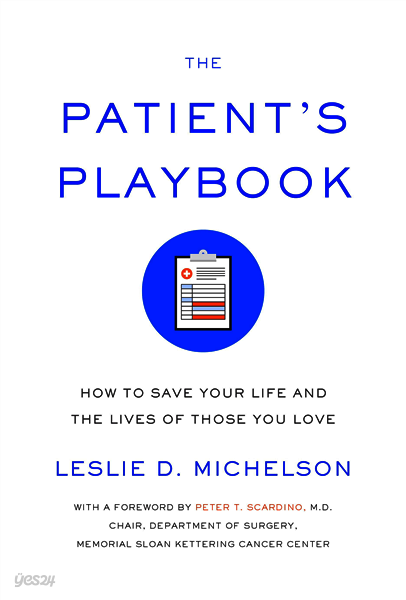
Too many Americans die each year as a result of preventable medical error—mistakes, complications, and misdiagnoses. And many more of us are not receiving the best care possible, even though it’s readily available and we’re entitled to it. The key is knowing how to access it. From the Hardcover edition. |
관련 분류
- 카테고리 분류
품목정보
- 발행일
- 2015년 09월 01일
- 이용안내
-
- 배송 없이 구매 후 바로 읽기
- 이용기간 제한없음
- TTS 불가능
- 저작권 보호를 위해 인쇄 기능 제공 안함
- 지원기기
- 크레마,PC(윈도우 - 4K 모니터 미지원),아이폰,아이패드,안드로이드폰,안드로이드패드,PC(Mac)
- 파일/용량
- EPUB(DRM) | 2.63MB ?
출판사 리뷰
|
Introduction
After I was born, in 1951, my mother went into a major postpartum depression. For the first six months of my life, she couldn’t get out of bed, leaving me in the care of my father and maternal grandmother. I actually didn’t learn about this until I was forty-five, and someone casually mentioned it at a party. Sadly, the stigma of psychiatric illness was so great at the time (and still can be today) that families touched by chronic depression often had to carry the burden in silence. My parents had been counseled by doctors that they shouldn’t discuss it, so they didn’t. My mother eventually recovered, but then she became bipolar, which meant there were days, months, and years when she’d be fine, and then long periods when she was incapable of getting up, making dinner, or holding a conversation. During her manic phases, she’d be on a high for days or weeks, talking nonstop and sometimes being cruel to me and others I know she loved. I couldn’t predict when her disease would take control of her. Coming home from school, I never knew if I’d be greeted by a fire-breathing dragon or a smiling mother with a glass of milk and a plate of cookies. I had to feel around the edges of the door for danger, the way they teach you in fire safety training. When I was ten, my mother screamed at me for forty-five minutes because I left a sneaker on the steps. The only ten-year-old who hasn’t left a sneaker on the steps is a ten-year-old who doesn’t have sneakers or steps. During an ugly scene when I was twelve or thirteen, I physically held my mother down in a chair and told her, “You will stop yelling at my brother right now.” That moment changed everything between us. She was my mother, and I loved her, but her disease was dangerous, and I had to be assertive. Although my mother’s illness was hard on me, it had to have been worse for my father. The instant I was born, he lost his wife. And yet he remained extraordinarily positive and strong. He was a genuine role model, the moral center of gravity for every community that he was in—whether it was our larger family, the synagogue, the Boy Scouts, his business, or his trade association. He was the guy who would solve other people’s problems. I could talk to Dad for hours. By my early teens, I was actively involved in helping with my mother’s care. That was when she received her first electroshock therapy treatment for recurring depression. Later, we had her on daily lithium, a mood stabilizer. I had to grow up and become a responsible caregiver at a very young age. And here’s where the story gets complicated. When I was in high school, my father came home one evening, clearly agitated. For me, the sun came up at night when my father walked through the door. As tired as he was, those hours with him were absolutely precious. If he came home anxious or upset, that was a big deal. He had gone for his annual physical that day with his primary care physician, a man with whom he’d attended high school in Newark, New Jersey. The doctor had recommended that my father see a certain cardiologist. A week or two later Dad came home even more rattled than before. The cardiologist had told him he needed to have open-heart surgery. I was overcome with worry. Was my dad going to die? Losing him wouldn’t just mean I’d be an orphan, practically speaking; it would mean I’d have to take full responsibility for my mother. That was not a reality I could handle. That night I couldn’t sleep. The next day I couldn’t concentrate at sc |