
이미 소장하고 있다면 판매해 보세요.
- 해외배송 가능?
- 문화비소득공제 가능
책소개
목차
|
Chapter 1. Structure of Sentences
1-1 Sentence Pattern 1 The Typical Day of my Dad 1-2 Sentence Pattern 2 April in Korea Jae-hyung Met Ha-neul 1-3 Sentence Pattern 3 Learning English 1-4 Sentence Pattern 4 Green Wine 1-5 Sentence Pattern 5 About Ms. Princess Chapter 2. Verb 2-1 Modals Classroom English 2-2 Verbs Used with Prepositions Sukhee and Her Boyfriend 2-3 Verbs Where You Don't Use Prepositions A Rich Tycoon Got Married to his Love at First Sight A Drama It doesn't Hurt to Ask 2-4 Passive/Active Problems Monica's Story A Drama 2-5 When You Don't Use Indirect Objects A Great Place to Visit Chapter 3. Gerund and Infinitive 3-1 Gerund A Boy who Became an Ox 3-2 Verbs Which Use Infinitive as Their Objects A Loner who Wanted to Live Alone A Drama Chapter 4. Tense 4-1 Present Flying Saucers 4-2 Present Progressive Now in the Campus of CNU 4-3 Present Perfect Tense 4-4 Present Perfect Progressive 4-5 Past 4-6 Past Progressive A Drama: Traffic Ticket 4-7 Past Perfect Tence About Tae-ji Seo, Korea's King of Pop 4-8 Future Someday, I'll... Someday A Holiday in Bali A Dilemma 4-9 Future Progressive Different Plans 4-10 Future Perfect My Sister 4-11 Future Perfect Progressive A Really Good Computer Chapter 5. Passive 5-1 Passive Summary of Plot J. R. R. Tolkien My Favorite Film: Dances With Wolves Chapter 6. Noun 6-1 People, Place and Thing Father Sees the World 6-2 Consonant and Vowel Sounds An FBI Agent who Became an Heir of a Billionaire 6-3 Nouns Referring to Groups of People O-seok's Story 6-4 Uncountable Nouns The Internet A Drama Chapter 7. Pronoun 7-1 Another vs. The Other Twins Two Dreams Gifts Baskin Robins 7-2 Other(s) vs. The other(s) A Rose Garden The French Flag 7-3 Singular Pronouns Everybody is Somebody 7-4 Plural Pronouns Job Application 7-5 Pronoun Which Can Be both Plural and Singular A Request Chapter 8. Adjective 8-1 What is an Adjective? William Blake 8-2 Rules for Comparisons Buying Shoes Convenience 8-3 Plural Adjectives Overprotective Parents A Drama At a Disco Chapter 9. Relative Pronoun 9-1 Relative Clauses (1) - Clauses with Who/Whose/Whom First Day of Class 9-2 "that" "which" and "what" Satisfaction A Letter Chapter 10. Conditional 10-1 Conditional 1 Motivation Unexpected Consequences 10-2 Conditional 2 Give me Some Advice 10-3 Conditional 3 An Unemployed Person's Story A Drama Bibliography |
저자 소개
저자: 박연성
박연성은 이화여대(학사), 서울대(석사), 전남대(박사)에서 영문학을 공부하였으며 현재 예향의 문화도시 광주에 위치한 전남대에서 영어를 가르치고 있다. 사학을 공부하는 남편 사이에 영상을 전공하는 딸과 음악을 사랑하는 아들을 두고 있다. 그동안 『영어의 밭으로 걸어나가라』, 『W. H. 오든』(공저), 『Listening to Windows』(공동 영시집)를 집필하였고 『복화술의 목소리』(공역)를 비롯한 번역서가 있다. 『창의적 영어 학습 Creative English Practice』은 전남대에서 여러 해 강의해온 영어회화작문 강의의 결정체이다.
관련 분류
품목정보
- 발행일
- 2009년 12월 15일
- 쪽수, 무게, 크기
- 130쪽 | 492g | 210*297*20mm
- ISBN13
- 9788975987748
책 속으로
|
CHAPTER 1. STRUCTURE OF SENTENCE
There are five kinds of sentence patterns: sentence pattern 1: subject + verb sentence pattern 2: subject + verb + complement sentence pattern 3: subject + verb + object sentence pattern 4: subject + verb + Indirect object + direct object sentence pattern 5: subject + verb + object + object complement Chant Don`t forget us! Don`t forget us! We are the subject and the verb. We are very important. No sentence is possible Without us. Don`t forget us! We are the subject and the verb. ACKNOWLEDGEMENT I have adapted this chant from Carolyn Graham, Jazz Chants, 1978, Oxford. 1-1 Sentence Pattern 1 Intransitive verb has a subject but it does not require an object. In the sentence, "They arrived early," "arrive" is an intransitive verb. 〈Common Intransitive Verbs〉 arrive, bounce, creep, crawl, cry, dance, drag, float, flutter, go, hop, laugh, live, march, plod, reply, rollerblade, run, stagger, saunter, sleep, smile, spring, stumble, talk, tiptoe, walk, work, yawn Preview: Construct sentences using the given verbs. Examples are given for each number. 1. arrive: It was already dark by the time Jessica arrived at their hotel. 2. bounce: The ball bounced back from the wall. 3. creep: Alex unlocked the back door and crept out into the yard. 4. crawl: Jessica and Alex are crawling on their hands and knees. 5. march: Thousands of Korean soldiers marched through the streets of Gwang-ju. 6. rollerblade: It is dangerous to rollerblade on big streets. 7. saunter: We watched our fellow students saunter into the building. 8. sleep: Did you sleep well? 9. walk: Anne walked out of the station and got into a taxi. 10. work: My dad isn't working at the moment. The Typical Day of my Dad This is a typical day of my dad. At 8:00 a.m., he walks to his office located on the Pine Avenue. He seldom talks to his co-workers when he engages in his work. However, he replies quickly when his boss addresses him. After work he comes home and rollerblades with me in the Giant Park in the evening. We smile as we glide along the lanes in the park. All around the park we can see many different people enjoying the day. On the grass there are babies crawling and crying. There are also children running and laughing happily. When my dad yawns widely, it usually is a signal that we should be getting back home and have dinner. My dad goes to bed early and usually sleeps like a log. 〈Speaking Activity〉 1. Do you want to be a dad like the one in the story? 2. Do you know anyone who is like the one in the story? 〈Writing Activity〉 Beside each part of a day, list activities you do. Use your knowledge and imagination. 〈Speaking Activity〉 The following is Lori Kim's list of what she does weekdays. Tell her routine in English. 8:00 buy paper and magazine 9:00 have a meeting with the manager 10:00 call Export International 10:15 Write to Alex 10:30 Talk with Pinto and Jane about the new products 12:00 write a letter to Harold Pinter of TM Production to confirm meeting 1:00 meet David for lunch 2:00 work at her office 5:00 come home 1-2 Sentence Pattern 2 The following linking verbs need complements. Students often make mistakes by using adverbs after them. After the following verbs, nouns or adjective forms should be used. 〈common linking verbs〉 seem, appear, look, become, turn, get, make, smell, sound, feel, taste Preview: Construct sentences using the given verbs. Examples are given for each number. 1. seem The child seems healthy. 2. appear Maria appears rich. 3. look Peter looks pale. 4. become In 1960 Kennedy became the first Catholic president. 5. turn I turned white when I saw all the blood on the floor. 6. get It is getting dark outside. 7. make John will make a good father. 8. smell It smells fishy. 9. sound The music sounds sweet. 10. feel I felt wonderful. 11. taste This milk tastes a little sour. April in Korea In April the weather got warmer and the sky turned yellow because of the yellow dust storms blowing from China. Even so, the air smelled good from the young spring foliage that turned greener every day. When Jin-sol got up this morning, she realized that her shoulder felt stiff. So she went to a public bath where some women soaked in a big hot bathtub. After taking a shower, Jin-sol visited the massage jets to give herself a shoulder rub. She felt much better. On her way home, the music on the street sounded delightful, and the day seemed perfect until Jin-sol got to her English class. It became stressful again but when she saw that her grade on her homework paper was an A+, she became high-spirited again. --- '본문' 중에서 『창의적 영어 학습』은 한국 학생들이 틀리기 쉽고 암기하기 어려운 문법 상황을 정리하고, 그 문법사항을 기반으로 하여 쓴 이야기(Gramstory, Grammar+story) 모음이다. 이 책은 2003년 겨울 토플을 가르친 경험을 발단으로 시작하게 되었다. 수학공식과도 같은 많은 문법규칙을 재미있게 학습하는 방법은 없을까 고민하던 중, 당시 전남대학교 언어 교육원에서 가르쳤던 마크 빈슨 선생님으로부터 단어로 이야기를 쓰면 단어를 자연스럽게 외울 수 있다는 말을 들었다. 그 순간 문법 공식에 포함되어있는 단어로 이야기를 쓰면 문법도 재미있게 익힐 수 있겠구나 하는 아이디어가 떠올랐다. 그리하여 최초로 쓴 이야기가 「소가 된 소년」이다. 이 이야기는 동명사를 목적어로 사용하는 동사들이 아홉 개 들어있다. 이야기를 여러 번 반복하여 읽다 보면 그 동사를 문맥 속에서 익힐 수 있다. 두 번째로 쓴 이야기는 「독거를 애호한 남자」이다. 이 이야기에는 부정사를 목적어로 쓰는 동사가 열 개 사용되었다. 이 두 이야기를 시작으로 나는 외우기 어렵고, 틀리기 쉬운 문법사항을 정리하고, 더 많은 문법 이야기를 쓰기에 이르렀다. 2004년 가을 학기에『창의적 영어 학습』을 온라인의 듣기 사이트에 수록된 회화와 함께 초급 영어회화작문강의에 쓰기 시작하여 향후 5년 동안 수정과 보완을 반복하였다. 그 과정에서 Gramstory의 읽기 후 활동으로 학생들이 쓴 일곱 편의 드라마가 수록되기에 이르렀다.『창의적 영어 학습』은 차별화된 문법 서적이면서, 동시에 학생들이 표현하고 싶은 내용이 표현된 드라마 교본이기도 하다. 뿐만 아니라 읽기 전후의 학습활동은 학생중심의 교실활동이 가능하도록 고안되어있다. 10년간 회화강의를 하면서 많은 책을 참고하여 발견한 재미있는 학습활동이 듬뿍 담겨져 있다. 이 책이 나오기까지 빚을 진 사람이 많이 있다. 먼저 하와이에 체류할 당시 사귄 벗 역사학자인 주로리(Lori Chu)선생님의 도움을 잊을 수 없다. 주로리 선생님은 문법 이야기와 드라마의 모든 원고를 교정해 주셨다. 책의 삽화를 그려준 왕은별과 딸 윤재은에게도 고마움을 전하고 싶다. 그리고 원고의 타이핑을 도와준 제자 김지현, 김선아, 황성경과 그리고 늘 조력의 손길을 아끼지 않는 남편 및 가족에게도 감사한 마음을 전하고 싶다. 그 외에 은혜를 입은 분들이 많이 있지만 지면 관계상 일일이 거론하지 못함을 죄송하게 생각한다. 끝으로 사계절 모두 눈부시게 아름다운 캠퍼스와 학습 동기가 높은 인재들이 있는 전남대학교에서 그간 가르칠 기회를 주신 하나님께 두 손 모아 감사드린다. --- '서문' 중에서 |
출판사 리뷰
|
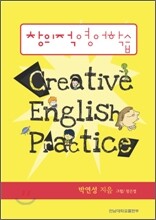
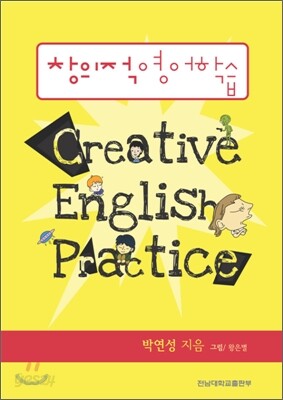
본 책은 한국 학생들이 틀리기 쉽고 암기하기 어려운 문법 상황을 정리하고, 그 문법사항을 기반으로 하여 쓴 이야기(Gramstory, Grammar+story) 모음이다. 이 책은 필자가 토플을 가르친 경험을 발단으로 시작하게 되었다. 수학공식과도 같은 많은 문법규칙을 재미있게 학습하는 방법은 없을까 고민하던 중, 당시 전남대학교 언어 교육원에서 가르쳤던 마크 빈슨 선생님으로부터 단어로 이야기를 쓰면 단어를 자연스럽게 외울 수 있다는 말을 들었다. 그 순간 문법 공식에 포함되어있는 단어로 이야기를 쓰면 문법도 재미있게 익힐 수 있겠구나 하는 아이디어가 떠올랐다. 「소가 된 소년」, 「독거를 애호한 남자」 이 두 이야기를 시작으로 나는 외우기 어렵고, 틀리기 쉬운 문법사항을 정리하고, 더 많은 문법 이야기를 쓰기에 이르렀다.
2004년 가을 학기에 『창의적 영어학습』을 온라인의 듣기 사이트에 수록된 회화와 함께 초급 영어회화작문강의에 쓰기 시작하여 향후 5년 동안 수정과 보완을 반복하였다. 그 과정에서 Gramstory의 읽기 후 활동으로 학생들이 쓴 일곱 편의 드라마가 수록되기에 이르렀다. 『창의적 영어학습』은 차별화된 문법 서적이면서, 동시에 학생들이 표현하고 싶은 내용이 표현된 드라마 교본이기도 하다. 뿐만 아니라 읽기 전후의 학습활동은 학생중심의 교실활동이 가능하도록 고안되어있다. 10년간 회화강의를 하면서 많은 책을 참고하여 발견한 재미있는 학습활동이 듬뿍 담겨져 있다. 관련학문을 연구하는 사람 또한 학습자들에게 좋은 길라잡이가 되기를 기원 한다. |
사락 별점0
혜택 및 유의사항밑줄0
혜택 및 유의사항
9,000원
총 1개
9,000원
