
이미 소장하고 있다면 판매해 보세요.
- 국내배송만 가능
- 문화비소득공제 가능
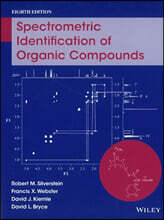
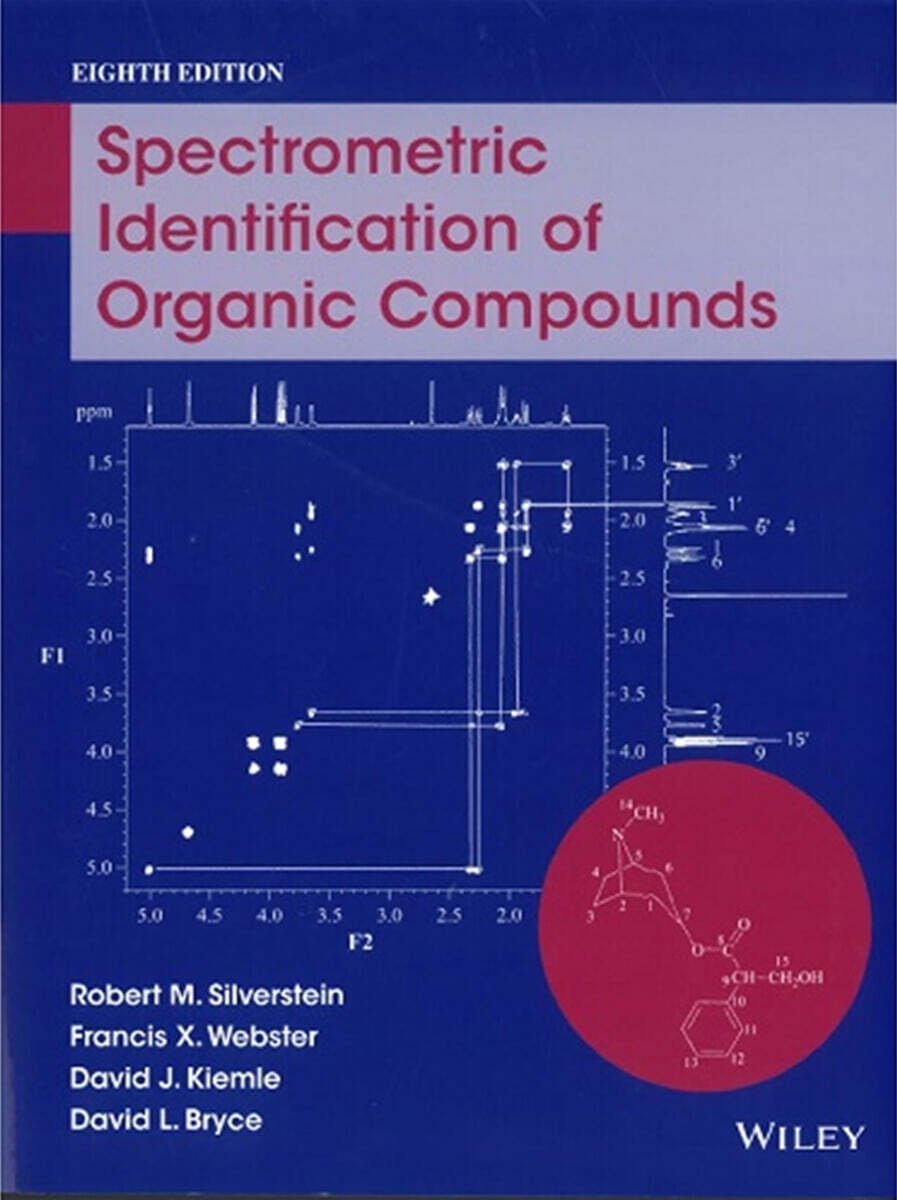
책소개
목차
|
CHAPTER 1 MASS SPECTROMETRY 1
1.1 Introduction 1 1.2 Instrumentation 2 1.3 Ionization Methods 3 1.4 Mass Analyzers 8 1.5 Interpretation of EI Mass Spectra 12 1.6 Mass Spectra of Some Chemical Classes 18 References 37 Student Exercises 37 Appendices 46 CHAPTER 2 INFRARED SPECTROSCOPY 71 2.1 Introduction 71 2.2 Theory 71 2.3 Instrumentation 76 2.4 Sample Handling 77 2.5 Interpretation of Spectra 78 2.6 Characteristic Group Absorptions of Organic Molecules 81 References 108 Student Exercises 108 Appendices 118 CHAPTER 3 PROTON (1H) MAGNETIC RESONANCE SPECTROSCOPY 126 3.1 Introduction 126 3.2 Theory 126 3.3 Instrumentation and Sample Handling 129 3.4 Chemical Shift 132 3.5 Spin-Spin Coupling, Multiplets, and Spin Systems 137 3.6 Protons on Oxygen, Nitrogen, and Sulfur Atoms: Exchangeable Protons 144 3.7 Coupling of Protons to Other Important Nuclei (19F, D (2H), 31P, 29Si, and 13C) 149 3.8 Chemical Equivalence 150 3.9 Magnetic Equivalence 154 3.10 AMX, ABX, and ABC Rigid Systems with Three Coupling Constants 155 3.11 Weakly and Strongly Coupled Systems: Virtual Coupling 156 3.12 Chirality 158 3.13 Magnitude of Vicinal and Geminal Coupling Constants 160 3.14 Long-Range Coupling 162 3.15 Selective Spin Decoupling: Double Resonance 162 3.16 Nuclear Overhauser Effect 162 3.17 Conclusion 163 References 164 Student Exercises 164 Appendices 175 CHAPTER 4 CARBON-13 NMR SPECTROSCOPY 191 4.1 Introduction 191 4.2 Theory 191 4.3 Interpretation of a Simple 13C NMR Spectrum: Diethyl Phthalate 198 4.4 Quantitative 13C Analysis 198 4.5 Chemical Equivalence 200 4.6 DEPT 200 4.7 Chemical Classes and Chemical Shifts 203 References 214 Student Exercises 214 Appendices 225 CHAPTER 5 TWO-DIMENSIONAL NMR SPECTROSCOPY 230 5.1 Introduction 230 5.2 Theory 231 5.3 Correlation Spectroscopy 233 5.4 Ipsenol: 1H-1H COSY 235 5.5 Caryophyllene Oxide 243 5.6 13C-13C Correlations: INADEQUATE 249 5.7 Lactose 251 5.8 Relayed Coherence Transfer: TOCSY 254 5.9 HMQC-TOCSY 259 5.10 ROESY 259 5.10.1 ROESY: Lactose 259 5.11 VGSE 262 5.12 Pulsed Field Gradient NMR 265 References 268 Student Exercises 268 CHAPTER 6 MULTINUCLEAR MAGNETIC RESONANCE SPECTROSCOPY 298 6.1 Introduction and General Considerations 298 6.2 15N Nuclear Magnetic Resonance 299 6.3 19F Nuclear Magnetic Resonance 306 6.4 29Si Nuclear Magnetic Resonance 309 6.5 31P Nuclear Magnetic Resonance 312 6.6 Conclusions 315 References 315 Student Exercises 315 Appendix 320 CHAPTER 7 SOLVED PROBLEMS 325 7.1 Introduction 325 Problem 7.1 Discussion 329 Problem 7.2 Discussion 333 Problem 7.3 Discussion 337 Problem 7.4 Discussion 344 Problem 7.5 Discussion 350 Problem 7.6 Discussion 356 Student Exercises 357 CHAPTER 8 ASSIGNED PROBLEMS 364 8.1 Introduction 364 INDEX 453 |
저자 소개
Robert M. Silverstein, PhD was as born in Baltimore, MD, and moved to Staten Island at a young age. He received his bachelor's degree from the University of Pennsylvania in 1937 and his masters' degree from New York University in 1941. He served with the U.S. Army during World War II. He then earned his doctorate from New York University.
Francis X. Webster is the author of Spectrometric Identification of Organic Compounds, 8th Edition, published by Wiley.
David J. Kiemle is the author of Spectrometric Identification of Organic Compounds, 8th Edition, published by Wiley.
David L. Bryce is the author of Spectrometric Identification of Organic Compounds, 8th Edition, published by Wiley.
품목정보
- 발행일
- 2014년 09월 29일
- 쪽수, 무게, 크기
- 455쪽 | 크기확인중
- ISBN13
- 9780470616376
사락 별점0
혜택 및 유의사항밑줄0
혜택 및 유의사항상품정보안내
직수입외서의 경우, 해외거래처에서 제공하는 정보가 부족하여 제목, 표지, 가격, 유통상태 등의 정보가 미비하거나 변경되는 경우가 있습니다. 정확한 확인을 원하시는 경우, 일대일 상담으로 문의하여 주시면 답변 드리겠습니다.
(판형과 판수 등이 다양한 도서는 찾으시는 도서의 ISBN을 알려 주시면 보다 빠르고 정확한 안내가 가능합니다.)
해외거래처에서 품절인 경우, 2차 거래선을 통해 유럽과 미국 출판사로 직접 수입이 진행될 수 있습니다.
수입 진행 시점으로 부터 2~3주가 추가로 소요되며, 해외에서도 유통이 원활하지 않은 도서는 품절 안내가 지연될 수 있습니다.
해당 경우, 문자와 메일로 별도 안내를 드리고 있사오니 마이페이지에서 휴대전화번호와 메일주소를 다시 한번 확인해주시기 바랍니다.
(판형과 판수 등이 다양한 도서는 찾으시는 도서의 ISBN을 알려 주시면 보다 빠르고 정확한 안내가 가능합니다.)
해외거래처에서 품절인 경우, 2차 거래선을 통해 유럽과 미국 출판사로 직접 수입이 진행될 수 있습니다.
수입 진행 시점으로 부터 2~3주가 추가로 소요되며, 해외에서도 유통이 원활하지 않은 도서는 품절 안내가 지연될 수 있습니다.
해당 경우, 문자와 메일로 별도 안내를 드리고 있사오니 마이페이지에서 휴대전화번호와 메일주소를 다시 한번 확인해주시기 바랍니다.
10,000원
총 1개
10,000원
