
소개
목차
|
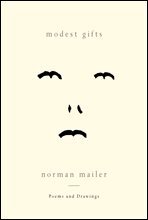
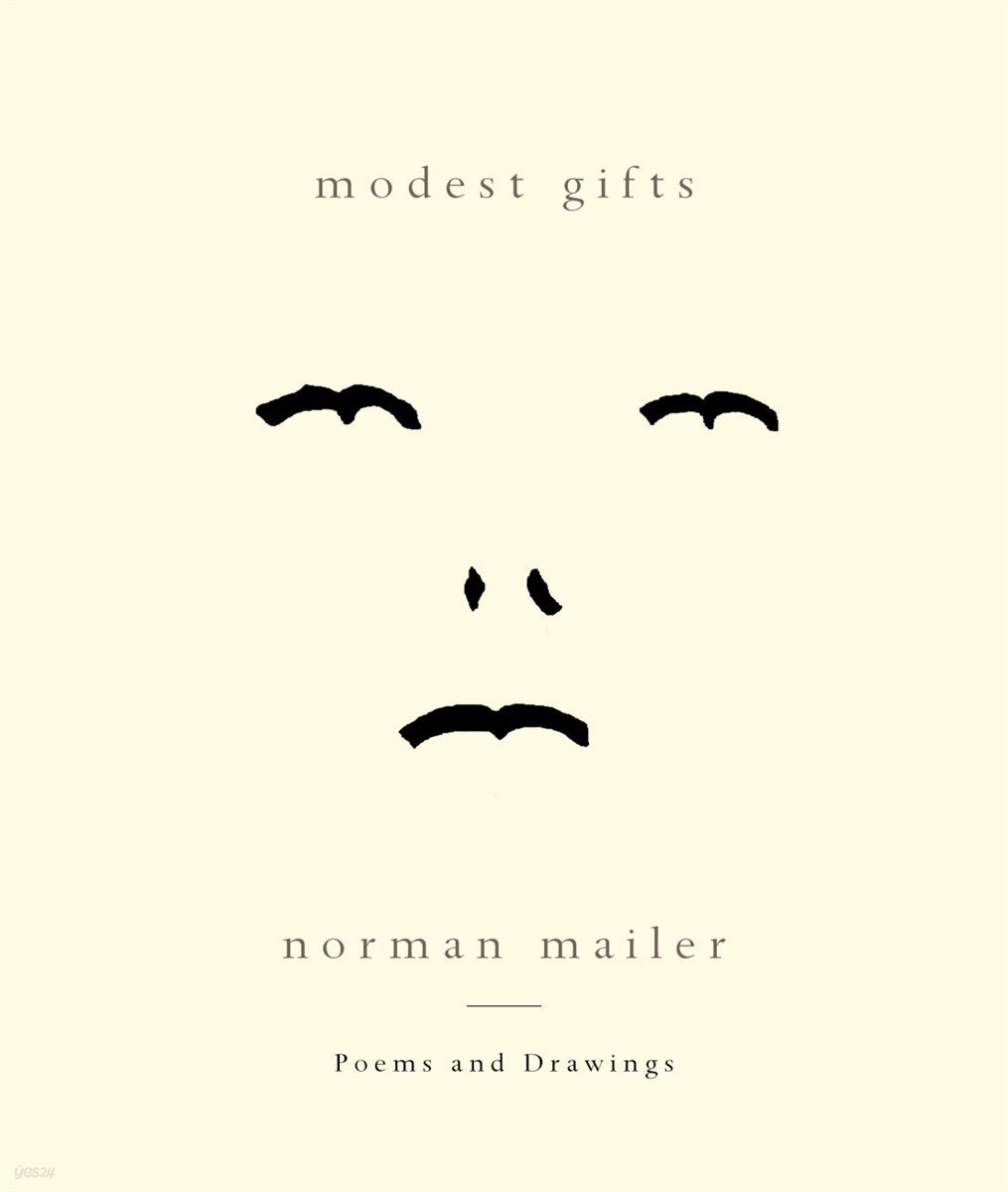
An unexpected collection from Norman Mailer—a book of his selected poems and more than one hundred of his drawings, most of them never before published. Modest Gifts is full of what the author calls “casual pleasures”—witty, naughty, and surprisingly tender verse and art. Lust, seduction, betrayal, jealousy, and even the banality of cocktail party chatter are depicted with humor, affection, and, above all, honesty. Here is an aspect of Norman Mailer unknown to many: lighthearted, prankish, whimsical, and often gentle, playfully sketching the intimate urban world that surrounds us. Modest, funny, and true, each poem and drawing shows a new side of one of the greatest writers of our time.
|
저자 소개
Norman Mailer was born in 1923 and published his first book, The Naked and the Dead, in 1948. The Armies of the Night won the National Book Award and the Pulitzer Prize in 1969; Mailer received another Pulitzer in 1980 for The Executioner’s Song. His most recent books, both published by Random House, are The Spooky Art and Why Are We at War? He lives in Provincetown with his wife, Norris Church Mailer.
품목정보
- 발행일
- 2015년 08월 19일
- 지원기기
- 크레마,PC(윈도우 - 4K 모니터 미지원),아이폰,아이패드,안드로이드폰,안드로이드패드,PC(Mac)
- 파일/용량
- EPUB(DRM) | 19.67MB ?
- ISBN13
- 9780812989717
출판사 리뷰
|
From the Introduction
I don’t know where to start. Well, in fact I do know. It is to warn the buyer. For the title is accurate–the gifts you will purchase are modest. William Merrill once wrote that a poem which was too easy to read was without value. “Difficult surfaces [can work] through to the poem’s emotional core.” These pieces, for the most part, will be comprehensible on first approach. Some barely qualify as poems. They are snippets of prose called short hairs, there to shift your mood a hair’s width. Perhaps one element of a good poem is its power to succeed in altering a reader’s mood, but I will make no such claim for most of these inclusions, and something of the same can be said of the drawings. Is one to call them caricatures, cartoons, squibbles, or doodles? At best, they are line drawings–shading is beyond my means. If I now combine these line drawings with the short hairs, it is to offer the reader an easy pleasure. My serious work, such as it is, does not always accomplish this. Nor does it always want to. I belong to that dwindling group of novelists who wish to make a demand on their audience. I want the reader to owe a little more to the work than some passing gratitude for the mild enlivening of his or her leisure time. My mind was shaped at an early age, after all, by the great Russian novelists with their implicit expectation that you, the reader, are there to suffer with the writer. Why? For a huge reason–to partake of the ongoing quest to deepen our comprehension of life and eternity, as if–for fact!–life and eternity cannot survive without such a quest. I still believe this. But by the age of eighty, tolerance insists on seeping into dedication. Casual pleasures become more meaningful even as lively pleasures sleep, and a few pains turn chronic. So, amusement becomes more of a virtue in itself. I now like to think that a limited ability to draw when coupled with a merry pretension to write poetry can turn sometimes into more than the sum of its parts, even as a minus times a minus will produce a plus. In mathematics, that always operates. In art, it can happen now and again. Obviously, I hope this is such an occasion. I am not, however, being altogether candid. There are a few good poems and a few good drawings here. Which ones they may be, I keep to myself. My real pleasure will come if twenty different candidates are nominated by a score of men and women. Here, I must offer a further confession. I knew this unashamedly self-serving attitude would have to disclose itself–modesty (at least for me) is too harsh a stricture to maintain all the way through two pages of a preface. One more note: A few poems were revised for this edition, but most were written in the early Sixties and published in a book called Deaths for the Ladies (and other disasters). The rest appeared by 1965 in Cannibals and Christians. Most of the drawings were done, however, in recent years. Nonetheless, the sketches are not all that removed from the tone of the short hairs, even if my ongoing mood in those years when the poems were written was considerably more intense. So I think it’s appropriate to include an appendix in this book. It is the introduction I wrote for a mass-market paperback edition of Deaths for the Ladies, which came out almost ten years after the first publication in 1962, and it will offer a subtext to those readers who find themselves somewhat intrigued by what follows. |