
- 구매혜택
-
주문제작도서 / 변심 반품 불가
- POD (Publish On Demand) 주문제작도서 변심 반품 불가
이미 소장하고 있다면 판매해 보세요.
- 국내배송만 가능
- 해외 거래처 사정에 의하여 품절/지연 가능
- 도서 정보 중 미표기 사항 안내?
- 문화비소득공제 가능
책소개
저자 소개
Marko obtained his Master’s degree from University of Belgrade - Faculty of Law in 2014. He specialized in Criminal Law, Family Law and Environmental Law. He spent his Master year studying about international child abduction. He is currently employed in Ministry of Defense’s Legal Department
품목정보
- 발행일
- 2017년 01월 01일
- 쪽수, 무게, 크기
- 206쪽 | 크기확인중
- ISBN13
- 9781680957853
책 속으로
|
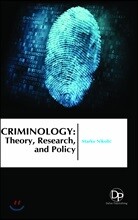
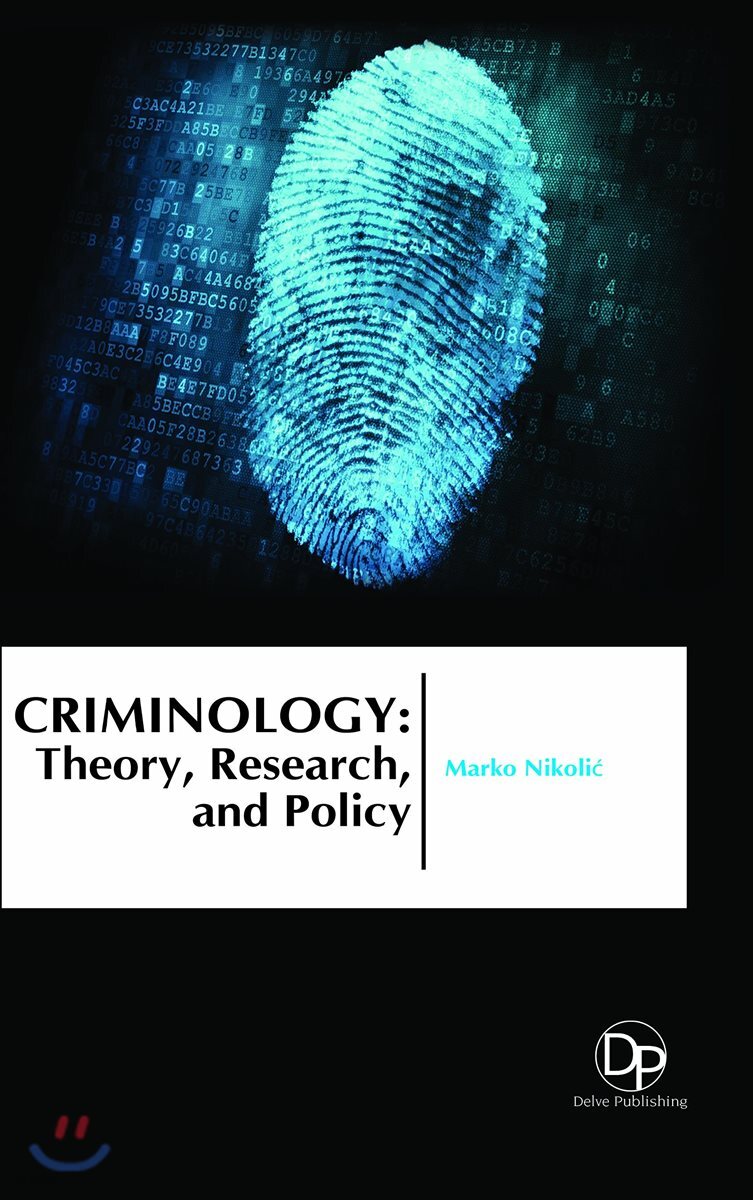
Criminology (from Latin cr?men, “accusation”; and Greek -λογ?α, -logia) is the scientific study of the nature, extent, management, causes, control, consequences, and prevention of criminal behavior, both on the individual and social levels. The term was first used in 1885 by Italian law professor Raffaele Garofalo as criminologia. In this book we will cover the bases regarding victims, crime and police in hope that this will awake the desire for further reading and studying of this legal discipline. We will start from the historical development of Criminology and Cesare Lombroso in Chapter 2 as the most colorful person in history of this discipline because he connected anthropology and crime. Although his theories are outdated his work is a must-know for every Criminologist. This is the reason he is chosen from many to be mentioned in the beginning of this book. Chapter 3 offers theoretical foundations for adopting Problem Based Learning in the study of crime and criminal justice. While problem-based learning (PBL) has been successfully used in many disciplines for over 30 years, it has not yet been widely adopted by criminal justice instructors. Chapter 4 brings partial test of Agnew’s general theory of crime and delinquency. Relying on a sample of adolescents and employing measures of the self, family, school, and peers domains, this study examines the contemporaneous and lagged effects of these four life domains on the likelihood of consuming alcohol and using marijuana. Given the increased criminalization of young people in poor communities, and the possibilities for change at this very moment, progressive criminological ideas have never been more important. Paper in the Chapter 5 discusses possible partnerships between progressive criminology and social justice organizations struggling to transform the criminal justice systems. Often people are focusing only on urban areas, research on rural communities and crime in Chapter 6 is examined as a way to criticize and challenge mainstream criminological theories and concepts like social disorganization and collective efficacy, and to remind critical criminologists of the importance for developing critical perspectives for place-based or ecological theories of crime. Some awarded experts are claiming that administrative criminology deserves much more positive appraisal than it has been given to date. You can read more about their standings in the Chapter 7 while Chapter 8 is dealing with white collar crime and sentencing in these cases. This study is saying: “It is important to strive for a sentencing system that is classless, but in doing so it is also important to respect real differences”.
Chapter 9 research the fact that exposure to crime and the density of alcohol outlets in one’s neighborhood will be positively associated with the incidence of hospitalization for and mortality from traumatic injuries, independent of other neighborhood characteristics. Victims and victimization are in the center of criminology interests. You need to know the categorization of victims of crime to then enter deeper into this world and learn the specifics of every category and group so you would eventually start finding ways of stopping further victimization of the given group. Chapter 10 gives you just outline of divisions among different victims. For many people, the primary interaction they have with the criminal justice system is with law enforcement. Open Data series in the Chapter 11 has been exploring the benefits and challenges of working with individual-level data in the criminal justice context. Criminology cannot be developed only academically but it need strong and well educated practitioners also. More on “predictive policing” you can read in this Chapter. Chapter 12 will bring qualitative methods in criminological research (labeling approach and critical criminology) closer to you. Qualitative methodology has to a large extent been developed in sociological research. Stable supplies of affordable energy could adversely affect quality of life and interrupt patterns of social cohesiveness. Chapter 13 investigates a hypothesized link between patterns of energy consumption and instrumental violence across 868 U.S. counties while next Chapter traces aspects of the development of a ‘green’ criminology and its perspectives. Criminology can not afford to exclude law enforcement from its studies. That is why Chapters 15, 16 and 17 are dedicated to this aspect of fighting against crime. Chapter 18 introduces the construction and methodological benefits of a series of new data sets that amalgamate approximately 30 years of public data on crime, victimization, fear of crime, social and political attitudes with national socio-economic indicators in England and Wales. Little research to date has accounted for the full spectrum of victimization to which adolescents can be exposed while Chapter 19 defines Child victimization. Final Chapter takes its starting point in the seminal work of Jock Young, The Criminological Imagination, published in 2011. He laid down a challenge for the future of the discipline in this book. These Chapter exposes different issues that have a vital presence in which the connections between them are unspoken. Given that the editor himself is a supporter of Green criminology as the future of all criminological work, I hope that this text will encourage someone to work further on establishing the foundations of this new direction of thoughts, providing us all with better results in practice. --Preface |
사락 별점0
혜택 및 유의사항밑줄0
혜택 및 유의사항상품정보안내
직수입외서의 경우, 해외거래처에서 제공하는 정보가 부족하여 제목, 표지, 가격, 유통상태 등의 정보가 미비하거나 변경되는 경우가 있습니다. 정확한 확인을 원하시는 경우, 일대일 상담으로 문의하여 주시면 답변 드리겠습니다.
(판형과 판수 등이 다양한 도서는 찾으시는 도서의 ISBN을 알려 주시면 보다 빠르고 정확한 안내가 가능합니다.)
해외거래처에서 품절인 경우, 2차 거래선을 통해 유럽과 미국 출판사로 직접 수입이 진행될 수 있습니다.
수입 진행 시점으로 부터 2~3주가 추가로 소요되며, 해외에서도 유통이 원활하지 않은 도서는 품절 안내가 지연될 수 있습니다.
해당 경우, 문자와 메일로 별도 안내를 드리고 있사오니 마이페이지에서 휴대전화번호와 메일주소를 다시 한번 확인해주시기 바랍니다.