
소득공제
베스트셀러
외서
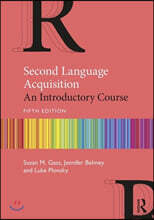
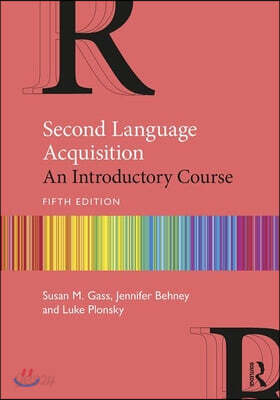
Second Language Acquisition: An Introductory Course
An Introductory Course
Paperback, 5th edition
Gass, Susan M. / Behney, Jennifer / Plonsky, Luke
Routledge
2020.06.18.
- 주간베스트
- 인문 사회 105위
이미 소장하고 있다면 판매해 보세요.
- 국내배송만 가능
- 문화비소득공제 가능
책소개
목차
|
Part One: Preliminaries Chapter One: Introduction 1.1 THE STUDY OF SECOND LANGUAGE ACQUISITION 1.2 DEFINITIONS 1.3 THE NATURE OF LANGUAGE 1.3.1 Semantics 1.3.2 Pragmatics 1.3.3 Syntax 1.3.4 Morphology and the Lexicon 1.3.5 Sound Systems 1.4 THE NATURE OF NONNATIVE SPEAKER KNOWLEDGE 1.5 CONCLUSION Chapter Two: Where Do Data Come From? 2.1 DATA TYPES 2.2 LEARNER CORPORA 2.3 DATA ELICITATION 2.3.1 Measuring General Proficiency 2.3.2 Measuring Nonlinguistic Information 2.3.3 Verbal Report Data 2.3.3.1 Think-Alouds 2.3.3.2 Stimulated Recall 2.3.3.3 Post-Production Interviews 2.3.4 Narrative Inquiry 2.3.5 Language-Elicitation Measures 2.3.5.1 Elicited Imitation 2.3.5.2 Judgments 2.3.5.3 Language Games 2.3.5.4 Discourse Completion 2.3.6 PROCESSING DATA 2.3.6.1 Reaction Time 2.3.6.2 Self-paced Reading 2.3.6.3 Eye-Tracking 2.3.6.4 Neurolinguistic Data 2.4 REPLICATION 2.5 META-ANALYSES 2.6 ISSUES IN DATA ANALYSIS 2.7 WHAT IS ACQUISITION? 2.8 CONCLUSION Part Two: Historical Underpinnings of SLA Research Chapter Three: The Role of the Native Language - A Historical Overview 3.1 INTRODUCTION 3.2 BEHAVIORISM 3.2.1 Linguistic Background 3.2.2 Psychological Background 3.3 CONTRASTIVE ANALYSIS HYPOTHESIS 3.4 ERROR ANALYSIS 3.5 CONCLUSION Chapter Four: The Transition Period 4.1 INTRODUCTION 4.2 FIRST LANGUAGE ACQUISITION 4.2.1 Words 4.2.2 Sounds and Pronunciation 4.2.3 Syntax 4.2.4 Morphology 4.3 CHILD L2 ACQUISITION 4.4 CHILD L2 MORPHEME ORDER STUDIES 4.5 ADULT L2 MORPHEME ORDER STUDIES 4.6 THE MONITOR MODEL 4.6.1 The Acquisition-Learning Hypothesis 4.6.2 The Natural Order Hypothesis 4.6.3 The Monitor Hypothesis 4.6.4 The Input Hypothesis 4.6.5 The Affective Filter Hypothesis 4.6.6 Limitations 4.7 CONCLUSION Chapter Five: Alternative Approaches to the Role of Previously Known Languages 5.1 REVISED PERSPECTIVES ON THE ROLE OF THE NATIVE LANGUAGE 5.1.1 Avoidance 5.1.2 Differential Learning Rates 5.1.3 Different Paths 5.1.4 Overproduction 5.1.5 Predictability/Selectivity 5.1.6 L1 Influences in L2 Processing 5.1.7 Morpheme Order 5.2 CONCLUSION Part Three: A Focus on Form - Language Universals Chapter Six: Formal Approaches to SLA 6.1 INTRODUCTION 6.2 UNIVERSAL GRAMMAR 6.2.1 Initial State 6.2.1.1 Fundamental Difference Hypothesis 6.2.1.2 Access to UG Hypothesis 6.2.2 UG Principles 6.2.3 UG Parameters 6.2.4 Minimalist Program 6.2.5 Falsification 6.3 TRANSFER: THE GENERATIVE/UG PERSPECTIVE 6.3.1 Levels of Representation 6.3.2 Clustering 6.3.3 Learnability 6.4 THE FUNDAMENTAL DIFFERENCE HYPOTHESIS REVISED 6.5 SEMANTICS AND THE SYNTAX?SEMANTICS INTERFACE HYPOTHESIS 6.5.1 Semantics 6.5.2 Syntax and Semantics: The Interface Hypothesis 6.6 PHONOLOGY 6.6.1 Markedness Differential Hypothesis 6.6.2 Similarity/Dissimilarity: Speech Learning Model 6.6.3 Optimality Theory 6.6.4 Ontogeny Phylogeny Model 6.7 CONCLUSION Chapter Seven: Typological Approaches 7.1 TYPOLOGICAL UNIVERSALS 7.1.1 Test Case I: The Accessibility Hierarchy 7.1.2 Test Case II: The Acquisition of Questions 7.1.3 Test Case III: Voiced/Voiceless Consonants 7.2 FALSIFIABILITY 7.3 TYPOLOGICAL UNIVERSALS: CONCLUSION 7.4 TYPOLOGICAL PRIMACY MODEL 7.5 THE ROLE OF THE L1: THREE APPROACHES 7.6 CONCLUSION: GENERAL COMMENTS ABOUT UNIVERSALS Part Four: A Focus on Meaning Chapter Eight: Meaning-based Approaches 8.1 INTRODUCTION 8.2 FUNCTIONAL APPROACHES 8.2.1 The Relationship between Form and Function: Form-to-Function 8.2.2 Concept-oriented Approach 8.3 TENSE AND ASPECT: THE ASPECT HYPOTHESIS 8.4 THE DISCOURSE HYPOTHESIS 8.5 CONCLUSION Chapter Nine: The Lexicon 9.1 THE SIGNIFICANCE OF THE LEXICON 9.2 LEXICAL KNOWLEDGE: WHAT DOES IT MEAN TO KNOW A WORD? 9.2.1 Production and Reception 9.2.2 Knowledge and Control 9.2.3 Breadth and Depth 9.2.4 Subcategorization 9.2.5 Word Associations and Networks 9.2.6 Word Formation 9.2.7 Formulaic Language, Collocations, and Chunking 9.2.7.1 Use of Multiword Units 9.2.7.2 Learning of Multiword Units 9.2.7.3 Processing of Multiword Units 9.3 INFLUENCES ON L2 VOCABULARY AND DEVELOPMENT 9.3.1 The Role of the L1 9.3.2 Incidental Vocabulary Learning 9.3.2.1 Input Type 9.3.2.2 What Helps Learning? 9.3.3 Depth of Processing 9.3.4 Incremental Vocabulary Learning 9.4 USING LEXICAL SKILLS 9.4.1 Production 9.4.2 Perception 9.5 CONCLUSION Part Five: Cognitive and Processing Approaches to SLA Chapter Ten: Psycholinguistic Approaches to Learning 10.1 INTRODUCTION 10.2 MODELS OF LANGUAGE PRODUCTION 10.3 PROCESSABILITY THEORY 10.4 PROCESSING OF INPUT 10.4.1 Input Processing 10.4.2 Processing Determinism 10.4.3 Autonomous Induction Theory 10.4.4 Shallow Structure Hypothesis 10.5 EMERGENTIST MODELS 10.5.1 Competition Model 10.5.2 Frequency-based Accounts 10.6 COMPLEX DYNAMIC SYSTEMS 10.7 SKILL ACQUISITION THEORY 10.8 CONCLUSION Chapter Eleven: Psycholinguistic Constructs and Knowledge Types 11.1 INTRODUCTION 11.2 INFORMATION PROCESSING 11.2.1 Automaticity 11.2.2 Restructuring 11.2.3 U-shaped Learning 11.2.4 Attention 11.2.5 Working Memory 11.2.6. Salience 11.2.7 Priming 11.3 KNOWLEDGE TYPES 11.3.1 Acquisition/Learning 11.3.2 Declarative/Procedural 11.3.3 Implicit/Explicit 11.3.4 Representation/Control 11.4 INTERFACE OF KNOWLEDGE TYPES 11.4.1 No Interface 11.4.2 Weak Interface 11.4.3 Strong Interface 11.5 CONCLUSION Part Six: The Social Environment of Learning Chapter Twelve: Interlanguage in Context 12.1 INTRODUCTION 12.2 SOCIOCULTURAL APPROACHES 12.2.1 Mediation 12.2.2 Internalization 12.2.3 Zone of Proximal Development 12.2.4 Private Speech 12.2.5 Learning in a Sociocultural Framework 12.2.6 Gesture and SLA 12.3 SOCIOLINGUISTIC VARIATION 12.4 SYSTEMATIC VARIATION 12.4.1 Linguistic Context 12.4.2 Social Context Relating to the Native Language 12.4.3 Social Context Relating to Interlocutor, Task Type, and Conversational Topic 12.4.4 Sociolinguistic Norms 12.5 CONVERSATION ANALYSIS 12.6 COMMUNICATION STRATEGIES 12.7 L2 PRAGMATICS 12.8 CONCLUSION: SLA AND OTHER DISCIPLINES Chapter Thirteen: Input, Interaction, and Output 13.1 INTRODUCTION 13.2 INPUT 13.3 COMPREHENSION 13.4 INTERACTION 13.5 OUTPUT 13.5.1 Hypothesis Testing 13.5.2 Automaticity 13.5.3 Meaning-based to Grammar-Based Processing 13.6. Feedback 13.6.1 Negotiation 13.6.2 Corrective Feedback 13.6.2.1 Recasts 13.6.2.2 Elicitation 13.6.2.3 Metalinguistic Feedback 13.7 THE ROLE OF INPUT AND INTERACTION IN LANGUAGE LEARNING 13.7.1 The Functions of Input and Interaction 13.7.2 Effectiveness of Feedback 13.7.2.1 Attention 13.7.2.2 Contrast Theory 13.7.2.3 Metalinguistic Awareness 13.7.3 Who Benefits From Interaction: When and Why? 13.8 LIMITATIONS OF INPUT 13.9 CONCLUSION Chapter Fourteen: Contexts of Language Learning - Classrooms, Study Abroad, and Technology 14.1 INTRODUCTION 14.2 CLASSROOM-BASED INSTRUCTION 14.2.1 Classroom Language 14.2.2 Teachability/Learnability 14.2.3 Focus on Form and Task-based Language Teaching 14.2.3.1 Timing 14.2.3.2 Forms to Focus On 14.2.3.3 Task Design 14.2.3.4 Input Manipulation and Input Enhancement 14.3 COMPLEXITY, ACCURACY, FLUENCY, AND PLANNING 14.4 PROCESSING INSTRUCTION 14.5 UNIQUENESS OF INSTRUCTION 14.6 EFFECTIVENESS OF INSTRUCTION 14.7 SLA AND CLASSROOM PRACTICES 14.8 ADDITIONAL CONTEXTS 14.8.1 Study Abroad 14.8.2 Technology-enhanced Language Learning 14.9 CONCLUSION Part Seven: The Individual Language Learner Chapter Fifteen: Learner-internal Influences 15.1 INTRODUCTION 15.2 THE INFLUENCE OF PSYCHOLOGY IN SLA 15.3 METHODOLOGICAL CONSIDERATIONS 15.4 AGE DIFFERENCES 15.5 APTITUDE 15.6 MOTIVATION 15.6.1 Motivation as a Function of Time and Success 15.6.2 Changes over Time 15.6.3 The L2 Motivational Self System 15.6.4 Influence of Success on Motivation and Demotivation 15.7 AFFECT 15.7.1 Anxiety 15.7.2 Other Emotional Variables 15.8 PERSONALITY 15.8.1 Extroversion and Introversion 15.8.2 Grit 15.9 LEARNING STRATEGIES 15.10 CONCLUSION Chapter Sixteen: Related Disciplines - A Focus on the Multilingual and Multimodal Learner 16.1 INTRODUCTION 16.2 BILINGUAL ACQUISITION 16.3 THIRD LANGUAGE ACQUISITION/MULTILINGUALISM 16.4 HERITAGE LANGUAGE ACQUISITION 16.5 SLA BY THE DEAF/HARD OF HEARING 16.6 CONCLUSION Part Eight: Conclusion Chapter Seventeen: An Integrated View of Second Language Acquisition 17.1 AN INTEGRATION OF SUB-AREAS 17.1.1 Apperceived Input 17.1.2 Comprehended Input 17.1.3 Intake 17.1.4 Integration 17.1.5 Output 17.2 CONCLUSION |
관련 분류
품목정보
- 발행일
- 2020년 06월 18일
- 쪽수, 무게, 크기
- 774쪽 | 178*254*40mm
- ISBN13
- 9781138743427
리뷰/한줄평0
상품정보안내
직수입외서의 경우, 해외거래처에서 제공하는 정보가 부족하여 제목, 표지, 가격, 유통상태 등의 정보가 미비하거나 변경되는 경우가 있습니다. 정확한 확인을 원하시는 경우, 일대일 상담으로 문의하여 주시면 답변 드리겠습니다.
(판형과 판수 등이 다양한 도서는 찾으시는 도서의 ISBN을 알려 주시면 보다 빠르고 정확한 안내가 가능합니다.)
해외거래처에서 품절인 경우, 2차 거래선을 통해 유럽과 미국 출판사로 직접 수입이 진행될 수 있습니다.
수입 진행 시점으로 부터 2~3주가 추가로 소요되며, 해외에서도 유통이 원활하지 않은 도서는 품절 안내가 지연될 수 있습니다.
해당 경우, 문자와 메일로 별도 안내를 드리고 있사오니 마이페이지에서 휴대전화번호와 메일주소를 다시 한번 확인해주시기 바랍니다.
(판형과 판수 등이 다양한 도서는 찾으시는 도서의 ISBN을 알려 주시면 보다 빠르고 정확한 안내가 가능합니다.)
해외거래처에서 품절인 경우, 2차 거래선을 통해 유럽과 미국 출판사로 직접 수입이 진행될 수 있습니다.
수입 진행 시점으로 부터 2~3주가 추가로 소요되며, 해외에서도 유통이 원활하지 않은 도서는 품절 안내가 지연될 수 있습니다.
해당 경우, 문자와 메일로 별도 안내를 드리고 있사오니 마이페이지에서 휴대전화번호와 메일주소를 다시 한번 확인해주시기 바랍니다.
59,000원
총 1개
59,000원
