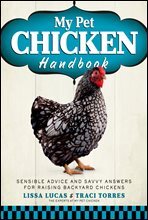


소개
품목정보
- 발행일
- 2014년 02월 04일
- 이용안내
-
- 배송 없이 구매 후 바로 읽기
- 이용기간 제한없음
- TTS 불가능
- 저작권 보호를 위해 인쇄 기능 제공 안함
- 지원기기
- 크레마,PC(윈도우 - 4K 모니터 미지원),아이폰,아이패드,안드로이드폰,안드로이드패드,PC(Mac)
- 파일/용량
- EPUB(DRM) | 14.29MB ?
- ISBN13
- 9781623360023
출판사 리뷰
|
CHAPTER 1
A BRIEF HISTORY of CHICKENS It probably comes as no surprise to hear that chickens came here shortly after the arrival of the first English settlers at Jamestown. And much has changed with chickens and the business of chickens over a few hundred years. E ven then, chickens were more of a sideline than a business or vocation. They weren't exactly regarded as farm animals—not in the same way cattle or horses were. Unlike those animals, chickens took up little space and required minimal care. Chickens were kept in small flocks, so it was usually very much a family affair. For instance, it was traditionally the job of the youngest child to gather the daily eggs, and, for the most part, the family chickens were managed by mom rather than dad. Extra eggs were sold at the market for "egg money," a little supplemental income for mom, in addition to the fresh eggs provided for the family. In America, chickens were historically more of a hobby—and they were a very American hobby, at that. For example, Thomas Jefferson gifted his favorite granddaughter with a pair of bantams for her pleasure. Teddy Roosevelt owned a one-legged rooster, and his children had pet hens with names like Fierce and Baron Spreckle. It's only been recently that chickens have gotten a bad reputation. Among some people, they are regarded as dumb or dirty birds. However, nothing could be further from the truth, though it's not hard to figure out where these erroneous ideas came from if you look at the conditions in factory farms today. Certainly, if it were permissible to keep dogs or cats (or any animal) in similar conditions, our ideas of their intelligence and cleanliness would be different as well. But the reputation of chickens was once quite different—in the past, they were symbols of goodness and bravery. In medieval times, for instance, the call of a rooster was thought to drive away demons and devils. Chickens have been variously considered symbols of pride, fertility, and even enlightenment, being heralds of the dawn. Roosters faithfully announced the break of day, so sunlight would illuminate the world and send evil and darkness slipping off into the shadows. A rooster was the model of an excellent father and, in fact, a symbol of fatherhood: He was vigilant in protection of his family, genteel in demeanor, and a generous provider. After all, when a rooster finds a choice morsel of food, he calls his family to the feast, letting the hens eat first while he watches for danger and keeps the peace. Roosters are even graceful dancers; consider the elegant sweep of a rooster's extended wing as he moves in circles around a hen he's trying to charm. It wasn't only roosters that were esteemed, though. Hens were also admired—symbolic of courage, self-sacrifice, and domestic virtue. Jesus compared himself gathering the tribes of Israel to a mother hen gathering chicks under her wings. Hens sit faithfully for weeks on the nest to hatch their eggs, barely eating or drinking until their little chicks have emerged. Then, there are 5 to 6 weeks more of care until the young birds are ready to be on their own. For good reason, hens were regarded as faithful, protective mothers—the epitome of tenderness and motherly love. In fact, the Greek historian Plutarch described the hen in this way: "What of the hens whom we observe each day at home, with what care and assiduity they govern and guard their chicks? Some let down their wings for the chicks to come under; others arch their backs for them to climb upon. There is no part of their bodies with which they do not wish to cherish their chicks if they can, nor do they do this without a joy and alacrity which they seem to exhibit by the sound of their voices." A 1933 snapshot shows a group of young women with their chickens. Even chicken eggs were symbols of rebirth and the cycle of life. In many cultures they were decorated in the springtime, joyously sought and found, a herald also of the returning plenty that came with the change of seasons. People have been delighting in chickens for thousands of years. For early American settlers, chickens were a great family hobby. You didn't have to live on a farm to keep chickens. Cows, horses, goats, and other livestock required large amounts of open pasture and a lot of work and expense. By contrast, chickens could live in a small yard. They cost little, and they required little effort. They would eat grains dropped by other animals or scraps from the kitchen, so they reduced waste. They even cut down on the insect population in their immediate vicinity with their sharp-eyed bug hunting. They were self-sufficient to a large extent, and often—although we don't recommend this today—the family chickens weren't even provided with a coop or other housing (like a barn). They simply roosted in trees or wherever they could, left to avoid predators on their own—or not. That's how it was for chickens in the early years of the United States. THE CHICKEN CRAZE BEGINS In the early to mid-1800s, for the first time, a breed of chickens known as Cochins was imported from China, and these appealing, fat, fluffy balls of feathers created a sensation. Compared to the flighty, quick birds most families kept for eggs, Cochins seemed as docile as kittens, and they were beautiful, too, with elaborately feathered legs and silver-laced, blue, and mottled colors. They made exceptional mothers that were also calm and easy to handle, so the chicks they raised were often especially docile, too. In short order, everyone wanted Cochins. But Cochins couldn't really be kept in the same catch-as-catch-can way that other chickens were being kept at the time. For one thing, their ponderous size made it improbable, if not impossible, for them to be able to roost high up in trees and nimbly avoid predators on their own. For another, their profusely feathered legs could be problematic in muddy environments. And lastly, they were expensive in comparison to other chickens, so there was more of a desire to provide housing and security for the rare, new China Cochins. As the first real exhibition chickens in the United States, Cochins set off a craze for poultry exhibition that has continued to this day. Professional farmers began getting involved with chickens, using selective breeding to create chickens with fancy feathering: crests, beards, feathered legs, and unusual plumage. However, chickens bred in this way didn't necessarily breed true; offspring might be completely different in character from their parents. With no breeding standards, there could be no real breeds like there are today. Establishing a new breed is a complex process. Once you have produced a stable cross, other breeders must show interest and standards (what the bird should look like) must be agreed on. In the early 19th century, those standards did not exist yet. THE MODERN CHICKEN The advent of modern poultry keeping resulted from a few different things happening at once, most notably the creation of the American Poultry Association (APA) in 1873. The APA began standardizing breeds, so that to be called a "breed," a chicken would have to be able to produce the same type of bird in future generations. This meant that someone buying chickens could be reasonably assured of the type of chickens he'd see in future generations, and could choose breeds based on qualities needed, such as cold hardiness, productivity, or early maturity. This was also the year that the first artificial incubator was patented—so chicks could now be hatched in quantity. Once there were standard breeds as well as a way to produce chickens in quantity, the chicken world was transformed. More people had access to keeping chickens, since hatching chicks no longer relied so much on Mother Nature. You didn't need broody hens to hatch eggs (broodiness could even be bred out, if desired). These changes also made it possible for chicken and egg businesses to grow substantially. Today, a single commercial incubator can hatch many thousands of chicks--a vast difference from the measly dozen or so eggs at a time a broody hen can hatch. Other changes followed soon after: Mass transportation allowed baby chicks to be shipped by train as early as the 1890s, and hatcheries began springing up all over the country. Farmers could order chickens "designed" to mature quickly and lay lots of eggs, and hobbyists could branch out into rare and fancy breeds they'd been coveting for years simply because there was better access to them. But while improved transportation helped the hobby, it also enabled chicken keeping to take its first steps toward becoming a large-scale agribusiness. Egg businesses were now able to order hundreds and thousands of baby chicks. And because of this, the birds began to be kept in different conditions. After all, when you have a flock of hundreds or thousands rather than just 20 or 30, your chickens will need much more space than what had been dedicated to small hobby flocks to allow them to forage enough to sustain themselves. And since the leftover table scraps of a family of four (or six or 10) wouldn't do much to supplement the foraging of that many birds, commercial chicken feed was developed, and it was formulated to keep chickens well nourished and maximize the number of eggs they could lay. Around the turn of the 20th century, chickens laid only about 30 eggs per year. Now, good layers are expected to produce around 200 to 250 eggs per year—seven to eight times as many. The selective breeding and the improved nutrition are paying off. The Downside of Modern Methods To remain competitive, egg farms had to become very efficient, so they changed their management practices: Confinement became the norm as producers began to realize savings from it. Confining chickens required less space, and it meant that they were in less danger from predators and eggs could be more easily gathered. Eggs were so cheap at the grocery store that fewer people kept their own chickens for eggs, and the space factory farms allocated to their birds grew smaller and smaller. Since chickens don't naturally live in close quarters, confinement created new problems, from aggression to increased risk of disease. Commercial chicken feed had started out by providing much-needed balanced nutrition for flocks that were confined away from natural forage; however, the focus of factory farming operations came to be on the quantity of eggs produced, rather than on the quality. Stress made the huge flocks vulnerable to many illnesses, and the density of their living spaces made it easy for sick birds to pass those illnesses to other birds. Bored birds would pick on each other ruthlessly from the stress of living in cages or cramped quarters their entire lives. Birds at the bottom of the pecking order couldn't get away from more aggressive hens like they could if allowed to roam free, and aggression became a serious problem. Rather than make the determination that chickens need a certain minimum amount of space for their physical and mental well-being, research went in the other direction: How can we squeeze more chickens into smaller spaces? But overcrowding causes stress, which in turn causes aggression among chickens. Today, the most common "solution" for the stress and aggression caused by close confinement in large factory farms is to debeak young chicks, a painful process often referred to with the less horrifying term beak trimming. As someone interested in backyard chicken keeping, you probably don't need to hear from us about the awful conditions chickens endure in many big commercial farming operations. You'll want to raise your chickens in humane, healthy conditions. And you will have the chance to discover how smart and endearing they really are. Fortunately, some progress, however modest, has been made in chicken farming. The European Union Council Directive has banned wire battery cages in the European Union. California has taken some steps as well, due to consumer outrage. However, some other states are taking steps backward, and animal abuse continues in factory farms. Your chickens will have a much better life. Egg-cetera! In most breeds, juvenile roosters can be distinguished from juvenile hens by the shape of their hackle and saddle feathers. Hens have rounded feathers, while roosters have long, pointy feathers in comparison. Restoring Common Sense The best solution to the aggression caused by close confinement is pretty simple: Give chickens more space and allow them to behave like chickens, rather than treating them like egg-making machines. When you keep a backyard flock, you have control over how the birds are kept and what they're eating. And by raising chickens that produce eggs in your own backyard, you're also reducing demand for inhumanely produced factory farm eggs, not to mention that you have more control over what you are feeding your family. Not coincidentally, giving chickens room and access to pasture increases the healthfulness of their eggs, on top of all the other benefits. Mother Earth News studies in 2007 and 2010 concluded that eggs from chickens raised on pasture are higher in omega-3s; vitamins A, D, and E; and beta- carotene while being lower in cholesterol and saturated fat. Really, this is what the new backyard chicken movement is all about. |