
소득공제
직수입양서
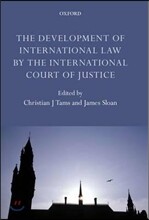
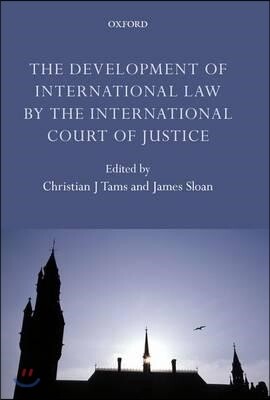
The Development of International Law by the International Court of Justice
Hardcover, POD 주문제작도서
Tams, Sloan
Oxford University Press (UK)
2013.10.15.
- 주문 제작 (POD) 도서로 제본 및 인쇄 품질이 다소 미흡할 수 있습니다 (해당 사유 반품 불가)
이미 소장하고 있다면 판매해 보세요.
- 국내배송만 가능
- 문화비소득공제 가능
이 분야의 이벤트

책소개
목차
|
List of Abbreviations xiii
List of Contributors xv Table of Cases xix I Prologue 1. General Introduction by James Shan 3 2. The International Court of Justice as an 'Agent' of Legal Development? by Sir Franklin Berman 7 1. Introduction 7 2. Legislative intent 8 3. The World Court's approach 10 4. The effect of the Court's judicial activity 17 5. Concluding remarks 20 II The Law of Treaties 3. The Role of the International Court of Justice in the Development of the Contemporary Law of Treaties by Vera Gowlland-Debbas 25 1. Introduction 25 2. The Court and the diversity of forms and actors involved in treaty-making 29 3. The Court, the hierarchization of international law, and the concept of collective interest treaties 34 4. The ICJ and the unity of the international system 46 5. Concluding remarks 51 4. The International Court of Justice and State Succession to Treaties: Avoiding Principled Answers to Questions of Principle by Andreas Zimmermann 53 1. Introduction 53 2. Distinguishing state succession from state identity/continuity in the jurisprudence of the ICJ 54 3. Treaty succession in the jurisprudence of the ICJ 57 4. Impact of the Court's jurisprudence on the law of treaty succession 68 III The Law of Claims 5. The International Court of Justice and the Law of State Responsibility by James Crawford 71 1. Introduction 71 2. Contribution of the PCIJ to the law of state responsibility 71 3. The ICJ's first responsibility cases and the initiation of the ILC's work on responsibility 73 4. Ago's influence on the ILC's work 75 5. The introduction of the concept of obligations owed to the international community as a whole 76 6. The Court's activism in Gabckovo-Nagymaros 79 7. Reception and influence of the ILC Articles 81 8. Conclusion 85 6. Diplomatic Protection and the International Court of Justice by Kate Parlett 87 1. Introduction 87 2. Origins of the doctrine of diplomatic protection 87 3. The inter-war period: the contours of the doctrine as shaped by the PCIJ 88 4. Diplomatic protection in the ICJ 93 5. Conclusions: progress and stagnation 105 7. Jurisdictional Immunities by Roger O'Keefe 107 1. Introduction 107 2. Less contentious questions 109 3. More contentious questions 115 4. The ICJ versus other international lawmaking processes 146 5. Conclusion 148 IV Spatial Regimes 8. The International Court of Justice and the Law of Territory by Malcolm N Shaw 151 1. Introduction 151 2. Sovereignty, territory, and title 152 3. Pre-colonial title 155 4. Validity of colonial tide 156 5. Self-determination and the process of decolonization 160 6. Uti possidetis 162 7. Title and boundary treaties 166 8. Relevance of the exercise of effective authority (effectivités) 168 9. Territorial integrity and secession in the post-independence situation 172 10. A role for human rights? 174 11. Conclusion 176 9. The Development of the Law of the Sea by the International Court of Justice by Antonios Tzanakopoulos 177 1. Introduction 177 2. The development of international law by the ICJ 178 3. The agents of development of the law of the sea 179 4. Influencing the development of the law: kind and degree 185 5. Contribution of the ICJ to the development of the law of the sea 188 6. Conclusion: the Court's influence 193 V The United Nations 10. The Role of the International Court of Justice in the Development of the Institutional Law of the United Nations by Gleider I Hemández 197 1. Introduction 197 2. The United Nations as an international organization 200 3. Powers of the principal organs 207 4. The Court's powers vis-à-vis the non-judicial principal organs 224 5. Conclusion 233 VI Armed Conflict 11. The International Court of Justice and the Use of Force by Christine Gray 237 1. Introduction 237 2. The Court's first case on the use of force: Corfu Channel 238 3. The language of the Court in Corfu Channel and subsequent cases 240 4. The Nicaragua case 241 5. The prohibition of the use of force 246 6. Self-defence 251 7. Conclusion 260 12. The International Court of Justice and the Law of Armed Conflicts by Cuius Kreß 263 1. Introduction 263 2. The judicial acquis: a sketch 264 3. Some reflections on the character and style of the Court's jurisprudence 280 4. The Court as a political agent and as a diplomat 290 5. Conclusion: on the Court's contribution to the development of the law of armed conflicts 295 VII Community Concerns 13. Human Rights Before the International Court of Justice: Community Interest Coming to Life? by Bruno Simma 301 1. Introduction 301 2. The first phase: hesitation and restraint 303 3. The more recent jurisprudence: a qualitative leap? 308 4. Background and context of the Court's human rights case law 318 5. Prospects for the future 321 6. A proper role for the Court 322 14. The International Court of Justice and the Rights of Peoples and Minorities by Gentian Zyberi 327 1. Introduction 327 2. International protection of the rights of minorities through the Permanent Court 329 3. The rights of peoples through the lens of the ICJ 338 4. Concluding remarks 351 15. The International Court of Justice and International Environmental Law by Malgosia Fitzmaurice 353 1. Introduction 353 2. Formulating basic concepts: Corfu Channel, Barcelona Traction 355 3. Initial caution: Nuclear Tests I 358 4. Growing awareness, procedural strictures: Nauru, Nuclear Tests II 360 5. Mainstreaming international environmental law: Nuclear Weapons, Gabcíkovo-Nagymaros 363 6. Proceduralizing environmental law: Pulp Mills 370 7. The diversity of international environmental law: pending cases 372 8. The nature and relevance of the Court's contribution 373 VIII Conclusion 16. The ICJ as a 'Law-Formative Agency': Summary and Synthesis by Christian J Tarns 377 1. Introduction 377 2. Taking stock 377 3. Explaining the Court's impact on legal development 388 4. The Court's contribution in perspective 395 Index 397 |
품목정보
- 발행일
- 2013년 10월 15일
- 쪽수, 무게, 크기
- 400쪽 | 158*236*30mm
- ISBN13
- 9780199653218
리뷰/한줄평0
상품정보안내
직수입외서의 경우, 해외거래처에서 제공하는 정보가 부족하여 제목, 표지, 가격, 유통상태 등의 정보가 미비하거나 변경되는 경우가 있습니다. 정확한 확인을 원하시는 경우, 일대일 상담으로 문의하여 주시면 답변 드리겠습니다.
(판형과 판수 등이 다양한 도서는 찾으시는 도서의 ISBN을 알려 주시면 보다 빠르고 정확한 안내가 가능합니다.)
해외거래처에서 품절인 경우, 2차 거래선을 통해 유럽과 미국 출판사로 직접 수입이 진행될 수 있습니다.
수입 진행 시점으로 부터 2~3주가 추가로 소요되며, 해외에서도 유통이 원활하지 않은 도서는 품절 안내가 지연될 수 있습니다.
해당 경우, 문자와 메일로 별도 안내를 드리고 있사오니 마이페이지에서 휴대전화번호와 메일주소를 다시 한번 확인해주시기 바랍니다.
(판형과 판수 등이 다양한 도서는 찾으시는 도서의 ISBN을 알려 주시면 보다 빠르고 정확한 안내가 가능합니다.)
해외거래처에서 품절인 경우, 2차 거래선을 통해 유럽과 미국 출판사로 직접 수입이 진행될 수 있습니다.
수입 진행 시점으로 부터 2~3주가 추가로 소요되며, 해외에서도 유통이 원활하지 않은 도서는 품절 안내가 지연될 수 있습니다.
해당 경우, 문자와 메일로 별도 안내를 드리고 있사오니 마이페이지에서 휴대전화번호와 메일주소를 다시 한번 확인해주시기 바랍니다.
342,000원
총 1개
342,000원
