

소득공제
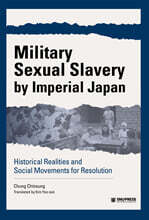
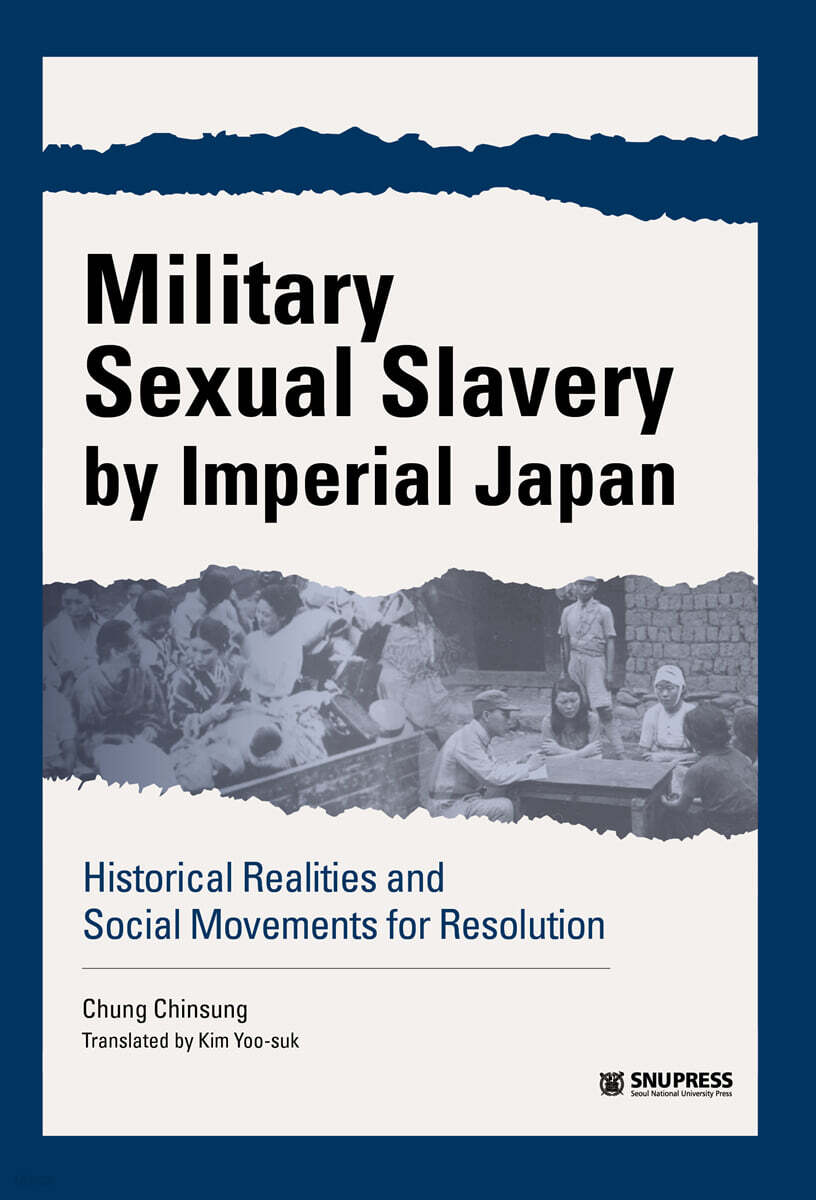
Military Sexual Slavery by Imperial Japan
Historical Realities and Social Movements for Resolution
서울대학교출판문화원
2024.12.30.
이미 소장하고 있다면 판매해 보세요.
- 국내배송만 가능
- 문화비소득공제 가능
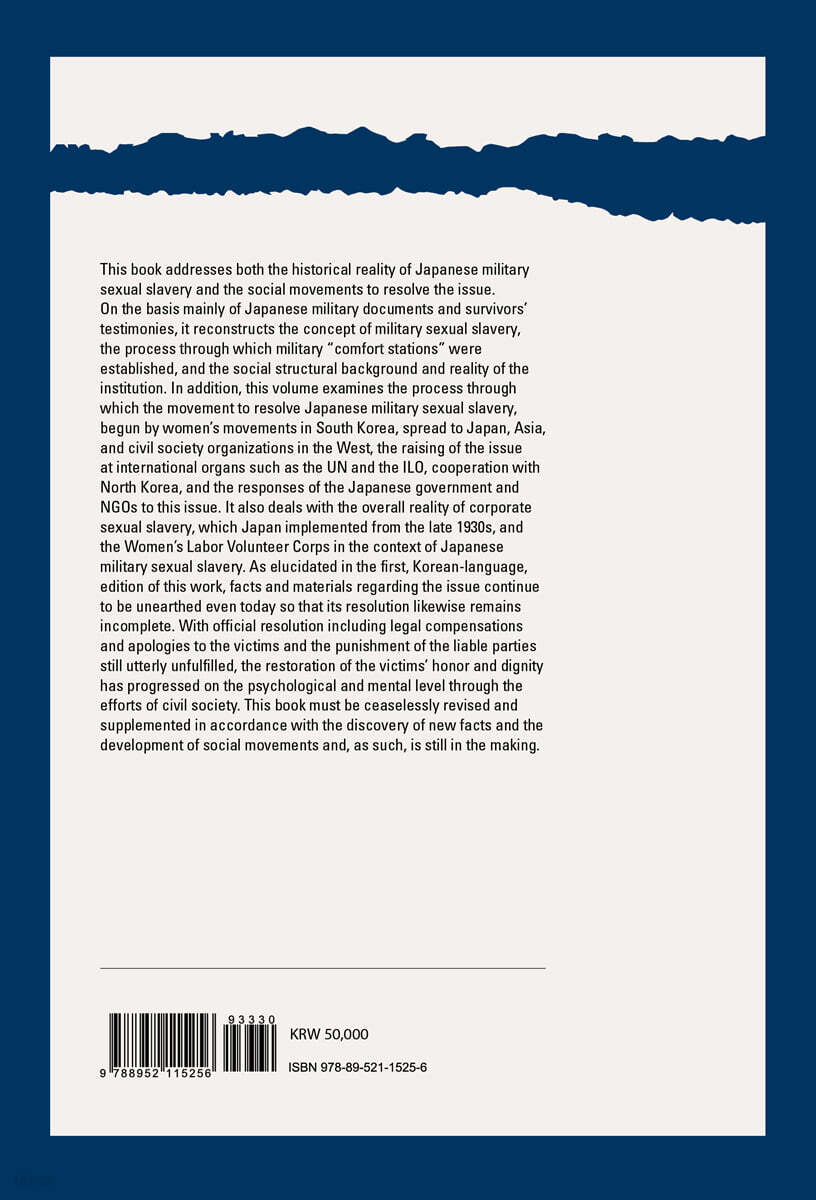
책소개
목차
|
A Note on the Text, Translation, and Transliteration
Abbreviations Tables and Diagrams Preface Part I: The Reality of the Issue of Japanese Military Sexual Slavery Chapter 1. The Concept of Japanese Military Sex Slaves 1. The Many Names for Japanese Military Sex Slaves 2. The Terminology of the Official Institution 3. Problems with the Actual Operation of the Volunteer Corps/Military Sexual Slavery 4. Institutional Confusion in the Testimonies of the Victims, Victimizers, and Investigators 5. The Perception of South Koreans Who Experienced the Japanese Colonial Era: Survey Results 6. Conclusion Chapter 2. The Process of Establishing Japanese Military Comfort Stations 1. The Periodization of the Implementation of Japanese Military Sexual Slavery 2. The Primitive Form of Military Comfort Stations: Approximately 1905 3. The Formation of Military Comfort Stations: Approximately 1932 4. The Establishment and Implementation of Full-fledged Military Comfort Station Policies: The End of 1937 and Onwards 5. Changes in the Establishment and Form of Management of Military Comfort Stations 6. Conclusion Chapter 3. The Forced Mobilization of Women as Japanese Military Sex Slaves 1. The Debate Surrounding Forced Mobilization 2. An Analysis of the Testimonies of South Korean Victims 3. The Testimonies of Other Victims and Experiencers of Comfort Stations and Documentary Materials 4. Conclusion Chapter 4. The Social Structural Background and Reality of Japanese Military Sexual Slavery 1. The Formative Background and Coloniality of Japanese Military Sexual Slavery 2. The Reality of Japanese Military Sexual Slavery 3. Concealment Part II: The Social Movements to Resolve the Issue of Japanese Military Sexual Slavery Chapter 5. The Movement to Resolve the Issue of Japanese Military Sexual Slavery 1. The Issue of Japanese Military Sexual Slavery before Social Movements 2. The Development and Periodization of the Movement 3. The Raising of the Issue by South Korean Women’s Movements and the Establishment of the Korean Council 4. The Participation of Other South Korean NGOs, North Korea, and Overseas Koreans 5. Solidarity with Civil Society in Japan and Asian Victim Nations and around the World 6. The Movement since the 2000 Women’s Tribunal 7. Beyond a Movement for Victims 8. The Movements Demanding Measures from the South Korean and Japanese Governments and the South Korean Government’s Position Chapter 6. The Issue of Japanese Military Sexual Slavery at the UN 1. The Internationalization of the Issue of Japanese Military Sexual Slavery 2. The UN’s Human Rights-related Organs 3. The Issue of Japanese Military Sexual Slavery at the UN Sub-Commission on Human Rights 4. The Issue of Japanese Military Sexual Slavery at the UN Commission on Human Rights/Human Rights Council 5. The Issue of Japanese Military Sexual Slavery at Treaty Bodies 6. Discussions on Japanese Military Sexual Slavery at Global Conferences and by International NGOs 7. Conclusion Chapter 7. The Issue of Japanese Military Sexual Slavery at the ILO 1. International Activities for the Resolution of the Issue of Japanese Military Sexual Slavery 2. The ILO, the Arena of the Presentation of Japanese Military Sexual Slavery 3. Raising the Issue of Japanese Military Sexual Slavery at the ILO: 1995-1996 4. The Initiation of Active Activities through the Channel of the Committee of Experts and the Committee of Experts and Conference Committee Reports: 1996-1997 5. The Committee of Experts’ Judgment and the Repeated Frustration of the Adoption of Japanese Military Sexual Slavery as an International Labour Conference Agenda: 1998-2000 6. A Partial Victory―The Adoption of the Issue at the Workers’ Meeting: 2001-2003 7. Repeated Conflict between the Workers’ and Employers’ Groups: Since 2004 Chapter 8. The 2000 Women’s International War Crimes Tribunal on Japan’s Military Sexual Slavery 1. The 2000 Women’s Tribunal as a New Movement 2. The Factors That Made the 2000 Women’s Tribunal Possible 3. The Movement in South Korea in the Process of Preparing for the 2000 Women’s Tribunal 4. The Main Points of Contention of the International Organizing Committee and the Tribunal 5. Cooperation among South Korea, North Korea, and Korean Residents in Japan 6. The Significance and Limitations of the 2000 Women’s Tribunal Part III: Japan’s Responses Chapter 9. The Responses of the Japanese Government and Conservative Public 1. Changes in the Position of the Japanese Government in the Process of Raising the Issue of Japanese Military Sexual Slavery 2. The Japanese Government’s Position as Expressed in UN Documents 3. The Perspective of Right-wing Public Opinion in Japan 4. Responses to the 2007 Passage of the US House of Representatives’ “Comfort Women Resolution” 5. From the Review of the Kono Statement to the December 28, 2015 Announcement of the Agreement on Japanese Military Sexual Slavery by the South Korean and Japanese Foreign Ministers Chapter 10. The Movements of Japanese NGOs 1. Raising the Issue of Japanese Military Sexual Slavery in Japan 2. The Awareness of the Issue and the Formation of the Movements: 1988-1991 3. The Development of Full-fledged Movements for the Resolution of the Issue of Japanese Military Sexual Slavery: End of 1991-1993 4. The Weakening of the Movements and the Search for Alternative Methods: End of 1993-August 1994 5. The Downfall of the Asian Women’s Fund, Movements for Legislation, the 2000 Women’s Tribunal, and Research Activities 6. Attempts at a Nationwide Coalition 7. The Characteristics and Points of Contention of Activist Organizations in Japan Part IV: The Nature of the Issue of Japanese Military Sexual Slavery Chapter 11. The Nature of the Issue of Japanese Military Sexual Slavery 1. The Issue of Japanese Military Sexual Slavery as One of Multilayered Human Rights Violation 2. The Historical Structure of the Oppression of Women 3. Nationalism and Feminism in the Issue of Japanese Military Sexual Slavery 4. Conclusion Chapter 12. The Awareness of the International Community: The Universality and Historical Particularity of the Wartime Violation of Women’s Human Rights 1. The Universality and Particularity of the Issue of Japanese Military Sexual Slavery 2. Japanese Military Sexual Slavery as an Issue of the Wartime Violation of Women’s Human Rights 3. The Issue of Historical Particularity 4. The Reasons for the Oversight of Historical Particularity in the Internationalization Process of the Movement 5. Conclusion Supplements Bibliography Index |
저자 소개 2
A professor emeritus in the Department of Sociology at Seoul National University, Chung Chinsung is a member of the UN Committee on the Elimination of Racial Discrimination. After graduating from Seoul National University (BA and MA), she received a doctoral degree in sociology from the University of Chicago. She served as a
A professor emeritus in the Department of Sociology at Seoul National University, Chung Chinsung is a member of the UN Committee on the Elimination of Racial Discrimination. After graduating from Seoul National University (BA and MA), she received a doctoral degree in sociology from the University of Chicago. She served as a professor in the Department of Sociology at Seoul National University and the president of the Korean Sociological Association, Korean Association of Women’s Studies, and Korean Association of Human Rights Studies, respectively. She was active in the UN Sub-Commission on the Promotion and Protection of Human Rights and the UN Human Rights Council Advisory Committee. She was a member of the South Korea-Japan Joint History Research Committee, Constitutional Court of Korea Advisory Committee, and Supreme Court of Korea Public Service Ethics Committee and the chair of the Seoul Metropolitan Gender Equality Committee and the Korean National Police Agency Gender Equality Committee, respectively. She also contributed to civil society activities as the co-representative of the Korean Council for the Women Drafted for Military Sexual Slavery by Japan and the director of the Korea Center for United Nations Human Rights Policy. She served as the director of the Institute for Social Development and Policy Research and the Human Rights Center, respectively, at Seoul National University.
She published numerous books and academic papers on women’s human rights and Korean-Japanese relations including A Theory of Social Movements in Contemporary Japan, Koreans in Japan, The United Nations and the Formation of Human Rights Norms, Human Rights in East Asia: A Comparison of Korean and Japanese Human Rights Improvement (co-authorship), The Current History of Korean Women (co-authorship), Sociology of Human Rights (co-authorship), and Gender Perspective on Modern and Contemporary History of Korea and Japan (co-authorship).
She published numerous books and academic papers on women’s human rights and Korean-Japanese relations including A Theory of Social Movements in Contemporary Japan, Koreans in Japan, The United Nations and the Formation of Human Rights Norms, Human Rights in East Asia: A Comparison of Korean and Japanese Human Rights Improvement (co-authorship), The Current History of Korean Women (co-authorship), Sociology of Human Rights (co-authorship), and Gender Perspective on Modern and Contemporary History of Korea and Japan (co-authorship).
After graduating from the Department of English Language and Literature at Seoul National University (BA and MA), Kim Yoo-suk studied English literature in the Department of English at the University of Minnesota-Twin Cities (PhD program; ABD). A full-time translator specializing in Korean studies and the arts, he co-translat
After graduating from the Department of English Language and Literature at Seoul National University (BA and MA), Kim Yoo-suk studied English literature in the Department of English at the University of Minnesota-Twin Cities (PhD program; ABD). A full-time translator specializing in Korean studies and the arts, he co-translated Source Book for the Korean History of Science (Cambridge University Press; forthcoming) for the Korean Research Institute of Science, Technology and Civilization at Jeonbuk National University and translated academic papers and literary works for the Seoul Journal of Korean Studies, Asia: Magazine of Asian Literature, and Changbi Publishers. His current project is a translation of Moon Manyong’s The Compressed Development of Science and Technology under the Authoritarian Regimes in South Korea (1945-1987). He also translated exhibition and curatorial texts for artists and art institutions including Jane Jin Kaisen, siren eun young jung, National Museum of Modern and Contemporary Art, Korea, Seoul Museum of Art, and Barakat Seoul.
품목정보
- 발행일
- 2024년 12월 30일
- 쪽수, 무게, 크기
- 344쪽 | 153*225*30mm
- ISBN13
- 9788952115256
사락 별점0
혜택 및 유의사항밑줄0
혜택 및 유의사항
50,000원
총 1개
50,000원
