
- [POD] 주문 제작 도서입니다. 발송까지 3일 정도 소요됩니다.
이미 소장하고 있다면 판매해 보세요.
- 국내배송만 가능
- 문화비소득공제 가능
ICT 사회 연구 총서

이 상품의 태그
책소개
목차
|
Preface
01 The Virtuous Cycle of the Korean ICT Industry and Economic and Social Systems (Joon-Shik Park) The ICT Industry and Korea’s Economic and Social Development Innovation in the ICT Industry and Climbing the Next Ladder of Success Development and Advancement of the ICT Industry Innovation Ecosystem and ICT Industry Summary and Conclusion 02 Agents in the Diffusion of Social Content in Korea:Role of Users, Employees, and the Government (Kyung-Hee Kim and Juhyun Hong) What is Social Content Agents of Social Content Diffusion and Their Roles Conclusion 03 News Innovation: Progress and Future Prospects (Sun Ho Jeong) Digital News in South Korea: Brief History and Unique Characteristics Lessons From the 2010s For Journalism Innovation in the 2020s Conclusion 04 The Korean Wave: Success Factors (Shin Dong Kim) Contributing Factors What is the Korean Wave to Koreans? Another cultural imperialism or a successful counterculture to the American empire? Future Prospects 05 South Korea’s ICT and Migrant Minorities’ Capabilities: Analysis of Foreign Brides’ Empowerment by Social Media (Dominique Nduhura, Shin Dong Kim and Nadine Mumporeze) Introduction Literature Review Methods Research Findings Discussion of the Findings Conclusion Contributors |
품목정보
- 발행일
- 2023년 04월 10일
- 쪽수, 무게, 크기
- 160쪽 | 210*290*20mm
- ISBN13
- 9791128896873
책 속으로
|
For Korea to continue to develop and grow its economy in the post-industrial era, it requires more advanced economic and social development strategies. These must be founded in the virtuous correlation between the ICT industry leading the transition to an advanced nation and key elements of economic and social development. To this end, it is very important to advance specific economic and social areas related to the ICT industry that can underlie a post-industrial economic and social paradigm shift. With this in mind, we examine how Korea is attempting to advance sustainably after its industrialization through ICT innovation, despite the various constraints and challenges it faces both domestically and internationally.
---「01 The Virtuous Cycle of the Korean ICT Industry and Economic and Social Systems」중에서 Social content has been spreading through the interaction of employees, users, and communication technologies, while the government has been an obstacle, failing to play its role in the diffusion of social content. According to the employees, they have made considerable contributions in social content diffusion, including rapid recognition of change, development of profit models, and creation of platforms for user participation. Users have also played a leading role in the diffusion of social content; they have majorly contributed in the quantitative expansion of the content and also facilitated the qualitative improvement of the content through various responses. ---「02 Agents in the Diffusion of Social Content in Korea」중에서 |
출판사 리뷰
|
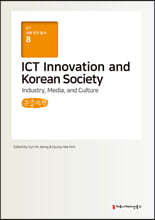
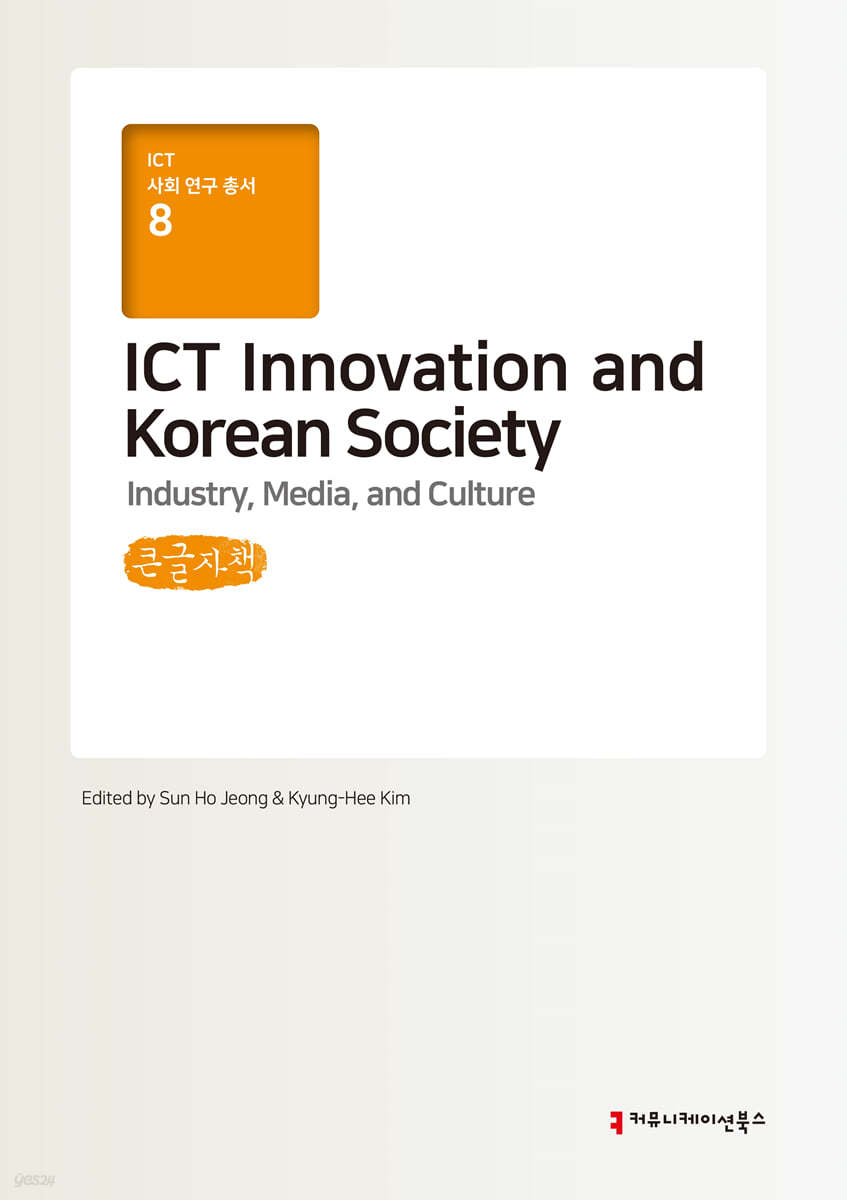
This book emerged out of a collaborative research project entitled “Global Applications of the Korean Development Models in the Information and Communication Industry.” From September 2015 to August 2020, scholars with expertise in industrial and regional sociology, media and cultural studies, and science and technology policy participated in the project. The goal was to explore cases related to the information and communications technology (ICT) industry in South Korea, analyze factors that have contributed to its successful and/or unsuccessful experiences, and carry out comparisons with those of other nations.
This book introduces five topics relevant to ICT innovation in Korean society. While chapters 1, 2, and 3 focus on South Korea’s ICT and media industries, chapters 4 and 5 extend our view by offering relevant topics in the context of the globalized media environment and culture. In chapter 1, Joon-Shik Park takes a close look at the role of the ICT industry in relation to South Korea’s economic and social development. He suggests that innovation in this industry has enabled the country to climb up the ladder of success, and discusses in detail the necessary conditions for further advancement. As examples of innovative ecosystems, industrial areas in Korea such as Teheran Valley and the Pangyo ICT cluster as well as the companies Naver, Daum, and Kakao are introduced for their contribution to the new industrial ecosystem. In chapter 2, Kyung-Hee Kim and Juhyun Hong provide an analysis of the diffusion process of content that enables users to exchange information and share experiences through interactions via social media. With the goal of identifying the different roles played by the Korean government, media users, industry professionals, and communication technologies, they interviewed 12 experts who spent most of their career in the ICT industry. In this chapter, they provide an explanation of the positive roles (i.e., media users, industry professionals, communication technologies) and negative roles (i.e., the government) played by each involved actor. In chapter 3, Sun Ho Jeong examines the progress of digital news innovation in South Korea and provides an outlook. Although emerging technologies have brought about positive changes to Korean society, they have also led to disruptive experiences for the journalism industry in particular. Approaching the subject matter from the perspectives of the industry and academia, she provides a brief introduction of the history and characteristics of digital news in South Korea, followed by challenges and opportunities experienced by news organizations in the 2010s, and a discussion on journalism innovation for the 2020s. The chapter concludes with final remarks for future directions. In chapter 4, Shin Dong Kim presents a discussion on the factors contributing to the worldwide success of Korean media and pop culture. Kim’s close inspection of the domestic factors (i.e., expansion of the television market, accumulation of program production technologies and skills, and a new generation of creators and consumers of media), and global factors (i.e., geopolitics of East Asian countries in relation to the development of cultural industries) that are identified as contributors to the Korean Wave furthers our understanding of the historical context of the phenomenon. The chapter also provides an opportunity to think about its implications for Korean people. Chapter 5 examines communities of foreign brides in South Korea, where social media is utilized for empowerment of migrant minorities. For this study, Dominique Nduhura, Shin Dong Kim, and Nadine Mumporeze conducted interviews and focus group discussions with 40 foreign brides from Vietnam, the Philippines, and Cambodia who are currently residing in South Korea. Findings suggest that their experiences with social media are largely favorable (i.e., connectedness, cathartic role, mutual education, advocacy, business platform, body celebration, political participation, access to services, etc.), while some mishaps from such use persist. |
사락 별점0
혜택 및 유의사항밑줄0
혜택 및 유의사항
37,000원
총 1개
37,000원
