
소득공제
수입
직수입양서
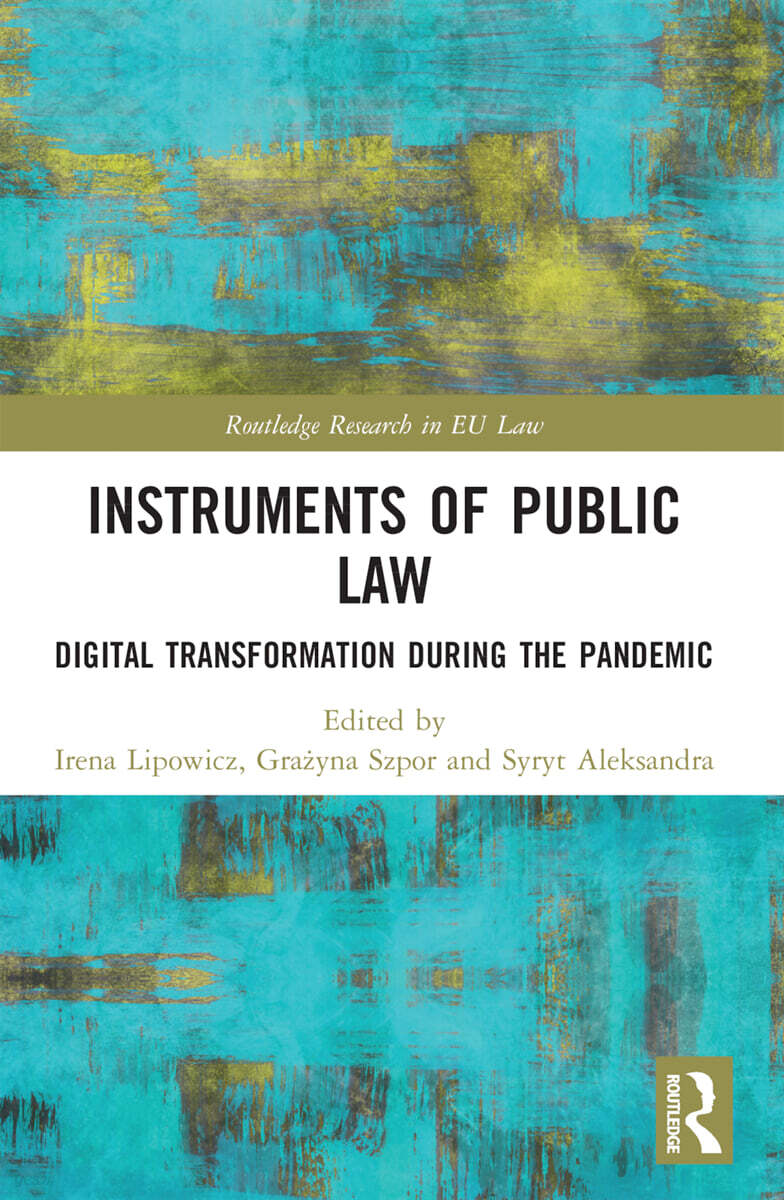
Instruments of Public Law
Digital Transformation during the Pandemic
Paperback, 1st Edition
Lipowicz, Irena / Szpor, Grażyna / Syrt, Aleksandra
Routledge
2024.05.27.
이미 소장하고 있다면 판매해 보세요.
- 국내배송만 가능
- 해외 거래처 사정에 의하여 품절/지연 가능
- 도서 정보 중 미표기 사항 안내?
- 문화비소득공제 가능
Routledge Research in EU Law
-
 Gender and the European Court of Human Rights 이동Gender and the European Court of Human Rights10% 99,330원
 -
European Universities Alliances and the Law 이동European Universities Alliances and the Law10% 356,010원
-
Implementing International Disability Law in the European Union 이동Implementing International Disability Law in the European Union10% 99,330원
-
Gender and the European Court of Human Rights 이동Gender and the European Court of Human Rights10% 356,010원
-
Implementing International Disability Law in the European Union 이동Implementing International Disability Law in the European Union10% 356,010원
-
Tangled Complexity of the EU Constitutional Process 이동Tangled Complexity of the EU Constitutional Process10% 91,050원
-
Constitutional Law and the EU Balanced Budget Principle 이동Constitutional Law and the EU Balanced Budget Principle10% 111,750원
-
Delegation of Powers in the EU Legal System 이동Delegation of Powers in the EU Legal System10% 97,260원
-
Tangled Complexity of the EU Constitutional Process 이동Tangled Complexity of the EU Constitutional Process10% 302,190원
-
Delegation of Powers in the EU Legal System 이동Delegation of Powers in the EU Legal System10% 356,010원
-
Migration Law and the Externalization of Border Controls 이동Migration Law and the Externalization of Border Controls10% 51,720원
-
Member State Interests and European Union Law 이동Member State Interests and European Union Law10% 97,260원
-
Constitutional Law and the EU Balanced Budget Principle 이동Constitutional Law and the EU Balanced Budget Principle10% 356,010원
-
EU and the Proliferation of Integration Principles under the Lisbon Treaty 이동EU and the Proliferation of Integration Principles under the Lisbon Treaty10% 97,260원
-
Gender and the Court of Justice of the European Union 이동Gender and the Court of Justice of the European Union10% 101,400원
-
Post-Soviet Constitutions and Challenges of Regional Integration 이동Post-Soviet Constitutions and Challenges of Regional Integration10% 97,260원
책소개
목차
|
DIGITAL TRANSFORMATION DURING THE PANDEMIC. INSTRUMENTS OF PUBLIC LAW * INTRODUCTION * I. GENERAL SUBJECTS * 1. THE NOTION OF DIGITAL TRANSFORMATION * 1. Introduction * 2. Structural analysis of juridisation * 3. Contextual analysis of occurrence in normative acts * 4. Explanations of a term "digital transformation" in the literature * 5. Digital transformation in public administration * 6. Conclusions * 2. THE PANDEMIC PHENOMENON ? A FEW GENERAL REMARKS * 1. Introduction * 2. The term "pandemic" * 3. A short story about pandemic COVID-19 * 4. Pandemic and epidemic issues in Polish law and practice * 5. Conclusions * 3. PUBLIC LAW INSTRUMENTS * 1. Introduction * 2. Polish doctrine * 3. German doctrine * 1. Italian doctrine * 2. Conclusions * II. EUROPEAN AND NATIONAL PUBLIC-LAW INSTRUMENTS * 1. THE DIGITAL TRANSFORMATION OF THE EUROPEAN UNION IN TIMES OF PANDEMIC ? SELECTED ISSUES OF PUBLIC LAW * 1. Introduction * 2. EU digital strategy * 3. Digital technologies: the EU response to a pandemic * 4. Implementation of the EU regulatory programme in Poland * 5. Form of measures taken by the EU: legal nature and legal basis * 6. The scope of measures taken by the EU: general characteristics * 7. Conclusions * 2. POLISH CONSTITUTIONAL INSTITUTIONS IN A PANDEMIC * 1. Introduction * 2. Constitutional tasks and obligations of the state regarding the response to a pandemic * 3. The institution of constitutional extraordinary measures and pandemics * 4. The use of digital solutions in a pandemic - constitutional institutions * 5. Conclusions * 3. USING TECHNOLOGY TO SUPPORT ADMINISTRATIONS IN CONTROLLING THE SARS-COV-2 PANDEMIC * 1. Introduction * 2. The response of the technology * 3. The Italian Immuni app * 4. The problem of fragmentation in the urgency of the pandemic * 5. The need for centralized coordination and privacy concerns * 6. Should the use of an app like Immuni have been mandatory? A question of proportionality * 7. The 2021 Regulation introducing an "interoperable EU Digital COVID Certificate": from a subsidiarity and proportionality perspective * 8. Conclusions * 4. THE PANDEMIC AS A CHANCE FOR ADMINISTRATIVE MODERNIZATION: SOME NOTES FROM GERMANY * 1. Introduction * 2. The current state of digitalization in Germany * 3. The pandemic as driver of the digital workplace and electronic public procurement? * 4. Digital strategy to manage the pandemic crisis in Germany * 5. The German style of pandemic management: federalism and the rule of law * 6. Conclusions * 5. PUBLIC INSTRUMENTS OF DIGITAL TRANSFORMATION DURING TIMES OF PANDEMIC IN THE REPUBLIC OF CROATIA * 1. Introduction * 2. Short chronology of pandemic in the Republic of Croatia * 3. Brief overview of digital transformation and its components in the Republic of Croatia in comparison to the EU * 4. Concise synopsis of Croatian public instruments of digital transformation during times of pandemic * 5. Long-term future outlook of Croatian public instruments of digital transformation * 6. Conclusions * III. CYBERSECURITY * 1. INFORMATION SECURITY AND CYBERSECURITY IN A PANDEMIC * 1. Introduction * 2. Information and related rights * 3. Privacy protection and security of personal data * 4. Information security and cyber-security * 5. Interoperability of data processing during a pandemic * 6. Conclusions * 2. COUNTERING CYBERCRIME DURING THE PANDEMIC * 1. Introduction * 2. The impact of digital transformation of the state and economy and the COVID - 19 pandemic on cybercrime * 3. Cyberattack scenarios involving COVID-19 * 4. Factors impeding the identification of the perpetrators * 5. De lege ferenda postulates * 6. Conclusions * IV. HEALTH CARE AND SOCIAL SECURITY * 1. Telemedicine during the epidemic * 1. Introduction * 2. Modifications introduced by the outbreak of COVID-19 * 3. Conclusions * 2. EMERGENCY REMOTE TEACHING IN THE COVID-19 PANDEMIC ERA IN LIGHT OF THE GDPR * 1. Introduction * 2. The legal landscape of data processing in ERT in Poland * 3. Actors involved in ERT and their responsibilities * 4. Principles of data processing and data subjects rights * 5. Conclusions * 3. STANDARDS OF PUBLIC ADMINISTRATION SERVICES FOR THE ELDERLY - A LESSON IN PANDEMIC TIME * 1. Introduction * 2. References * 3. ICT as a support network for mental health and general physical well-being * 4. Problems of long-term institutional care (LTC) standards * 5. Technology-enabledcare * 6. Conclusions * 4. PUBLIC E-SERVICES FOR PEOPLE WITH DISABILITIES DURING THE COVID-19 PANDEMIC * 1. Introduction * 2. A situation of people with disabilities * 3. Public e-service * 4. Barriers to accessing public services * 5. Analysis of the needs of people with disabilities in terms of access to public e-services * 6. Analysis of selected public e-services in the era of Covid-19 * 7. Conclusions * V. ADMINISTRATION IN A PANDEMIC * 1. ACCESS TO PUBLIC INFORMATION IN A PANDEMIC * 1. Introduction * 2. Principles of access to public information in the Republic of Poland * 3. Modification of regulations in the first period of the pandemic * 4. Assessment of legal solutions for limiting the right to information in the first pandemic period * 5. Conclusion * 2. COMMON REMOTE ACCESS TO PUBLIC SPATIAL DATA IN A PANDEMIC SITUATION ON THE EXAMPLE OF THE GEOPORTAL * 1. Introduction * 2. Geoportal as a point of common access to public data * 3. Data shared in the Geoportal during the pandemic * 3.1. Coronavirus related data, services and recommendations made available on the Geoportal * 3.2. Accessibility to the new data * 4. The use of the Geoportal and activities promoting it * 5. Changes in existing regulations and common availability of public spatial data * 5.1. Changes made by the "Shield 4.0" law * 5.2. Amendments to the Geodetic and Cartographic Law * 6. Conclusions * 3. VERIFICATION OF IDENTITY IN A PANDEMIC * 1. Introduction * 2. The concept and meaning of identity identification * 3. The impact of a pandemic on the identification process * 4. Biometric identification during a pandemic * 5. Conclusions * 4. REMOTE WORKING IN PUBLIC ADMINISTRATION DURING A PANDEMIC VERSUS DATA PROTECTION * 1. Introduction * 2. Processing of employees' personal data in the context of remote working * 3. Processing of personal data in remote working * 3.1. Organizational resources * 3.2. Technical resources * 4. Conclusions * VI. ECONOMIC ACTIVITY AND FINANCIAL SYSTEM DURING A PANDEMIC * SUPPORTING ENTREPRENEURSHIP DURING THE COVID-19 PANDEMIC * 1. Introduction * 2. Freedom of establishment and entrepreneurship * 3. Forms of support for entrepreneurship * 4. Conclusions * 1. IMPROVING THE ELECTRONIC COMMUNICATION OF THE TAXPAYER WITH THE TAX AUTHORITIES DURING THE PANDEMIC * 1. Introduction * 2. Legal basis for obligations and powers to file tax returns electronically * 3. Tax portals of tax administration bodies * 4. New e-services introduced in the pandemic period * 5. Other forms of communication between taxpayers and tax authorities * 6. Conclusions * VII. EDUCATION IN A PANDEMIC * 1. PROBLEMS OF DIGITAL TRANSFORMATION OF UNIVERSITIES IN TIMES OF PANDEMIC - FIRST EXPERIENCES * 3. Introduction * 4. Legal basis for the functioning of polish universities during the pandemic * 5. The role of Shield 2.0 and Shield 4.0 to the functioning of universities in times of pandemic * 6. Specific solutions resulting from the regulations of the MoSHE for the functioning of HEIs during a pandemic * 1. Digital transformation - a challenge for universities * 2. Conclusions * 2. USE OF EDUCATIONAL APPLICATIONS, INCLUDING VIDEO GAMES, BY PUBLIC ENTITIES DURING THE PANDEMIC * 3. Introduction * 2. Video games and educational apps as tools to support non-manual information instruments of public actors in education * 3. Cooperation between public and commercial entities in the scope of using video games to prevent the rapid and uncontrolled spread of the Coronavirus * 4. The social significance of video games before and during a pandemic in Poland * 5. Conclusions * 3. THE ROLE OF INFOGRAPHICS IN REDUCING UNCERTAINTY IN A PANDEMIC SITUATION * 1. Introduction * 2. Forms of uncertainty reduction in the information society * 3. Characteristics of infographics and their usefulness during a pandemic * 4. The themes of the infographics * 5. Functions of infographics * 6. Internet dissemination * 7. Image proportions * 8. Use of infographics by public actors in a pandemic situation * 9. Conclusions * FINAL REMARKS * |
품목정보
- 발행일
- 2024년 05월 27일
- 쪽수, 무게, 크기
- 350쪽 | 680g | 160*230mm
- ISBN13
- 9781032205168
리뷰/한줄평0
상품정보안내
직수입외서의 경우, 해외거래처에서 제공하는 정보가 부족하여 제목, 표지, 가격, 유통상태 등의 정보가 미비하거나 변경되는 경우가 있습니다. 정확한 확인을 원하시는 경우, 일대일 상담으로 문의하여 주시면 답변 드리겠습니다.
(판형과 판수 등이 다양한 도서는 찾으시는 도서의 ISBN을 알려 주시면 보다 빠르고 정확한 안내가 가능합니다.)
해외거래처에서 품절인 경우, 2차 거래선을 통해 유럽과 미국 출판사로 직접 수입이 진행될 수 있습니다.
수입 진행 시점으로 부터 2~3주가 추가로 소요되며, 해외에서도 유통이 원활하지 않은 도서는 품절 안내가 지연될 수 있습니다.
해당 경우, 문자와 메일로 별도 안내를 드리고 있사오니 마이페이지에서 휴대전화번호와 메일주소를 다시 한번 확인해주시기 바랍니다.
(판형과 판수 등이 다양한 도서는 찾으시는 도서의 ISBN을 알려 주시면 보다 빠르고 정확한 안내가 가능합니다.)
해외거래처에서 품절인 경우, 2차 거래선을 통해 유럽과 미국 출판사로 직접 수입이 진행될 수 있습니다.
수입 진행 시점으로 부터 2~3주가 추가로 소요되며, 해외에서도 유통이 원활하지 않은 도서는 품절 안내가 지연될 수 있습니다.
해당 경우, 문자와 메일로 별도 안내를 드리고 있사오니 마이페이지에서 휴대전화번호와 메일주소를 다시 한번 확인해주시기 바랍니다.
91,050원
총 1개
91,050원