
소득공제
외서
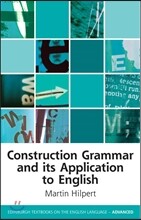
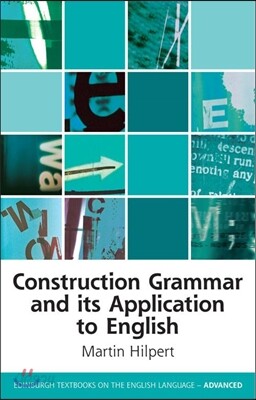
Construction Grammar and Its Application to English
Paperback
Hilpert, Martin
Edinburgh University Press
2014.04.30.
이미 소장하고 있다면 판매해 보세요.
- 국내배송만 가능
- 문화비소득공제 가능
Edinburgh Textbooks on the English Language Advanced Eup
-
 Construction Grammar and Its Application to English 이동Construction Grammar and Its Application to English29,000원
책소개
목차
|
List of tables and figures ix
Acknowledgements x To readers: Why you shouldn't pick up, let alone read, this book xi 1. Introducing Construction Grammar 1 1.1 What do you know when you know a language? 1 1.1.1 Idiomatic expressions permeate ordinary language 3 1.1.2 Idiomatic expressions are more than fixed strings 5 1.1.3 Idiomatic expressions are productive 7 1.1.4 The growth of the appendix 7 1.2 What is a construction? 8 1.2.1 Denning constructions: a first try 9 1.2.2 Defining constructions beyond non-predictability 12 1.3 Identifying constructions 14 1.3.1 Does the expression deviate from canonical patterns? 14 1.3.2 Does the expression carry non-compositional meaning? 16 1.3.3 Does the expression have idiosyncratic constraints? 18 1.3.4 Does the expression have collocational preferences? 20 1.4 Summing up 22 1.5 Outline of the following chapters 23 Study questions 23 Further reading 24 2. Argument structure constructions 25 2.1 Analysing 'simple sentences' 25 2.2 Argument structure 26 2.3 Valency-increasing constructions 31 2.3.1 The DITRANSITIVE construction 31 2.3.2 The CAUSED MOTION construction 35 2.3.3 The WAY construction 36 2.4 Valency-decreasing constructions 39 2.4.1 The PASSIVE 39 2.4.2 The IMPERATIVE construction 42 2.4.3 Null Instantiation 44 2.5 Relations between argument structure constructions 45 2.6 Summing up 47 Study questions 49 Further reading 49 3. Inside the construct-i-con 50 3.1 Meaningless constructions? 50 3.2 The construct-i-con: a network of interlinked constructions 57 3.2.1 Inheritance 57 3.2.2 Kinds of inheritance links 60 3.2.3 Complete inheritance vs. redundant representations 65 3.3 'Normal syntax' in Construction Grammar 67 3.4 Summing up 71 Study questions 72 Further reading 73 4. Constructional morphology 74 4.1 More than a theory of syntax 74 4.1.1 one wug, two wugs 74 4.1.2 skypable 75 4.1.3 shpants 77 4.1.4 a what-the-heck-is-wrong-with-you look 79 4.2 Morphological constructions and their properties 80 4.2.1 Morphological productivity 81 4.2.2 Paradigmatic organisation 83 4.2.3 Non-compositional meanings 85 4.2.4 Simultaneous affixation 86 4.3 Constructional solutions to morphological puzzles 88 4.3.1 Affix ordering 88 4.3.2 Compounding 93 4.4 Summing up 97 Study questions 99 Further rending 100 5. Information packaging constructions 101 5.1 The pragmatic side of Construction Grammar 101 5.1.1 Information packaging: the basics 104 5.1.2 Presupposition and assertion 105 5.1.3 Activation 107 5.1.4 Topic and locus 109 5.2 Information packaging and grammar 111 5.2.1 Cleft constructions 112 5.2.2 Dislocation and related constructions 117 5.3 Island constraints 123 5.4 Summing up 126 Study questions 128 Further reading 128 6. Constructions and language processing 130 6.1 The quest for behavioural evidence 130 6.2 Evidence from language comprehension 132 6.2.1 Constructions explain how hearers understand novel denominal verbs 132 6.2.2 Constructional meanings are routinely accessed in sentence comprehension 134 6.2.3 Constructions explain knowledge of grammatical unacceptability 137 6.2.4 Constructions explain incidental verbatim memory 142 6.3 Evidence from language production 144 6.3.1 Constructions explain reduction effects in speech 144 6.3.2 Constructions explain syntactic priming, and exceptions to syntactic priming 144 6.3.3 Constructions explain how speakers complete sentences 143 6.4 Summing up 151 Study questions 154 Further reading 154 7. Constructions and language acquisition 155 7.1 Construction Grammar for kids 155 7.1.1 Item-based learning 156 7.1.2 The sociocognitive foundation of language learning 158 7.2 Evidence for the item-based nature of language learning 163 7.3 From item-based schemas to constructions 169 7.4 The acquisition of complex sentences 172 7.5 Summing up 176 Study questions 178 Further reading 178 8. Language variation and change 179 8.1 Language myths 179 8.2 Constructional variation 181 8.2.1 There's more than one way to do it 181 8.2.2 Variation in syntactic constructions; the example of relative clauses 183 8.2.3 Analysing variation between constructions 185 8.3 Constructional variation across groups of speakers 191 8.4 Constructional change: variation across time 194 8.5 Summing up 199 Study questions 200 Further reading 201 9. Concluding remarks 202 References 205 Index 217 |
품목정보
- 발행일
- 2014년 04월 30일
- 쪽수, 무게, 크기
- 220쪽 | 340g | 137*213*20mm
- ISBN13
- 9780748675852
사락 별점0
혜택 및 유의사항밑줄0
혜택 및 유의사항상품정보안내
직수입외서의 경우, 해외거래처에서 제공하는 정보가 부족하여 제목, 표지, 가격, 유통상태 등의 정보가 미비하거나 변경되는 경우가 있습니다. 정확한 확인을 원하시는 경우, 일대일 상담으로 문의하여 주시면 답변 드리겠습니다.
(판형과 판수 등이 다양한 도서는 찾으시는 도서의 ISBN을 알려 주시면 보다 빠르고 정확한 안내가 가능합니다.)
해외거래처에서 품절인 경우, 2차 거래선을 통해 유럽과 미국 출판사로 직접 수입이 진행될 수 있습니다.
수입 진행 시점으로 부터 2~3주가 추가로 소요되며, 해외에서도 유통이 원활하지 않은 도서는 품절 안내가 지연될 수 있습니다.
해당 경우, 문자와 메일로 별도 안내를 드리고 있사오니 마이페이지에서 휴대전화번호와 메일주소를 다시 한번 확인해주시기 바랍니다.
(판형과 판수 등이 다양한 도서는 찾으시는 도서의 ISBN을 알려 주시면 보다 빠르고 정확한 안내가 가능합니다.)
해외거래처에서 품절인 경우, 2차 거래선을 통해 유럽과 미국 출판사로 직접 수입이 진행될 수 있습니다.
수입 진행 시점으로 부터 2~3주가 추가로 소요되며, 해외에서도 유통이 원활하지 않은 도서는 품절 안내가 지연될 수 있습니다.
해당 경우, 문자와 메일로 별도 안내를 드리고 있사오니 마이페이지에서 휴대전화번호와 메일주소를 다시 한번 확인해주시기 바랍니다.
