

이미 소장하고 있다면 판매해 보세요.
- 국내배송만 가능
- 문화비소득공제 가능
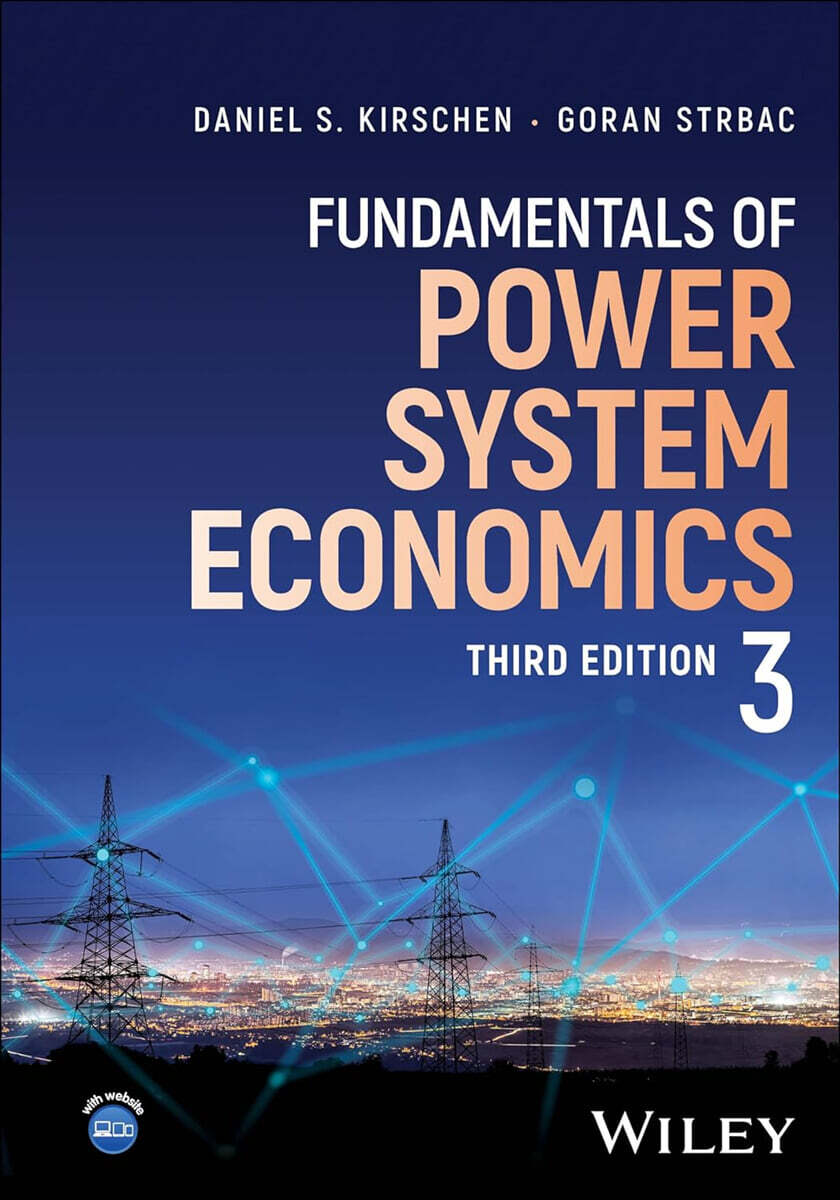
책소개
목차
|
Preface to the Third Edition Preface to the Second Edition Preface to the First Edition Chapter 1: Introduction 1.1 Why Study Power System Economics? 1.2 Industry Structure 1.2.1 Vertically Integrated Monopoly Utility 1.2.2 The Dawn of Competition 1.2.3 Introducing Independent Power Producers 1.2.4 Wholesale Competition 1.2.5 Retail Competition 1.2.6 Incorporating Distributed Energy Resources 1.3 Dramatis Personae 1.4 Competition and Privatization 1.5 Experience and Open Questions 1.6 Further Reading 1.7 Problems Chapter 2: Concepts from Economics 2.1 Introduction 2.2 Fundamentals of Markets 2.2.1 Modeling the Consumers 2.2.1.1 Individual Demand 2.2.1.2 Surplus 2.2.1.3 Demand and Inverse Demand Functions 2.2.1.4 Price Elasticity of Demand 2.2.2 Modeling the Producers 2.2.2.1 Opportunity Cost 2.2.2.2 Supply and Inverse Supply Functions 2.2.2.3 Producers’ Revenue 2.2.2.4 Price Elasticity of Supply 2.2.3 Market Equilibrium 2.2.4 Pareto Efficiency 2.2.5 Global Welfare and Deadweight Loss 2.2.6 Time-varying prices 2.3 Concepts from the Theory of the Firm 2.3.1 Inputs and Outputs 2.3.2 Long Run and Short Run 2.3.3 Costs 2.3.3.1 Short-run Costs 2.3.3.2 Long-run Costs 2.3.3.3 Opportunity Costs 2.4 Risk 2.5 Types of Markets 2.5.1 Spot Market 2.5.2 Forward Contracts and Forward Markets 2.5.3 Future Contracts and Futures Markets 2.5.4 Options 2.5.5 Contracts for Difference 2.5.6 Managing the Price Risks 2.5.7 Market Efficiency 2.6 Markets with Imperfect Competition 2.6.1 Market Power 2.6.2 Monopoly 2.7 Regulation 2.7.1 Goals of Regulation 2.7.2 Traditional Regulation 2.7.3 Drawbacks of Traditional Regulation 2.8 Externalities 2.9 Role of Government 2.10 Further Reading 2.11 Problems Chapter 3: Economic Operation in a Vertically Integrated Environment 3.1 Introduction 3.2 Short-run Characteristics of the Demand for Electrical Energy 3.3 Short-run Characteristics of the Generation of Electrical Energy 3.3.1 Thermal Generation 3.3.2 Wind and Solar Generation 3.3.3 Hydro Generation 3.4 Short-run Characteristics of Energy Storage Systems 3.5 Economic Dispatch 3.5.1 Mathematical formulation 3.5.2 Economic Dispatch Considering Unit Limits 3.5.3 Interpretation of the Lagrange Multipliers 3.5.4 Economic Dispatch Using Piecewise Linear Cost Curves 3.6 Load Flexibility and Storage 3.7 Unit Commitment 3.7.1 Mathematical formulation 3.7.2 Solving the Unit Commitment Problem 3.7.3 Handling Uncertainty 3.8 Further Reading 3.9 Problems Chapter 4: Structure of Wholesale Markets for Electrical Energy 4.1 What makes a MWh a Unique Commodity? 4.2 Trading Periods 4.3 Forward Markets 4.3.1 Bilateral or Decentralized Trading 4.3.2 Centralized Trading 4.3.2.1 Principles of Centralized Trading 4.3.2.2 Day-ahead Forward Market 4.3.2.3 Formulation as an Optimization Problem 4.3.2.4 Market Clearing Price 4.3.2.5 Recovering the Fixed Costs 4.3.3 Comparison of Centralized and Decentralized Trading 4.4 Spot Market 4.4.1 Obtaining Balancing Resources 4.4.2 Gate Closure 4.4.3 Operation of the Spot Market 4.4.4 Interactions between the Spot Market and the Forward Markets 4.4.5 Virtual Bidding 4.5 The Settlement Process 4.6 Further Reading 4.7 Problems Chapter 5: Participating in Markets for Electrical Energy 5.1 Introduction 5.2 The Consumer’s Perspective 5.3 The Retailer’s Perspective 5.4 The Producer’s Perspective 5.4.1 Perfect Competition 5.4.1.1 Optimal dispatch 5.4.1.2 Scheduling 5.4.1.3 Forecasting errors 5.4.1.4 Cogeneration plants 5.4.1.5 Ancillary services 5.4.2 Imperfect Competition 5.4.2.1 Bertrand model 5.4.2.2 Cournot Model 5.4.2.3 Factors that facilitate the exercise of market power 5.4.2.4 Supply Functions Equilibria 5.4.2.5 Agent-based modeling 5.4.2.6 Experimental economics 5.4.2.7 Limitations of these models 5.5 Perspective of Plants that Do Not Burn Fossil Fuels 5.5.1 Nuclear power plants 5.5.2 Hydroelectric power plants 5.5.3 Wind and Solar Generation 5.5.3.1 Intermittency and Stochasticity 5.5.3.2 Effect on the markets 5.6 The Storage Owner’s Perspective 5.6.1 Self-scheduling 5.6.2 Centralized market 5.7 The Flexible Consumer’s Perspective 5.7.1 Flexible demand vs. storage 5.7.2 Remunerating flexible demand 5.7.3 Implementation Issues 5.8 The Neighbor’s Perspective 5.9 An Overall Market Perspective 5.9.1 Clearing the market 5.9.2 Default price and price cap 5.9.3 Exercising market power 5.9.4 Mitigating market power 5.10 Further Reading 5.11 Problems Chapter 6: Integrating Wholesale Electricity Markets and Transmission Networks 6.1 Introduction 6.2 Decentralized Trading over a Transmission Network 6.2.1 Physical Transmission Rights 6.2.2 Issues with Physical Transmission Rights 6.3 Centralized Trading over a Transmission Network 6.3.1 Centralized Trading in a Two-bus System 6.3.1.1 Unconstrained Transmission 6.3.1.2 Constrained Transmission 6.3.1.3 Congestion Surplus 6.3.2 Centralized Trading in a Three-bus System 6.3.2.1 Economic Dispatch 6.3.2.2 Correcting the Economic Dispatch 6.3.2.3 Nodal Prices 6.3.2.4 Congestion Surplus 6.3.2.5 Economically Counter-intuitive Flows 6.3.2.6 Economically Counter-intuitive Prices 6.3.2.7 More Economically Counter-intuitive Prices 6.3.2.8 Nodal Pricing and Market Power 6.3.2.9 A Few Additional Comments on Nodal Marginal Prices 6.3.3 Losses in Transmission Networks 6.3.3.1 Types of Losses 6.3.3.2 Marginal Cost of Losses 6.3.3.3 Effect of Losses on Generation Dispatch 6.3.3.4 Merchandising Surplus 6.3.3.5 Combining Losses and Congestion 6.3.3.6 Handling of Losses under Bilateral Trading 6.3.4 Mathematical Formulation of Nodal Pricing 6.3.4.1 Network with a Single Busbar 6.3.4.2 Network of Infinite Capacity with Losses 6.3.4.3 Network of Finite Capacity with Losses 6.3.4.4 Network of Finite Capacity, dc Power Flow Approximation 6.3.4.5 ac modeling 6.3.5 Managing Transmission Risks in a Centralized Trading System 6.3.5.1 The Need for Network-related Contracts 6.3.5.2 Financial Transmission Rights 6.3.5.3 Point-to-Point Financial Transmission Rights 6.3.5.4 Flowgate Rights 6.4 Further Reading 6.5 Problems Chapter 7: Power System Operation 7.1 Introduction 7.2 Operational Reliability 7.2.1 The Value of Reliability 7.2.2 The Cost of Reliability 7.2.3 Procuring Reliability Resources 7.3 Operational Issues 7.3.1 Balancing Issues 7.3.1.1 Load/generation Balance 7.3.1.2 Balancing Resources 7.3.2 Network Issues 7.3.2.1 Limits on Power Transfers 7.3.2.2 Voltage Control and Reactive Support 7.3.2.3 Other Stability Resources 7.3.3 System Restoration 7.3.4 Market Models vs. Operational Models 7.4 Obtaining Reliability Resources 7.4.1 Compulsory Provision 7.4.2 Market for Reliability Resources 7.4.3 System Balancing with a Significant Proportion of Variable Renewable Generation 7.4.4 Creating a Level-playing Field 7.5 Buying Reliability Resources 7.5.1 Quantifying the Needs 7.5.2 Remunerating Reliability Resources 7.5.2.1 Co-optimization of Energy and Reserve in a Centralized Day-ahead Market 7.5.2.2 Operational Reserve Demand Curve (ORDC) 7.5.3 Allocation of Transmission Capacity Between Energy and Reserve 7.5.4 Allocating the Costs 7.5.4.1 Who Should Pay for Reserve? 7.5.4.2 Who Should Pay for Regulation and Load Following? 7.6 Selling Reliability Resources 7.7 Further Reading 7.8 Problems Chapter 8: Investing in Generation and Other Resources 8.1 Introduction 8.2 Assessing the Profitability of Generating Plants 8.2.1 Building New Generation Capacity 8.2.2 Retiring Generation Capacity 8.2.3 Cyclical Demand and Peak Price Hours 8.2.4 Variable Renewable Generation 8.2.5 Energy Storage 8.2.6 Levelized Cost of Energy 8.2.7 Production Costing Models 8.2.8 System Integration Cost 8.3 Generation Adequacy 8.3.1 Assessing Generation Adequacy 8.3.2 Generation Adequacy in Energy-only Markets 8.3.3 Capacity Payments 8.3.4 Capacity Markets 8.3.5 Strategic Reserve 8.3.6 Operating Reserve Demand Curve (ORDC) 8.3.7 Reliability Contracts 8.3.8 Long-term Contracts 8.4 Supporting Investments in Renewable Generation 8.5 Integrated Resources Planning (IRP) 8.6 Further Reading 8.7 Problems 9 Investing in Transmission 9.1 Introduction 9.2 The Nature of the Transmission Business 9.3 Calculating the Optimal Transmission Capacity 9.3.1 The Arbitrage Value of Transmission 9.3.2 The Transmission Demand Function 9.3.3 The Transmission Supply Function 9.3.4 Optimal Transmission Capacity 9.3.5 Effect of Load Fluctuations 9.3.6 Cost Recovery with Optimal Transmission Capacity 9.3.7 Cost Recovery with Suboptimal Transmission Capacity 9.3.8 Economies of Scale 9.3.9 Optimal Transmission Capacity in a Meshed Network 9.4 Non-wire Transmission Expansion 9.5 Allocating the Cost of Transmission Expansion 9.6 Other Sources of Value of Transmission 9.6.1 Sharing Reserve 9.6.2 Sharing Balancing Capacity 9.6.3 Sharing Generation Capacity Margin 9.7 Problems Chapter 10: Retail Tariffs 1.1 Introduction 10.2 Theoretically Optimal Pricing 10.2.1 Marginal Cost Pricing 10.2.2 Paying for the Fixed Costs 10.2.3 Incorporating the Externalities 10.3 Conventional Pricing 10.4 Refinements to Conventional Pricing 10.4.1 Customer Classes 10.4.2 Time-of-use Tariffs 10.4.3 Critical Peak Pricing 10.4.4 Social Tariffs 10.4.5 Tiered Pricing 10.4.6 Minimum Bill 10.4.7 Demand Charges 10.4.8 Peak Demand Limit 10.4.9 Penalty for Low Power Factor 10.5 Behind the Meter Generation 10.6 Retailers 10.7 Further Reading 10.8 Problems Index |
저자 소개
Daniel S. Kirschen, PhD, is the Donald W. and Ruth Mary Close Professor of Electrical and Computer Engineering at the University of Washington, USA. A Fellow of the IEEE and the Chinese Society for Electrical Engineering, his research focuses on renewable energy integration, power system economics, and grid resilience. He previously taught at The University of Manchester, UK, and developed utility control center software for Control Data and Siemens.
Goran Strbac, PhD, is Professor of Energy Systems at Imperial College London, UK, with extensive experience in modelling and analysis of operation, planning, security and economics of energy systems. He led the development of novel analysis methods that have been extensively used to inform industry, governments and regulatory bodies about the role and value of emerging technologies in supporting a cost effective transition to a resilient low carbon energy future.
품목정보
- 발행일
- 2026년 04월 01일
- 쪽수, 무게, 크기
- 384쪽 | 942g | 175*252*30mm
- ISBN13
- 9781394333028
사락 별점0
혜택 및 유의사항밑줄0
혜택 및 유의사항상품정보안내
(판형과 판수 등이 다양한 도서는 찾으시는 도서의 ISBN을 알려 주시면 보다 빠르고 정확한 안내가 가능합니다.)
해외거래처에서 품절인 경우, 2차 거래선을 통해 유럽과 미국 출판사로 직접 수입이 진행될 수 있습니다.
수입 진행 시점으로 부터 2~3주가 추가로 소요되며, 해외에서도 유통이 원활하지 않은 도서는 품절 안내가 지연될 수 있습니다.
해당 경우, 문자와 메일로 별도 안내를 드리고 있사오니 마이페이지에서 휴대전화번호와 메일주소를 다시 한번 확인해주시기 바랍니다.
