
소득공제
PDF
eBook
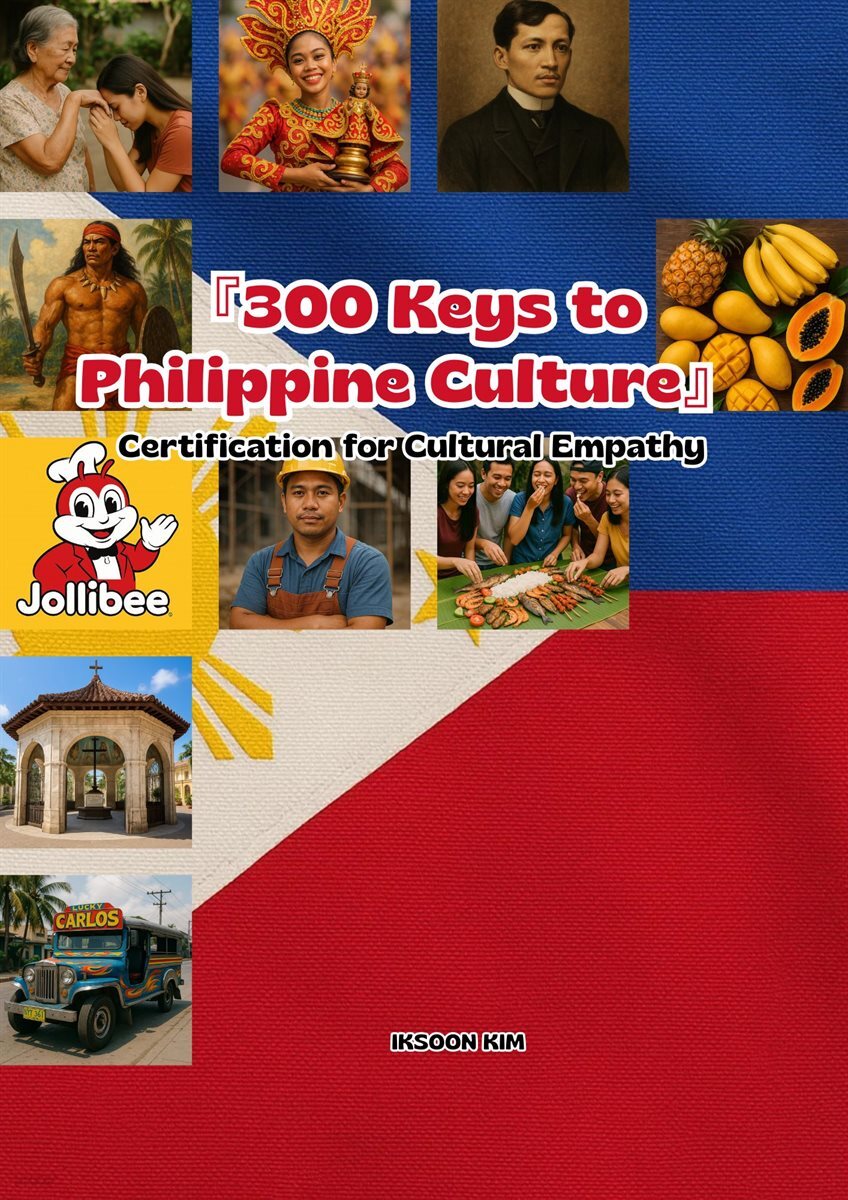
300 Keys to Philippine Culture
Certification for Cultural Empathy
PDF
소개
목차
|
Part 1: Discovering the Philippines - Basic Understanding and First Impressions
Chapter 1. 7,641 Islands, One Nation: The Cultural Diversity Born from Geographical Variety Chapter 2. The Melting Pot of East and West: The Multi-layered Heritage Throughout Philippine History Chapter 3. 'Filipino' and 'Filipina': National Identity and the Pride Within Chapter 4. A Way of Life in a Tropical Climate: How Weather Affects the Filipino Character and Daily Life Chapter 5. The Two Faces of Metro Manila: The Dynamics of a Capital Where Chaos and Opportunity Coexist Chapter 6. Anatomy of a Nation's Symbols: The Spirit Embodied in the Flag, National Flower, and National Anthem Chapter 7. Asia's English Hub: The Characteristics and Social Status of Philippine English (Taglish) Chapter 8. The Truth about 'Filipino Time': A Flexible Attitude Towards Time and Relationship-Oriented Thinking Chapter 9. Behind the Smile: The Complex Emotions Hidden Within Filipino Optimism Chapter 10. Essential Etiquette in a Culture of Hospitality: How to Make a Good First Impression Chapter 11. 'Mabuhay!': The Philosophy of Respect for Life in a Welcome Greeting Chapter 12. A Paradise of Tropical Fruits: The Flavors of the Philippines, including Mango, Durian, and Lansones Chapter 13. Typhoons Across the Archipelago: Natural Disasters and the Resilience of the Filipino People Chapter 14. Philippine Public Holidays: The Meanings of Various Holidays Commemorating Religion and History Chapter 15. 'Po' and 'Opo': The Culture of Respect and Politeness Embedded in the Language Chapter 16. Exploring Major Cities: The Charms of Regional Hubs like Cebu, Davao, and Baguio Chapter 17. 'Kalma Lang': The Value of Seeking Calmness in the Phrase "Just Relax" Chapter 18. The Demographics of the Philippines: The Potential and Social Challenges of a Young Nation Chapter 19. A Social Media Powerhouse: The Impact of Digital Communication on Philippine Society Chapter 20. How to Travel in the Philippines: Practical Advice for a Safe and Enjoyable Trip Part 2: The Filipino Heart - Core Values and Social Psychology Chapter 21. 'Kapwa': The Concept of a Shared Self that Encompasses 'I' and 'You' Chapter 22. 'Hiya': A Delicate Emotion for Face, Self-Esteem, and Social Harmony Chapter 23. 'Utang na Loob': A Debt of Gratitude Repaid over a Lifetime Chapter 24. 'Pakikisama': Getting Along and Groupism for Maintaining Relationships Chapter 25. 'Bahala Na': Faith in God and an Attitude of Surrender to Fate Chapter 26. 'Amor Propio': The Instinct to Protect One's Personal Honor and Dignity Chapter 27. 'Selos': The Cultural Expression of Filipino-style Jealousy and its Repercussions Chapter 28. 'Pamilya' First: The Value of Family that Comes Before All Else Chapter 29. 'Bayanihan': Unpaid Cooperation, a Symbol of Community Spirit Chapter 30. 'Chismis': The Social Function of Gossip, Information Exchange, and Social Control Chapter 31. 'Pasalubong': The Affection Carried on the Way Home, Gifts that Strengthen Relationships Chapter 32. 'Damayan': The Spirit of Mutual Support in Sharing Grief Chapter 33. 'Maramdamin': A Sensitive Nature, Easily Hurt and Perceptive of Others' Feelings Chapter 34. The Art of Indirect Communication: When "Yes" Means "No" Chapter 35. The Filipino Sense of Humor: The Wisdom of Sublimating Adversity into Laughter Chapter 36. 'Ganas': A Strong Craving and Motivation for Something Chapter 37. 'Lambing': Filipino-style Affection Mixed with Pouting and Endearment Chapter 38. 'Tampo': The Process of Sulking and Reconciliation Among Close Relations Chapter 39. 'Gigil': The Uncontrollable Feeling When Seeing Something Cute Chapter 40. 'Pagmamahal': Unconditional Love, the Essence of Filipino Emotion (Parts 3-14 continue with a similar structure, covering Family, Communication, Religion, Food, Arts, Daily Life, History, Modern Issues, Regional Cultures, Social Interactions, Systemic Issues, and Modern Trends.) |
저자 소개
He began his career at Samsung Electronics' headquarters as part of the 34th open recruitment class, working in the Strategic Planning Division's Human Resources team. There, he was responsible for talent acquisition and labor relations, honing a sharp insight into organizations and people. He later founded an IT firm, where he developed and managed solutions, demonstrating his expertise in building systems and solving problems across both large corporations and venture businesses.
Currently, as the President of the International Career Development Association, he helps countless individuals develop their job competencies and careers. He is also a certified Korean language instructor, dedicated to teaching language and culture.
This book is the culmination of his long-term residence in the Philippines, where he applied his systematic thinking and deep understanding of people to distill the raw experiences he gained as a Korean navigating the local culture. He goes beyond theoretical analysis to share the living essence of Philippine culture, aiming to reduce the trial and error that readers might otherwise face.
His Drone Pilot Instructor license reflects his relentless curiosity and expertise, which have driven him to explore the new world of the Philippines in depth and provide readers with the most accurate map possible.
Credentials and Publications:
Present: President, International Career Development Association
Former: HR Team, Strategic Planning Division, Samsung Electronics Headquarters
Unmanned Multicopter (Drone) Pilot Instructor, 1st Class
Korean Language Teacher Certificate (21-22-0754)
Korean Nouns Level 1 (Nov. 2023)
A+ in the Workplace: What to Do in These Situations (Nov. 2023)
Becoming a Camtasia Expert (July 2020)
Becoming a Google Expert (Mar. 2018)
Currently, as the President of the International Career Development Association, he helps countless individuals develop their job competencies and careers. He is also a certified Korean language instructor, dedicated to teaching language and culture.
This book is the culmination of his long-term residence in the Philippines, where he applied his systematic thinking and deep understanding of people to distill the raw experiences he gained as a Korean navigating the local culture. He goes beyond theoretical analysis to share the living essence of Philippine culture, aiming to reduce the trial and error that readers might otherwise face.
His Drone Pilot Instructor license reflects his relentless curiosity and expertise, which have driven him to explore the new world of the Philippines in depth and provide readers with the most accurate map possible.
Credentials and Publications:
Present: President, International Career Development Association
Former: HR Team, Strategic Planning Division, Samsung Electronics Headquarters
Unmanned Multicopter (Drone) Pilot Instructor, 1st Class
Korean Language Teacher Certificate (21-22-0754)
Korean Nouns Level 1 (Nov. 2023)
A+ in the Workplace: What to Do in These Situations (Nov. 2023)
Becoming a Camtasia Expert (July 2020)
Becoming a Google Expert (Mar. 2018)
품목정보
- 발행일
- 2025년 07월 13일
- 지원기기
- 크레마, PC(윈도우 - 4K 모니터 미지원), 아이폰, 아이패드, 안드로이드폰, 안드로이드패드, 전자책단말기(저사양 기기 사용 불가), PC(Mac)
- 파일/용량
- PDF(DRM) | 208.84MB ?
- 글자 수/ 페이지 수
- 약 862쪽 ?
- ISBN13
- 9791175080003
출판사 리뷰
|
"It is no exaggeration to say that business in the Philippines begins and ends with relationships. Countless Korean companies waste enormous time and money because they fail to realize that the Filipino 'Yes' is different from our 'Yes.' This book brilliantly dissects that very point. Understanding 'Utang na Loob' and the 'Padrino System' is more than just common knowledge; it is the most effective investment in reducing business risk and building trust that money can't buy. The cultural insight gained from this book will make your business more robust than any financial statement analysis ever could."
? A Business Professional's Review "The experience of having countless question marks about my family turned into exclamation points." "Becoming a family with someone from a different culture is a journey of finding answers to new questions every day. Why are they so obsessed with family events? Why do they sulk over trivial matters ('tampo') and act endearingly ('lambing')? Sometimes, you get exhausted just trying to understand their seemingly endless cultural nuances. This book is a warm commentary on all those questions. As you turn the pages, you realize that the behaviors of your spouse and their family were not 'wrong,' but 'different.' This is a must-read for all multicultural families, showing how cultural differences can become an opportunity for a deeper embrace of love, not a seed of conflict." ? A Multicultural Family's Review "Ultimately, all relationships begin with empathy. This book is the kindest textbook on how to achieve it." "The author asserts that 'Cultural Competence' is an essential skill for all of us living in the 21st century. Through the specific lens of the Philippines, we gain insight into the universal wisdom of understanding others and forming meaningful relationships. This book goes beyond simply introducing the Philippines; it teaches us how to see others without prejudice and how to enter their world with sincerity and genuine communication. For anyone who wishes to build deeper, warmer relationships with people anywhere in the world, this book will be an excellent guide." ? An Academic's Review |