
소득공제
수입
직수입양서
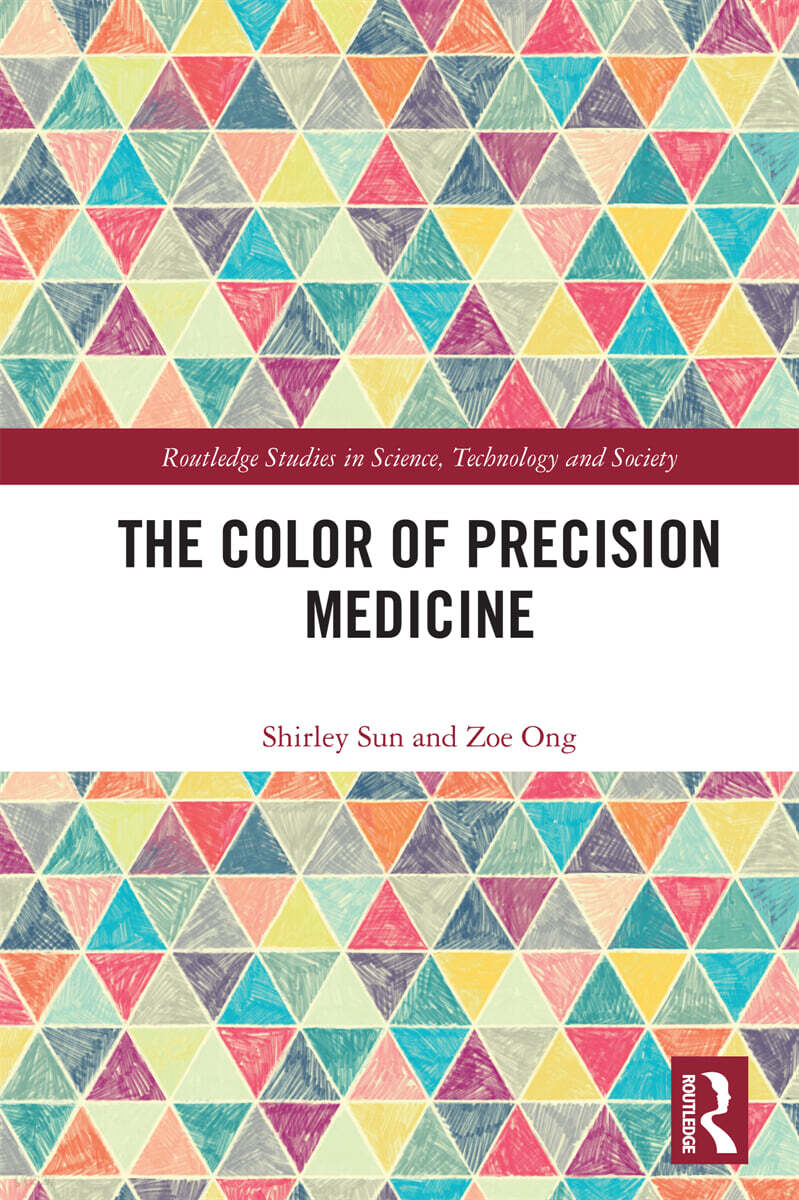
Color of Precision Medicine
Paperback, 1st Edition
Shirley Sun, Zoe Ong
Routledge
2025.09.29.
이미 소장하고 있다면 판매해 보세요.
- 국내배송만 가능
- 해외 거래처 사정에 의하여 품절/지연 가능
- 도서 정보 중 미표기 사항 안내?
- 문화비소득공제 가능
Routledge Studies in Science, Technology and Society
-
 Cognitive Science and the Reconceptualization of Social Theory 이동Cognitive Science and the Reconceptualization of Social Theory10% 346,330원
 -
Critical ICT4D (Information and Communication Technologies for Development) 이동Critical ICT4D (Information and Communication Technologies for Development)10% 346,330원
-
Critical ICT4D (Information and Communication Technologies for Development) 이동Critical ICT4D (Information and Communication Technologies for Development)10% 88,570원
-
Public Communication of Research Universities 이동Public Communication of Research Universities10% 94,620원
-
Policies and Politics of Interdisciplinary Research 이동Policies and Politics of Interdisciplinary Research10% 94,620원
-
Public Communication of Research Universities 이동Public Communication of Research Universities10% 346,330원
책소개
목차
|
Table of Contents 1 . Introduction Precision medicine (PM): A global phenomenon What is precision medicine? Definitions, sites and scale. Precision medicine as an alternative to race-based medicine What is race-based medicine and racial profiling in medicine? Problems with race-based medicine/racial profiling in medicine Is genome-based precision medicine really the answer? Addressing the debate: Racialization as the key concept Racialization of national census categories Racialization in science (or, scientific racism) in colonial contexts Racialization of medicine in colonial contexts Racialization in medicine in contemporary times In the (post-)Genomic Era: Racialization of human genomic science What is the future of genome-based precision medicine? An empirical examination in cancer care in three post-colonial societies. Chapter outline 2 . Using race to overcome race: An inherent contradiction in precision medicine Introduction Using race to overcome race: understanding an inherent contradiction in translational precision medicin First domain: Searching for the genetic biomarker in scientific research Second domain: Recruiting suitable human subjects for clinical trials Third domain: Medical decision-making in the clinic Conclusion 3. Trans-National colors: Race, Ethnicity and Genomic Science in the United States of America, Canada and Singapore Introduction Is race biological or socially constructed? A brief overview. Where and how do racialization happen in genomic science? Materials for racialization of a population sample and/or patient Issues with the different ways of racialization Perspectives from the genomic science community about the relationship between race and genetics No clear distinction between ethnoracial population groups Genetic heterogeneity within an ethnoracial population group Race as a social construct If race is socially constructed, why are there differences in frequencies of genetic alleles between racial/ethnic groups? If not race, what drives human genomic diversity? Conclusion 4. The “relative resources” model: Heterogeneity of resources and the racialization of precision medicine Introduction The “personalized medicine” versus “racialized medicine” debate “Race is really the poor man’s genomic test”: The relative resources model Human and informatics resources 5. Pharmacogenetic/Pharmacogenomic Drug Toxicity Studies, Race/Ethnicity and Managing Adverse Drug Reactions in the Clinic: Ongoing Tensions Introduction Examples of racialised pharmacogenomic studies in the US, Canada and Singapore Allopurinol 5-Fluorouracil (5-FU) Cost-effectiveness studies, race/ethnicity and precision medicine Who is Asian and who is Caucasian? Debating race/ethnicity-based pharmacogenetic toxicity data in the clinic Subjective interpretation of drug toxicity risks Toxicity is a multi-factor phenomenon and is not just about genetics Pharmacogenetics/pharmacogenomics studies and pharmaceutical companies are at odds. Conclusion 6 Conclusion What is already known on the topics of race-based medicine, precision medicine, and the molecularization of race? What does this book add to the existing state of the art? What are the arguments and findings in each chapter? How might this study affect research, practice or policy? Research Practice Policy Science communication by scientists and journalists Medical education What should different stakeholders take away from this book? Scientists Physicians/medical doctors Public policy makers Health economists What are the theoretical and empirical contributions of this book? On “racialization” On the nexus of relative resources and racialization of precision medicine On differential racialization What are the tensions with the usage of race/ethnicity in genomic science with medical and public health implications? What are some of the limitations of this study? What are some of the future research projects based on this book? |
관련 분류
품목정보
- 발행일
- 2025년 09월 29일
- 쪽수, 무게, 크기
- 148쪽 | 300g | 160*230mm
- ISBN13
- 9781032565637
사락 별점0
혜택 및 유의사항밑줄0
혜택 및 유의사항상품정보안내
직수입외서의 경우, 해외거래처에서 제공하는 정보가 부족하여 제목, 표지, 가격, 유통상태 등의 정보가 미비하거나 변경되는 경우가 있습니다. 정확한 확인을 원하시는 경우, 일대일 상담으로 문의하여 주시면 답변 드리겠습니다.
(판형과 판수 등이 다양한 도서는 찾으시는 도서의 ISBN을 알려 주시면 보다 빠르고 정확한 안내가 가능합니다.)
해외거래처에서 품절인 경우, 2차 거래선을 통해 유럽과 미국 출판사로 직접 수입이 진행될 수 있습니다.
수입 진행 시점으로 부터 2~3주가 추가로 소요되며, 해외에서도 유통이 원활하지 않은 도서는 품절 안내가 지연될 수 있습니다.
해당 경우, 문자와 메일로 별도 안내를 드리고 있사오니 마이페이지에서 휴대전화번호와 메일주소를 다시 한번 확인해주시기 바랍니다.
(판형과 판수 등이 다양한 도서는 찾으시는 도서의 ISBN을 알려 주시면 보다 빠르고 정확한 안내가 가능합니다.)
해외거래처에서 품절인 경우, 2차 거래선을 통해 유럽과 미국 출판사로 직접 수입이 진행될 수 있습니다.
수입 진행 시점으로 부터 2~3주가 추가로 소요되며, 해외에서도 유통이 원활하지 않은 도서는 품절 안내가 지연될 수 있습니다.
해당 경우, 문자와 메일로 별도 안내를 드리고 있사오니 마이페이지에서 휴대전화번호와 메일주소를 다시 한번 확인해주시기 바랍니다.
96,630원
총 1개
96,630원
