
소득공제
수입
직수입양서
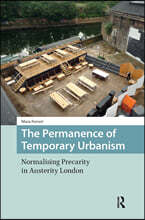
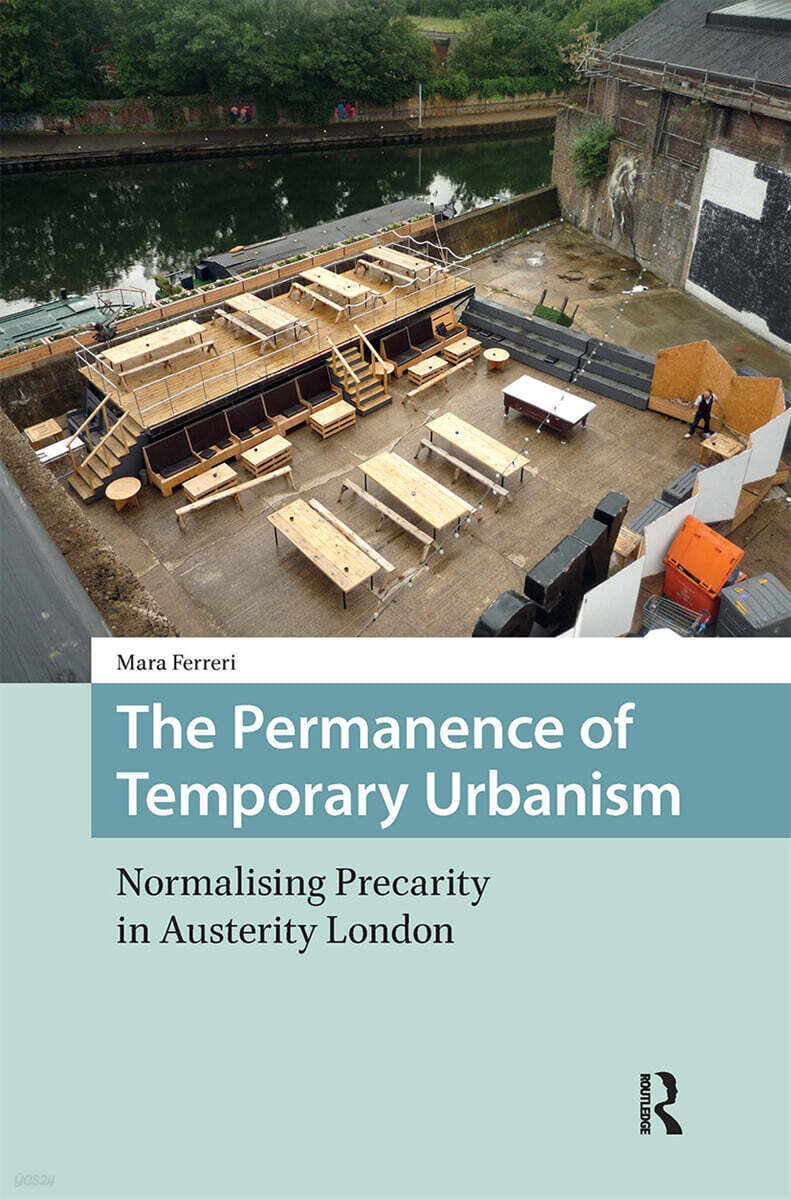
Permanence of Temporary Urbanism
Normalising Precarity in Austerity London
Paperback, 1st Edition
Mara Ferreri
Routledge
2025.12.01.
이미 소장하고 있다면 판매해 보세요.
- 국내배송만 가능
- 해외 거래처 사정에 의하여 품절/지연 가능
- 도서 정보 중 미표기 사항 안내?
- 문화비소득공제 가능
Cities and Cultures
-
 Media and Mapping Practices in the Middle East and North Africa 이동Media and Mapping Practices in the Middle East and North Africa10% 95,550원
-
Amsterdam Diaries, Life Writing and Identity 이동Amsterdam Diaries, Life Writing and Identity18% 312,020원
-
Media and Mapping Practices in the Middle East and North Africa 이동Media and Mapping Practices in the Middle East and North Africa10% 290,700원
책소개
목차
|
Chapter
1. Temporary urbanism: a situated approach,Reclaiming spaces and the role of temporariness, The trope of temporariness as 'alterity', For a situated approach to temporary urbanism, 'Post-crisis' London, The book's questions, Chapter 2. The entangled field of temporary urbanism, The emergence of a discourse, Countering recessional perceptions, 'Creative' fillers,Art showcasing to the world: pop-up in the shadow of the 2012 Games, The rise of the pop-up intermediary, Meanwhilers: a clever rebranding, The Meanwhile London Competition, Enrolling urban professionals in the shift to austerity, The unresolved question of unlawful occupations, Conclusion: the primacy of property, Chapter 3. 'Not a pop-up!',The experience of performers and visual artists, A well-established history, 'Provided you can beg, steal or borrow a space', Group+Work and 1990s myths in public commissioning, Pop-ups in Westminster, ArtEvict in 'forgotten spaces', Settling down in Hackney Wick Fish Island? Pop-up spaces as festivals and digital arts incubators, Conclusions: in the cracks of the creative city promise, Chapter 4. Staging temporary spaces, Experiential economies and the performativity of urban activation, The Elephant as a site for 'community engagement', Studio at the Elephant, A strategy of open programming, Visibility for recognition, Mediating face-to-face interactions,Empowerment for surrender? Conclusions: the openness of agonistic encounters, Chapter 5. Planning a temporary city of on-demand communities, Temporariness in planning at times of austerity, 'Stitching the fringes' before and after the Olympics, Learning from Others: interim uses as urban 'testing sites', Vacant land and setting up a temporary community hub, Young people and the 'two communities', Risky grassroots, Temporary 'urban vitality' in the LLDC Local Plan (2015-2031), 'Seeding' long-term uses,Learning to become 'on-demand communities', Conclusions: the risk of planned precarization, Chapter 6. The normalisation of temporariness, Underused spaces as a 'problem', The projective logic, Ephemeral architectures, Permanent 'times of uncertainty', Tactical or precarious acting? Precarity as temporal foreclosure, Conclusion: reclaiming urban space-time after the pop up, Index, Bibliography. |
품목정보
- 발행일
- 2025년 12월 01일
- 쪽수, 무게, 크기
- 194쪽 | 360g | 160*230mm
- ISBN13
- 9781041188674
사락 별점0
혜택 및 유의사항밑줄0
혜택 및 유의사항상품정보안내
직수입외서의 경우, 해외거래처에서 제공하는 정보가 부족하여 제목, 표지, 가격, 유통상태 등의 정보가 미비하거나 변경되는 경우가 있습니다. 정확한 확인을 원하시는 경우, 일대일 상담으로 문의하여 주시면 답변 드리겠습니다.
(판형과 판수 등이 다양한 도서는 찾으시는 도서의 ISBN을 알려 주시면 보다 빠르고 정확한 안내가 가능합니다.)
해외거래처에서 품절인 경우, 2차 거래선을 통해 유럽과 미국 출판사로 직접 수입이 진행될 수 있습니다.
수입 진행 시점으로 부터 2~3주가 추가로 소요되며, 해외에서도 유통이 원활하지 않은 도서는 품절 안내가 지연될 수 있습니다.
해당 경우, 문자와 메일로 별도 안내를 드리고 있사오니 마이페이지에서 휴대전화번호와 메일주소를 다시 한번 확인해주시기 바랍니다.
95,550원
총 1개
95,550원
